Blog Archive

Sunday, September 26, 2021

09-25-2021-2042 - phasor phase vector complex amplitude sinor complexor

 In physics and engineering, a phasor (a portmanteau of phase vector[1][2]), is a complex numberrepresenting a sinusoidal function whose amplitude (A), angular frequency (ω), and initial phase (θ) are time-invariant. It is related to a more general concept called analytic representation,[3] which decomposes a sinusoid into the product of a complex constant and a factor depending on time and frequency. The complex constant, which depends on amplitude and phase, is known as a phasor, or complex amplitude,[4][5] and (in older texts) sinor[6] or even complexor.[6]

A common situation in electrical networks is the existence of multiple sinusoids all with the same frequency, but different amplitudes and phases. The only difference in their analytic representations is the complex amplitude (phasor). A linear combination of such functions can be factored into the product of a linear combination of phasors (known as phasor arithmetic) and the time/frequency dependent factor that they all have in common.

The origin of the term phasor rightfully suggests that a (diagrammatic) calculus somewhat similar to that possible for vectors is possible for phasors as well.[6] An important additional feature of the phasor transform is that differentiation and integration of sinusoidal signals (having constant amplitude, period and phase) corresponds to simple algebraic operations on the phasors; the phasor transform thus allows the analysis (calculation) of the AC steady state of RLC circuits by solving simple algebraic equations (albeit with complex coefficients) in the phasor domain instead of solving differential equations (with real coefficients) in the time domain.[7][8] The originator of the phasor transform was Charles Proteus Steinmetz working at General Electric in the late 19th century.[9][10]

Glossing over some mathematical details, the phasor transform can also be seen as a particular case of the Laplace transform, which additionally can be used to (simultaneously) derive the transient response of an RLC circuit.[8][10] However, the Laplace transform is mathematically more difficult to apply and the effort may be unjustified if only steady state analysis is required.[10]

Fig 2. When function  is depicted in the complex plane, the vector formed by its imaginary and real parts rotates around the origin. Its magnitude is A, and it completes one cycle every 2Ï€/ω seconds. θ is the angle it forms with the real axis at t = n•2Ï€/ω, for integer values of n.

https://en.wikipedia.org/wiki/Phasor


------------------------------------------------------------------------------------------------------------------


The Thought Emporium - Making Real Holograms!


The Thought Emporium - Cold Fire You Can Touch - DIY Cold Plasma Torch


Decellularization is a pretty strange process. Using a special type of soap, it's possible to remove all the cellular material from a piece of tissue, leaving only the connective proteins and polymers behind that normally hold the cells in place. It leaves you with something that looks like the starting material, but is really just an empty sponge called a scaffold. Doctors and scientists have been exploring this technique for many years because those empty scaffolds are extremely useful for cell culture. By seeding them with cells taken from a patient, it's possible to grow a brand new organ or tissue able to be transplanted into a patient, potentially saving their life. The same technique could even be used to make lab grown meat. Today we explore this amazing process and turn an ordinary grape, into meat.


https://www.youtube.com/watch?v=FaVHTd9Ne_s


Decellularization (also spelled decellularisation in British English) is the process used in biomedical engineering to isolate the extracellular matrix (ECM) of a tissue from its inhabiting cells, leaving an ECM scaffold of the original tissue, which can be used in artificial organ and tissue regeneration. Organ and tissue transplantation treat a variety of medical problems, ranging from end organ failure to cosmetic surgery. One of the greatest limitations to organ transplantation derives from organ rejection caused by antibodies of the transplant recipient reacting to donorantigens on cell surfaces within the donor organ.[1] Because of unfavorable immune responses, transplant patients suffer a lifetime taking immunosuppressing medication. Stephen F. Badylak pioneered the process of decellularization at the McGowan Institute for Regenerative Medicine at the University of Pittsburgh.[2] This process creates a natural biomaterial to act as a scaffold for cell growth, differentiation and tissue development. By recellularizing an ECM scaffold with a patient’s own cells, the adverse immune response is eliminated. Nowadays, commercially available ECM scaffolds are available for a wide variety of tissue engineering. Using peracetic acid to decellularize ECM scaffolds have been found to be false and only disinfects the tissue.

With a wide variety of decellularization-inducing treatments available, combinations of physical, chemical, and enzymatic treatments are carefully monitored to ensure that the ECM scaffold maintains the structural and chemical integrity of the original tissue.[2] Scientists can use the acquired ECM scaffold to reproduce a functional organ by introducing progenitor cells, or adult stem cells (ASCs), and allowing them to differentiate within the scaffold to develop into the desired tissue. The produced organ or tissue can be transplanted into a patient. In contrast to cell surface antibodies, the biochemical components of the ECM are conserved between hosts, so the risk of a hostile immune response is minimized.[3][4] Proper conservation of ECM fibers, growth factors, and other proteins is imperative to the progenitor cells differentiating into the proper adult cells. The success of decellularization varies based on the components and density of the applied tissue and its origin.[5] The applications to the decellularizing method of producing a biomaterial scaffold for tissue regeneration are present in cardiac, dermal, pulmonary, renal, and other types of tissues. Complete organ reconstruction is still in the early levels of development.[6]

https://en.wikipedia.org/wiki/Decellularization


Decellularization of porcine heart valves is the removal of cells along with antigenic cellular elements[1] by either physical or chemical decellularization of the tissue.[2] This decellularized valve tissue provides a scaffold with the remaining extracellular matrix (ECM) that can then be used for tissue engineering and valve replacement in humans inflicted with valvular disease.[3] Decellularized biological valves have potential benefit over conventional valves through decreased calcification which is thought to be an immuno-inflammatory response initiated by the recipient.[4]

https://en.wikipedia.org/wiki/Decellularization_of_porcine_heart_valve


A bioartificial heart is an engineered heart that contains the extracellular structure of a decellularized heart and cellular components from a different source. Such hearts are of particular interest for therapy as well as research into heart disease. The first bioartificial hearts were created in 2008 using cadaveric rat hearts.[1][2][3] In 2014, human-sized bioartificial pig hearts were constructed.[4] Bioartificial hearts have not been developed yet for clinical use, although the recellularization of porcine hearts with human cells opens the door to xenotransplantation.[4][5]

Background[edit]

Heart failure is one of the leading causes of death. In 2013, an estimate of 17.3 million deaths per year out of the 54 million total deaths was caused by cardiovascular diseases, meaning that 31.5% of the world's total death was caused by this.[6] Often, the only viable treatment for end-stage heart failure is organ transplantation.[5] Currently organ supply is insufficient to meet the demand, which presents a large limitation in an end-stage treatment plan.[2][5] A theoretical alternative to traditional transplantation processes is the engineering of personalized bioartificial hearts. Researchers have had many successful advances in the engineering of cardiovascular tissue and have looked towards using decellularized and recellularized cadaveric hearts in order to create a functional organ.[5] Decellularization-recellularization involves using a cadaveric heart, removing the cellular contents while maintaining the protein matrix (decellularization), and subsequently facilitating growth of appropriate cardiovascular tissue inside the remaining matrix (recellularization).[5]

Over the past years, researchers have identified populations of cardiac stem cells that reside in the adult human heart. This discovery sparked the idea of regenerating the heart cells by taking the stem cells inside the heart and reprogramming them into cardiac tissues.[7] The importance of these stem cells are self-renewal, the ability to differentiate into cardiomyocytes, endothelial cells and smooth vascular muscle cells, and clonogenicity. These stem cells are capable of becoming myocytes, which are for stabilizing the topography of the intercellular components, as well as to help control the size and shape of the heart, as well as vascular cells, which serve as a cell reservoir for the turnover and the maintenance of the mesenchymal tissues.[7] However, in vivo studies have demonstrated that the regenerative ability of implanted cardiac stem cells lies in the associated macrophage-mediated immune response and concomitant fibroblast-mediated wound healing and not in their functionality, since these effects were observed for both live and dead stem cells.[8]

Methodology[edit]

The preferred method to remove all cellular components from a heart is perfusion decellularization. This technique involves perfusing the heart with detergents such as SDS and Triton X-100 dissolved in distilled water.[1]

The remaining ECM is composed of structural elements such as collagen, laminin, elastin and fibronectin. The ECM scaffold promotes proper cellular proliferation and differentiation, vascular development, as well as providing mechanical support for cellular growth.[5] Because minimal DNA material remains after the decellularization process, the engineered organ is biocompatible with the transplant recipient, regardless of species. Unlike traditional transplant options, recellularized hearts are less immunogenic and have a decreased risk of rejection.[2][9]

Once the decellularized heart has been sterilized to remove any pathogens, the recellularization process can occur.[2] Multipotent cardiovascular progenitors are then added to the decellularized heart and with additional exogenous growth factors, are stimulated to differentiate into cardiomyocytes, smooth muscle cells and endothelial cells.[10]

Recellularized heart functionality[edit]

The most promising results come from recellularized rat hearts. After only 8 days of maturation, the heart models were stimulated with an electrical signal to provide pacing. The heart models showed a unified contraction with a force equivalent to ~2% of a normal rat heart or ~25% of that of a 16-week-old human heart.[1][5]

Although far from use in a clinical setting, there have been great advances in the field of bioartificial heart generation.[2][5][10] The use of decellularization and recellularization processes, has led to the production of a three dimensional matrix that promotes cellular growth; the repopulation of the matrix containing appropriate cell composition; and the bioengineering of organs demonstrating functionality (limited) and responsiveness to stimuli.[2][5] This area shows immense promise and with future research may redefine treatment of end stage heart failure.

https://en.wikipedia.org/wiki/Bioartificial_heart


Decellularized ECM[edit]

Decellularized extracellular matrix based bioinks can be derived from nearly any mammalian tissue. However, often organs such as heart, muscle, cartilage, bone, and fat are decellularized, lyophilized, and pulverized, to created a soluble matrix that can then be formed into gels.[13] These bioinks possess several advantages over other materials due to their derivation from mature tissue. These materials consist of a complex mixture of ECM structural and decorating proteins specific to their tissue origin. Therefore, dECM-derived bioinks are particularly tailored to provide tissue-specific cues to cells. Often these bioinks are cross-linked through thermal gelation or chemical cross-linking such as through the use of riboflavin.[14]

See also[edit]


https://en.wikipedia.org/wiki/Bio-ink#Decellularized_ECM

https://en.wikipedia.org/wiki/Category:Biomaterials
https://en.wikipedia.org/wiki/Human_penis

https://en.wikipedia.org/wiki/Triton_X-100
https://en.wikipedia.org/wiki/Hyaline_cartilage
https://en.wikipedia.org/wiki/Acellular_dermis
https://en.wikipedia.org/wiki/Tissue_engineering
https://en.wikipedia.org/wiki/Regeneration_in_humans

https://en.wikipedia.org/wiki/Axel_Haverich
https://en.wikipedia.org/wiki/Joyce_Wong


09-25-2021-2043 - TRIAC (triode for alternating current; also bidirectional triode thyristor or bilateral triode thyristor)

A TRIAC (triode for alternating current; also bidirectional triode thyristor or bilateral triode thyristor[citation needed]) is a three terminal electronic component that conducts current in either direction when triggered. The term TRIAC is a genericised trademark.

TRIACs are a subset of thyristors (analogous to a relay in that a small voltage and current can control a much larger voltage and current) and are related to silicon controlled rectifiers (SCRs). TRIACs differ from SCRs in that they allow current flow in both directions, whereas an SCR can only conduct current in a single direction. Most TRIACs can be triggered by applying either a positive or negative voltage to the gate (an SCR requires a positive voltage). Once triggered, SCRs and TRIACs continue to conduct, even if the gate current ceases, until the main current drops below a certain level called the holding current.

Gate turn-off thyristors (GTOs) are similar to TRIACs but provide more control by turning off when the gate signal ceases.

The bidirectionality of TRIACs makes them convenient switches for alternating-current (AC). In addition, applying a trigger at a controlled phase angle of the AC in the main circuit allows control of the average current flowing into a load (phase control). This is commonly used for controlling the speed of a universal motor, dimming lamps, and controlling electric heaters. TRIACs are Bipolar devices.


Triac.svg
The circuit symbol for a TRIAC, where "A1" is Anode 1, "A2" is Anode 2, and "G" is Gate. Anode 1 and Anode 2 are normally termed Main Terminal 1 (MT1) and Main Terminal 2 (MT2) respectively
TypePassive
Pin configurationanode1, gate and anode2


https://en.wikipedia.org/wiki/TRIAC


------------------------------------------------------------------------------------------------------------------------


Above. Applied Science - Holograms on chocolate


How To CAKE That - Holographic Rainbow Edible Cellophane


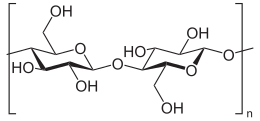
Cellulose, a linear polymer of D-glucose units (two are shown) linked by β(1→4)-glycosidic bonds


https://en.wikipedia.org/wiki/Cellulose


In The Kitchen With Matt - How to Make Sugar Glass | Easy Edible Glass Recipe


Collins Key - DIY Edible Water Bottle YOU CAN EAT!!!!! *NO PLASTIC* Learn How To Make The Best DIY Liquid Food


09-25-2021-2039 - triangular matrix zero

 In the mathematical discipline of linear algebra, a triangular matrix is a special kind of square matrix. A square matrix is called lower triangular if all the entries above the main diagonal are zero. Similarly, a square matrix is called upper triangular if all the entries below the main diagonal are zero. 

Because matrix equations with triangular matrices are easier to solve, they are very important in numerical analysis. By the LU decomposition algorithm, an invertible matrix may be written as the product of a lower triangular matrix L and an upper triangular matrix U if and only if all its leading principal minors are non-zero.


https://en.wikipedia.org/wiki/Triangular_matrix


Flo Rida - Elevator (feat. Timbaland)


09-25-2021-2038 - fitting length

12 Inch Disco Mirror Ball - Disco Mirror Balls

 In mathematics, specifically in the area of algebra known as group theory, the Fitting length (or nilpotent length) measures how far a solvable group is from being nilpotent. The concept is named after Hans Fitting, due to his investigations of nilpotent normal subgroups.

https://en.wikipedia.org/wiki/Fitting_length#nilpotent_series

Applied Science - Hypercentric optics: A camera lens that can see behind objects


File:Simple Zero Crossing Circuit.png
https://commons.wikimedia.org/wiki/File:Simple_Zero_Crossing_Circuit.png

Zero crossing (or burst-firing) control is an approach for electrical control circuits that starts operation with the AC load voltage at close to 0 volts in the AC cycle.[1] This is in relation to solid state relays, such as triacs and silicon controlled rectifiers.[1] The purpose of the circuit is to start the triac conducting very near the time point when the load voltage is crossing zero volts (at the beginning or the middle of each AC cycle represented by a sine wave), so that the output voltage begins as a complete sine-wave half-cycle. In other words, if the controlling input signal is applied at any point during the AC output wave other than very close to the zero voltage point of that wave, the output of the switching device will "wait" to switch on until the output AC wave reaches its next zero point. This is useful when sudden turn-on in the middle of a sine-wave half cycle could cause undesirable effects like high frequency spikes for which the circuit or the environment is not expected to handle gracefully.

The point where the AC line voltage is 0 V is the zero cross point. When a triac is connected in its simplest form, it can clip the beginning of the voltage curve, due to the minimum gate voltage of the triac. A zero cross circuit works to correct this problem, so that the triac functions as well as possible. This is typically done with thyristors in two of the three phases.

Many opto-triacs come with zero cross circuits built in. They are often used to control larger, power triacs. In this setup triac turn-on delays will compound, so quick turn on times are important.

The corresponding phase angle circuits are more sophisticated and more expensive than zero cross circuits.

https://en.wikipedia.org/wiki/Zero_crossing_control


The zero-crossing rate (ZCR) is the rate at which a signal changes from positive to zero to negative or from negative to zero to positive.[1] Its value has been widely used in both speech recognition and music information retrieval, being a key feature to classify percussive sounds.[2]

ZCR is defined formally as

where  is a signal of length  and  is an indicator function.

In some cases only the "positive-going" or "negative-going" crossings are counted, rather than all the crossings, since between a pair of adjacent positive zero-crossings there must be a single negative zero-crossing.

For monophonic tonal signals, the zero-crossing rate can be used as a primitive pitch detection algorithm. Zero crossing rates are also used for Voice activity detection (VAD), which determines whether human speech is present in an audio segment or not.

See also[edit]


https://en.wikipedia.org/wiki/Zero-crossing_rate

A zero-crossing is a point where the sign of a mathematical function changes (e.g. from positive to negative), represented by an intercept of the axis (zero value) in the graph of the function. It is a commonly used term in electronics, mathematics, acoustics, and image processing.
A zero-crossing in a line graph of a waveform representing voltage over time

In electronics[edit]

In alternating current, the zero-crossing is the instantaneous point at which there is no voltage present. In a sine wave or other simple waveform, this normally occurs twice during each cycle. It is a device for detecting the point where the voltage crosses zero in either direction.

The zero-crossing is important for systems that send digital data over AC circuits, such as modems, X10 home automation control systems, and Digital Command Control type systems for Lionel and other AC model trains.

Counting zero-crossings is also a method used in speech processing to estimate the fundamental frequency of speech.

In a system where an amplifier with digitally controlled gain is applied to an input signal, artifacts in the non-zero output signal occur when the gain of the amplifier is abruptly switched between its discrete gain settings. At audio frequencies, such as in modern consumer electronics like digital audio players, these effects are clearly audible, resulting in a 'zipping' sound when rapidly ramping the gain or a soft 'click' when a single gain change is made. Artifacts are disconcerting and clearly not desirable. If changes are made only at zero-crossings of the input signal, then no matter how the amplifier gain setting changes, the output also remains at zero, thereby minimizing the change. (The instantaneous change in gain will still produce distortion, but it will not produce a click.)

If electrical power is to be switched, no electrical interference is generated if switched at an instant when there is no current—a zero crossing. Early light dimmers and similar devices generated interference; later versions were designed to switch at the zero crossing.

In image processing[edit]

In the field of Digital Image Processing, great emphasis is placed on operators that seek out edges within an image. They are called 'Edge Detection' or 'Gradient filters'. A gradient filter is a filter that seeks out areas of rapid change in pixel value. These points usually mark an edge or a boundary. A Laplace filter is a filter that fits in this family, though it sets about the task in a different way. It seeks out points in the signal stream where the digital signal of an image passes through a pre-set '0' value, and marks this out as a potential edge point. Because the signal has crossed through the point of zero, it is called a zero-crossing. An example can be found here, including the source in Java.

In the field of Industrial radiography, it is used as a simple method for the segmentation of potential defects.[1]

References[edit]

  1. ^ Mery, Domingo (2015). Computer Vision for X-Ray Testing. Switzerland: Springer International Publishing. p. 271. ISBN 978-3319207469.

See also[edit]

https://en.wikipedia.org/wiki/Zero_crossing

Edge detection includes a variety of mathematical methods that aim at identifying edges, curves in a digital image at which the image brightness changes sharply or, more formally, has discontinuities. The same problem of finding discontinuities in one-dimensional signals is known as step detection and the problem of finding signal discontinuities over time is known as change detection. Edge detection is a fundamental tool in image processing, machine vision and computer vision, particularly in the areas of feature detection and feature extraction.[1]
https://en.wikipedia.org/wiki/Edge_detection

In computer vision and image processing, a feature is a piece of information about the content of an image; typically about whether a certain region of the image has certain properties. Features may be specific structures in the image such as points, edges or objects. Features may also be the result of a general neighborhood operation or feature detection applied to the image. Other examples of features are related to motion in image sequences, or to shapes defined in terms of curves or boundaries between different image regions.

More broadly a feature is any piece of information which is relevant for solving the computational task related to a certain application. This is the same sense as feature in machine learning and pattern recognitiongenerally, though image processing has a very sophisticated collection of features. The feature concept is very general and the choice of features in a particular computer vision system may be highly dependent on the specific problem at hand.

https://en.wikipedia.org/wiki/Feature_(computer_vision)

In special relativity, a four-vector (or 4-vector)[1] is an object with four components, which transform in a specific way under Lorentz transformation. Specifically, a four-vector is an element of a four-dimensional vector space considered as a representation space of the standard representation of the Lorentz group, the (1/2,1/2) representation. It differs from a Euclidean vector in how its magnitude is determined. The transformations that preserve this magnitude are the Lorentz transformations, which include spatial rotations and boosts (a change by a constant velocity to another inertial reference frame).[2]: ch1 

Four-vectors describe, for instance, position xμ in spacetime modeled as Minkowski space, a particle's four-momentum pμ, the amplitude of the electromagnetic four-potential Aμ(x) at a point x in spacetime, and the elements of the subspace spanned by the gamma matrices inside the Dirac algebra.

The Lorentz group may be represented by 4×4 matrices Î›. The action of a Lorentz transformation on a general contravariant four-vector X (like the examples above), regarded as a column vector with Cartesian coordinates with respect to an inertial frame in the entries, is given by

(matrix multiplication) where the components of the primed object refer to the new frame. Related to the examples above that are given as contravariant vectors, there are also the corresponding covariant vectors xμ, pμ and Aμ(x). These transform according to the rule

where T denotes the matrix transpose. This rule is different from the above rule. It corresponds to the dual representation of the standard representation. However, for the Lorentz group the dual of any representation is equivalent to the original representation. Thus the objects with covariant indices are four-vectors as well.

For an example of a well-behaved four-component object in special relativity that is not a four-vector, see bispinor. It is similarly defined, the difference being that the transformation rule under Lorentz transformations is given by a representation other than the standard representation. In this case, the rule reads X′ = Π(Λ)X, where Î (Λ) is a 4×4 matrix other than Î›. Similar remarks apply to objects with fewer or more components that are well-behaved under Lorentz transformations. These include scalars, spinors, tensors and spinor-tensors.

The article considers four-vectors in the context of special relativity. Although the concept of four-vectors also extends to general relativity, some of the results stated in this article require modification in general relativity.

https://en.wikipedia.org/wiki/Four-vector


Though Emporium - Punching Water So Hard LIGHT Comes Out - Sonoluminescence


The Action Lab - How Hard Is It To Freeze Flowing Water?


The Thought Emporium - Exploding Space Radiation Literally Distorts TIME

Applied Science - Electro-osmosis: pumping water with electricity and no magnets

Dry water and Burning ice: all about gas hydrates

Glowing plasma created by a high speed jet of water

Candle flame is repelled by magnets (and Zeeman follow-up)

Science Action: How does a magnetic field confine a plasma?

Magnetic Confinement Fusion

NASA Lattice Confinement Fusion [2020]