Blog Archive

Wednesday, February 15, 2023

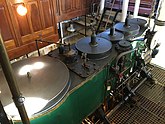
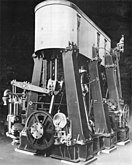
02-15-2023-1450 - Triple or multiple expansion engine steam cylinder pressure 1881-scotland

Triple or multiple expansion

A triple-expansion engine is a compound engine that expands the steam in three stages, e.g. an engine with three cylinders at three different pressures. A quadruple-expansion engine expands the steam in four stages, and so on.[40] However, as explained above, the number of expansion stages defines the engine, not the number of cylinders, e.g. the RMS Titanic had four-cylinder, triple-expansion engines.[43] The first successful commercial use was an engine built at Govan in Scotland by Alexander C. Kirk for the SS Aberdeen in 1881.[44]

Multiple-expansion engine manufacture continued well into the 20th century. All 2,700 Liberty ships built by the United States during World War II were powered by triple-expansion engines, because the capacity of the US to manufacture marine steam turbines was entirely directed to the building of warships. The biggest manufacturer of triple-expansion engines during the war was the Joshua Hendy Iron Works. Toward the end of the war, turbine-powered Victory ships were manufactured in increasing numbers.[45]


 https://en.wikipedia.org/wiki/Marine_steam_engine#Triple_or_multiple_expansion


02-15-2023-1449 - Admiral Makarov mid-1900s

Admiral Makarov was the second of the four Bayan-class armoured cruisers built for the Imperial Russian Navy during the mid-1900s. While initially assigned to the Baltic Fleet, the ship was detached to the Mediterranean several times before the start of World War I in 1914. She was modified to lay mines shortly after the war began. Admiral Makarov laid mines herself during the war and provided cover for other ships laying minefields. The ship fought several inconclusive battles with German ships during the war, including the Battle of Åland Islands in mid–1915. She also defended Moon Sound during the German invasion of the Estonian islands in late 1917. Admiral Makarov was decommissioned in 1918 and sold for scrap in 1922.  

AdmiralMakarov1916.jpg
Admiral Makarov in 1916
History
Russian Empire
NameAdmiral Makarov
NamesakeAdmiral Stepan Makarov
BuilderForges et Chantiers de la Méditerranée, La Seyne-sur-Mer, France
Laid downApril 1905[Note 1]
Launched28 May 1906
CompletedApril 1908
FateSold for scrap, 1922
General characteristics
Class and type Bayan-class armoured cruiser
Displacement7,750 long tons (7,874 t) standard
Length449.6 ft (137.0 m)
Beam57 ft 6 in (17.5 m)
Draught22 ft (6.7 m)
Installed power16,500 ihp (12,300 kW)
Propulsion
Speed21 knots (39 km/h; 24 mph)
Complement568
Armament
Armour

https://en.wikipedia.org/wiki/Russian_cruiser_Admiral_Makarov


02-15-2023-1447 - Asia (Russian: А́зия) was a cruiser of the Imperial Russian Navy.


Asia (Russian: А́зия) was a cruiser of the Imperial Russian Navy. The ship was originally the Philadelphia-built iron merchant steamship Columbus completed in 1874

The iron passenger-cargo steamship Columbus was built 1873/74 in Philadelphia by William Cramp & Sons as Yard No.184 for local shipowner William P Clyde & Co.[1]

Columbus was bought by Russia in May 1878, one of three merchant ships purchased in the United States to be transformed into naval cruisers: State of California became Europa, Saratoga became Afrika, and Columbus became Asia. After initial conversion by her builders, Cramp, in Philadelphia, she was sailed to Russia by a Russian crew for further outfitting in Kronstadt during 1878 and 1879.

The cruiser saw initial duty in the Far East, but then returned to the Baltic. She was downgraded to Cruiser 2nd Class on 1 February 1892. The future Vice Admiral Karl Jessen was her commanding officer in 1895 and 1896. In 1898 she received a new engine, increasing her power from 1,200 hp (890 kW) to 2,700 hp (2,000 kW), and adding 2.2 knots (4 km/h; 3 mph) to her top speed.

In August 1911, now rather obsolete, Asia was transferred to the reserve fleet. In October 1912 she was renamed Kaukas (Russian: "Кавказ"). Following the outbreak of the First World War, she was once again renamed Asia on 11 September 1914, assigned to the Baltic Fleet's transport squadron and used as a minelayer.

The ship was deactivated in May 1918 and scrapped in 1923. 


Azia1874-1923.jpg
History
United States
NameColumbus

United States
NameColumbus
OwnerWilliam P. Clyde & Co, Philadelphia
Port of registryPhiladelphia
BuilderWilliam Cramp & Sons, Philadelphia
Yard number184
Laid down1873
Launched18 September 1873
Completed1874
Maiden voyage10 February 1874
HomeportNew York
FateSold to Russia, May 1878
Russian Empire
Name
  • Asia
  • Kavkaz (1912-1914)
BuilderWilliam Cramp & Sons, Philadelphia
Yard number204 (for conversion)
AcquiredPurchased May 1878
ReclassifiedCruiser 2nd Class, 1 February 1892
StrickenMay 1918
FateScrapped in Germany, 1923


https://en.wikipedia.org/wiki/Russian_cruiser_Asia


02-15-2023-1446 - COLUMBUS PROGRAMS


The COLUMBUS PROGRAMS are a computational chemistry software suite for calculating ab initio molecular electronic structures, designed as a collection of individual programs communicating through files.[1][2] The programs focus on extended multi-reference calculations of atomic and molecular ground and excited states. In addition to standard classes of reference wave functions such as CAS and RAS, calculations can be performed with selected configurations. Some features employ the atomic orbital integrals and gradient routines from the Dalton as well as MOLCAS program suites. COLUMBUS is distributed open-source under the LGPL license.

The COLUMBUS PROGRAMS are frequently used for nonadiabatic problems because of its ability to calculate MRCI nonadiabatic coupling vector analytically. 

https://en.wikipedia.org/wiki/COLUMBUS

02-15-2023-1444 - The Catholic Monarchs[a][b] were Queen Isabella I of Castile[1] and King Ferdinand II of Aragon

The Catholic Monarchs[a][b] were Queen Isabella I of Castile[1] and King Ferdinand II of Aragon, whose marriage and joint rule marked the de facto unification of Spain.[2] They were both from the House of Trastámara and were second cousins, being both descended from John I of Castile; to remove the obstacle that this consanguinity would otherwise have posed to their marriage under canon law, they were given a papal dispensation by Sixtus IV. They married on October 19, 1469, in the city of Valladolid; Isabella was 18 years old and Ferdinand a year younger. It is generally accepted by most scholars that the unification of Spain can essentially be traced back to the marriage of Ferdinand and Isabella.

Spain was formed as a dynastic union of two crowns rather than a unitary state, as Castile and Aragon remained separate kingdoms until the Nueva Planta decrees of 1707–16. The court of Ferdinand and Isabella was constantly on the move, in order to bolster local support for the crown from local feudal lords. The title of "Catholic King and Queen" was officially bestowed on Ferdinand and Isabella by Pope Alexander VI in 1494,[3] in recognition of their defence of the Catholic faith within their realms. 

Wedding portrait of Queen Isabella I of Castile (right) and King Ferdinand II of Aragon (left), married in 1469

 https://en.wikipedia.org/wiki/Catholic_Monarchs_of_Spain


02-15-2023-1443 - Christopher Columbus[a] (/kəˈlʌmbəs/;[3] born between 25 August and 31 October 1451, died 20 May 1506)

Christopher Columbus[a] (/kəˈlʌmbəs/;[3] born between 25 August and 31 October 1451, died 20 May 1506) was an Italian[b] explorer and navigator who completed four voyages across the Atlantic Ocean sponsored by the Catholic Monarchs of Spain, opening the way for the widespread European exploration and colonization of the Americas. His expeditions were the first known European contact with the Caribbean, Central America, and South America.

The name Christopher Columbus is the anglicisation of the Latin Christophorus Columbus. Scholars generally agree that Columbus was born in the Republic of Genoa and spoke a dialect of Ligurian as his first language. He went to sea at a young age and travelled widely, as far north as the British Isles and as far south as what is now Ghana. He married Portuguese noblewoman Filipa Moniz Perestrelo, who bore his son Diego, and was based in Lisbon for several years. He later took a Castilian mistress, Beatriz Enríquez de Arana, who bore his son, Fernando (also given as Hernando).[5][6][7]

Largely self-educated, Columbus was knowledgeable in geography, astronomy, and history. He developed a plan to seek a western sea passage to the East Indies, hoping to profit from the lucrative spice trade. After the Granada War, and following Columbus's persistent lobbying in multiple kingdoms, the Catholic Monarchs Queen Isabella I and King Ferdinand II agreed to sponsor a journey west. Columbus left Castile in August 1492 with three ships and made landfall in the Americas on 12 October, ending the period of human habitation in the Americas now referred to as the pre-Columbian era. His landing place was an island in the Bahamas, known by its native inhabitants as Guanahani. He subsequently visited the islands now known as Cuba and Hispaniola, establishing a colony in what is now Haiti. Columbus returned to Castile in early 1493, bringing a number of captured natives with him. Word of his voyage soon spread throughout Europe.

Columbus made three further voyages to the Americas, exploring the Lesser Antilles in 1493, Trinidad and the northern coast of South America in 1498, and the eastern coast of Central America in 1502. Many of the names he gave to geographical features, particularly islands, are still in use. He also gave the name indios ("Indians") to the indigenous peoples he encountered. The extent to which he was aware that the Americas were a wholly separate landmass is uncertain; he never clearly renounced his belief that he had reached the Far East. As a colonial governor, Columbus was accused by his contemporaries of significant brutality and was soon removed from the post. Columbus's strained relationship with the Crown of Castile and its appointed colonial administrators in America led to his arrest and removal from Hispaniola in 1500, and later to protracted litigation over the perquisites that he and his heirs claimed were owed to them by the crown.

Columbus's expeditions inaugurated a period of exploration, conquest, and colonization that lasted for centuries, thus bringing the Americas into the European sphere of influence. The transfer of commodities, ideas, and people between the Old World and New World that followed his first voyage are known as the Columbian exchange. Columbus was widely celebrated in the centuries after his death, but public perception has fractured in the 21st century as scholars have given greater attention to the harms committed under his governance, particularly the beginning of the depopulation of Hispaniola's indigenous Taínos caused by mistreatment and Old World diseases, as well as by that people's enslavement. Many places in the Western Hemisphere bear his name, including the country of Colombia, the District of Columbia, and British Columbia.

https://en.wikipedia.org/wiki/Christopher_Columbus


02-15-2023-1442 - Cristoforo Colombo in 1896

Cristoforo Colombo was a steel-hulled corvette built in the early 1890s for the Italian Regia Marina (Royal Navy). The ship was built as a replacement for an earlier vessel of the same name, based on a nearly identical design. The new ship was intended to serve in Italy's colonial empire in eastern Africa, and was designed to be able to operate at long range, far from home ports, for an extended period of time.

The Regia Marina ultimately sold the ship in March 1907, though her ultimate fate is unknown. 

Italian corvette Cristoforo Colombo.jpg

Cristoforo Colombo in 1896

 https://en.wikipedia.org/wiki/Italian_corvette_Cristoforo_Colombo_(1892)


02-15-2023-1441 - SS Cristoforo Colombo photographed in the port of Venice, in October 1972

SS Cristoforo Colombo (Italian pronunciation: [kriˈstɔːforo koˈlombo]) was an Italian ocean liner built in the 1950s, brother ship of the SS Andrea Doria.  

Cristoforo Colombo - IMO 5082285 - P Venice 1972.jpg

SS Cristoforo Colombo photographed in the port of Venice, in October 1972

https://en.wikipedia.org/wiki/SS_Cristoforo_Colombo


02-15-2023-1440 - Cristoforo di Messisbugo or Cristoforo da Messisbugo (15th century – 1548)

Cristoforo di Messisbugo or Cristoforo da Messisbugo (15th century – 1548) was a steward of the House of Este in Ferrara and an Italian cook of the Renaissance. 

Illustration to Messisbugo's cookbook on how to prepare a banquet, Banchetti composizioni di vivande e apparecchio generale

 https://en.wikipedia.org/wiki/Cristoforo_di_Messisbugo


02-15-2023-1439 - Cristoforo (known as Caradosso) Foppa (1445 – c. 1527)

Cristoforo (known as Caradosso) Foppa (1445 – c. 1527) was an Italian goldsmith, sculptor, and die sinker.

According to some sources he was born at Mondonico]/Olgiate Molgora in the Province of Lecco, and according to others in Pavia. It is possible that this artist is not correctly known as Ambrogio, but that his Christian name was Cristoforo. He was in the service of Lodovico Il Moro, Duke of Milan, for some years, and executed for him a medal and several pieces of goldsmith's work. He worked in Hungary in the service of King Matthias Corvinus, probably in August 1489; a later visit to the court was cut short by the King's death in 1490.[1] Later on he is heard of in Rome, working for Popes Julius II and Leo X. His will was executed in 1526 and he is believed to have died in the following year. Giorgio Vasari refers at some length to a medal struck by him in Rome, having upon it a representation of Bramante and his design for St. Peter's Basilica, and he speaks of him as "the most excellent goldsmith of that time, who has no equal in the execution of dies".[2] He is said by some to have been responsible for the terracotta reliefs in the sacristy of San Satiro in Milan.[3] In addition to the Bramante and Moro medals, three others are attributed to him, one representing Julius II, another the fourth Duke of Milan, Francesco Sforza, and the third Gian Giacomo Trivulzio. 

Plaquette or square medal of Gian Giacomo Trivulzio

 https://en.wikipedia.org/wiki/Cristoforo_Foppa


02-15-2023-1438 - Cristoforo Moretti (documented in Lombardy and Piedmont 1451 – 1475)

Madonna and Child between two female saints. Fresco, attributed to Moretti, from the apse of S. Calimero, Milan.

Cristoforo Moretti (documented in Lombardy and Piedmont 1451 – 1475) was a Lombard painter of the quattrocento who worked in a late International Gothic style very similar to that of Michelino da Besozzo’s last period. Few of the unsigned works later attributed to him are attributed with perfect certainty.[1] 

https://en.wikipedia.org/wiki/Cristoforo_Moretti


02-15-2023-1436 - Giovanni Cristoforo (or Giancristoforo) Romano (1456–1512)

Giovanni Cristoforo (or Giancristoforo) Romano (1456–1512) was an Italian Renaissance sculptor and medallist.

Born in Rome to Isaia da Pisa, he was probably a pupil of Andrea Bregno. His first known works are in the Ducal Palace of Urbino, dating from before 1482. Later he worked as medallist for the courts of Ferrara and Mantua, where he was a favourite of duchess Isabella d'Este.

In 1491 he moved to Milan called by Isabella's brother-in-law Ludovico Sforza, who commissioned him the tomb of Gian Galeazzo Visconti at the Certosa di Pavia, which he executed in collaboration with Benedetto Briosco. After the fall of the Sforza (1499) he returned to work for Isabella d'Este, for which he executed some fine medals and the precious marble portal of her study in the Ducal Palace of Mantua.

Later, he sojourned in Rome (called by Pope Julius II), Naples, Cremona, and again Milan and Urbino.

The tripartite marble altar-piece in the Costa Chapel in Santa Maria del Popolo was probably created by him for Cardinal Jorge da Costa around 1505.

He died in 1512. 

Plaster cast of a Battle scene by Gian Cristoforo Romano 1491-1497 (sculpted), ca. 1884 (cast) V&A Museum no. REPRO.1884-669

 https://en.wikipedia.org/wiki/Giovanni_Cristoforo_Romano


02-15-2023-1435 - Death of the Sun, Moon and Stars Falling by Cristoforo de Predis, illustration from 'Stories of St. Joachim, St. Anne, ... ", Royal Library of Turin (miniaturist and illuminator)

Death of the Sun, Moon and Stars Falling by Cristoforo de Predis, illustration from 'Stories of St. Joachim, St. Anne, ... ", Royal Library of Turin


Cristoforo de Predis (1440-1486), was an Italian miniaturist and illuminator.  

https://en.wikipedia.org/wiki/Cristoforo_de_Predis

02-15-2023-1434 - Tomb of Ludovico il Moro and Beatrice d'Este, Pavia.

Tomb of Ludovico il Moro and Beatrice d'Este, Pavia.

 https://en.wikipedia.org/wiki/Cristoforo_Solari


02-15-2023-1432 - Negro Hung Alive by the Ribs by Cristoforo Dall'Acqua

Negro Hung Alive by the Ribs by Cristoforo Dall'Acqua, Amsterdam University Library; design based on earlier print by William Blake

 https://en.wikipedia.org/wiki/Cristoforo_Dall%27Acqua


02-15-2023-1431 - Cristoforo

 https://en.wikipedia.org/wiki/Cristoforo

02-15-2023-1418 - Boxer

The Boxer is a medium to large, short-haired dog breed of mastiff-type, developed in Germany. The coat is smooth and tight-fitting; colors are fawn, brindled, or white, with or without white markings. Boxers are brachycephalic (they have broad, short skulls), have a square muzzle, mandibular prognathism (an underbite), very strong jaws, and a powerful bite ideal for hanging on to large prey. The Boxer was bred from the Old English Bulldog and the now extinct Bullenbeisser, which became extinct by crossbreeding rather than by a decadence of the breed. The Boxer is a member of both The Kennel Club and American Kennel Club (AKC) Working Group.[4]

The first Boxer club was founded in 1895, with Boxers being first exhibited in a dog show for St. Bernards in Munich the next year. Based on 2013 AKC statistics, Boxers held steady as the seventh-most popular breed of dog in the United States for the fourth consecutive year.[5] According to the AKC's website,[6] though, the boxer is now the 11th-most popular dog breed in the United States. 

https://en.wikipedia.org/wiki/Boxer_(dog)

02-15-2023-1417 - Animal Breeding Various (horse, stud, albino, inbred, strain, breed, usa, etc.)

 https://en.wikipedia.org/wiki/Category:Animal_breeding

https://en.wikipedia.org/wiki/usa

https://en.wikipedia.org/wiki/Category:Albino_animals

https://en.wikipedia.org/wiki/Category:Horse_breeding_and_studs

https://en.wikipedia.org/wiki/Category:Inbred_animals

https://en.wikipedia.org/wiki/Coisogenic_strain

02-15-2023-1415 - Uruz Project

The Uruz Project had the goal of breeding back the extinct aurochs (Bos p. primigenius). Uruz is the old Germanic word for aurochs. The Uruz Project was initiated in 2013 by the True Nature Foundation[1] and presented at TEDx DeExtinction, a day-long conference[2] organised by the Long Now Foundation with the support of TED and in partnership with National Geographic Society,[3] to showcase the prospects of bringing extinct species back to life. The de-extinction movement itself is spearheaded by the Long Now Foundation.  

Artist impression of an aurochs bull found in Braunschweig, Germany.

 https://en.wikipedia.org/wiki/Uruz_Project


02-15-2023-1414 - Cairo spiny mouse (Acomys cahirinus)

 The Cairo spiny mouse (Acomys cahirinus), also known as the common spiny mouse, Egyptian spiny mouse, or Arabian spiny mouse, is a nocturnal species of rodent in the family Muridae. It is found in Africa north of the Sahara, where its natural habitats are rocky areas and hot deserts. It is omnivorous and feeds on seeds, desert plants, snails, and insects. It is a gregarious animal and lives in small family groups. It is the first and only known rodent species that exhibit spontaneous decidualization and menstruation.[3]

https://en.wikipedia.org/wiki/Cairo_spiny_mouse

02-15-2023-1414 - draft

 https://en.wikipedia.org/wiki/Mouse

https://en.wikipedia.org/wiki/Category:Albino_animals

https://en.wikipedia.org/wiki/Category:Animal_breeding


02-15-2023-1411 - animals bred for albinism on a large scale

 https://en.wikipedia.org/wiki/Category:Animals_bred_for_albinism_on_a_large_scale


02-15-2023-1411 - FVB mouse

FVB is an albino, inbred laboratory mouse strain that is named after its susceptibility to Friend leukemia virus B.[1] 

 An FVB mouse

An FVB mouse

https://en.wikipedia.org/wiki/FVB_mouse


https://en.wikipedia.org/wiki/Category:Laboratory_mouse_strains


02-15-2023-1410 - nude mouse

 A nude mouse is a laboratory mouse from a strain with a genetic mutation that causes a deteriorated or absent thymus, resulting in an inhibited immune system due to a greatly reduced number of T cells. The phenotype (main outward appearance) of the mouse is a lack of body hair, which gives it the "nude" nickname. The nude mouse is valuable to research because it can receive many different types of tissue and tumor grafts, as it mounts no rejection response. These xenografts are commonly used in research to test new methods of imaging and treating tumors. The genetic basis of the nude mouse mutation is a disruption of the FOXN1 gene.[1][2]

https://en.wikipedia.org/wiki/Nude_mouse


02-15-2023-1409 - humanized mouse


A humanized mouse is a mouse carrying functioning human genes, cells, tissues, and/or organs. Humanized mice are commonly used as small animal models in biological and medical research for human therapeutics.

A humanized mouse or a humanized mouse model is one that has been xenotransplanted with human cells and/or engineered to express human gene products, so as to be utilized for gaining relevant insights in the in vivo context for understanding of human-specific physiology and pathologies.[1] A lot of our knowledge about several human biological processes has been obtained from studying animal models like rodents and non-human primates. In particular, small animals such as mice are advantageous in such studies owing to their small size, brief reproductive cycle, easy handling and due to the genomic and physiological similarities with humans; moreover, these animals can also be genetically modified easily. Nevertheless, there are several incongruencies of these animal systems with those of humans, especially with regard to the components of the immune system. To overcome these limitations and to realize the full potential of animal models to enable researchers to get a clear picture of the nature and pathogenesis of immune responses mounted against human-specific pathogens, humanized mouse models have been developed. Such mouse models have also become an integral aspect of preclinical biomedical research.[2] 

https://en.wikipedia.org/wiki/Humanized_mouse

02-15-2023-1409 - SCID Mice

SCID mice are routinely used as model organisms for research into the basic biology of the immune system, cell transplantation strategies, and the effects of disease on mammalian systems. They have been extensively used as hosts for normal and malignant tissue transplants. In addition, they are useful for testing the safety of new vaccines or therapeutic agents in immunocompromised individuals.

The condition is due to a rare recessive mutation on Chromosome 16 responsible for deficient activity of an enzyme involved in DNA repair (Prkdc or "protein kinase, DNA activated, catalytic polypeptide"). Because V(D)J recombination does not occur, the humoral and cellular immune systems fail to mature. As a result, SCID mice have an impaired ability to make T or B lymphocytes, may not activate some components of the complement system, and cannot efficiently fight infections, nor reject tumors and transplants.

By crossing SCID mice with mice carrying mutations in related genes, such as interleukin-2Rgamma,[11] more efficient immunocompromised strains can be created to further aid research. The degree to which the various components of the immune system are compromised varies according to what other mutations the mice carry along with the SCID mutation. 

https://en.wikipedia.org/wiki/Severe_combined_immunodeficiency_(non-human)#Mice


02-15-2023-1408 - scrambler mouse

Scrambler is a spontaneous mouse mutant lacking a functional DAB1 gene, resulting in a phenotype resembling that seen in the reeler mouse.[1] The strain was first described by Sweet et al. in 1996.[2]

Neuroanatomical abnormalities

The spontaneous autosomal recessive scrambler mutation on chromosome 4 causes a deficiency of DAB1, encoding disabled-1, a protein involved in the signaling of the Reelin protein, lacking in the reeler mutant,[3] Dab1-scm homozygous mutants possess a reeler-like phenotype with respect to cell malpositioning in cerebellar cortex, hippocampus, and neocortex.[4][5] Purkinje cell and granule cell degeneration results in ataxia.[6] Despite normal Reln mRNA levels, Dab1-scm mutants have defective reelin signaling, indicating that disabled-1 acts downstream of reelin. Cell ectopias are identical with targeted disruption of Dab1.[7][8] 

https://en.wikipedia.org/wiki/Scrambler_mouse


02-15-2023-1407 - reeler mouse

A reeler is a mouse mutant, so named because of its characteristic "reeling" gait. This is caused by the profound underdevelopment of the mouse's cerebellum, a segment of the brain responsible for locomotion. The mutation is autosomal and recessive, and prevents the typical cerebellar folia from forming.  

https://en.wikipedia.org/wiki/Reeler


02-15-2023-1406 - sticky mouse

 https://en.wikipedia.org/wiki/Sticky_mouse


02-15-2023-1405 - ob/ob or obese mouse

Two white mice both with similar sized ears, black eyes, and pink noses. The body of the mouse on the left, however, is about three times the width of the normal sized mouse on the right.

A comparison of a mouse unable to produce leptin thus resulting in obesity (left) and a normal mouse (right)


The ob/ob or obese mouse is a mutant mouse that eats excessively due to mutations in the gene responsible for the production of leptin and becomes profoundly obese. It is an animal model of type II diabetes. Identification of the gene mutated in ob led to the discovery of the hormone leptin, which is important in the control of appetite.

The first ob/ob mouse arose by chance in a colony at the Jackson Laboratory in 1949.[1] The mutation is recessive. Mutant mice are phenotypically indistinguishable from their unaffected littermates at birth, but gain weight rapidly throughout their lives, reaching a weight three times that of unaffected mice. ob/ob mice develop high blood sugar, despite an enlargement of the pancreatic islets and increased levels of insulin.[2]

The gene affected by the ob mutation was identified by positional cloning.[3] The gene produces a hormone, called leptin, that is produced predominantly in adipose tissue. One role of leptin is to regulate appetite by signalling to the brain that the animal has had enough to eat.[4] Since the ob/ob mouse cannot produce leptin, its food intake is uncontrolled by this mechanism. 

https://en.wikipedia.org/wiki/Ob/ob_mouse


02-15-2023-1403 - Arabidopsis thaliana, the thale cress, mouse-ear cress or arabidopsis

Arabidopsis thaliana, the thale cress, mouse-ear cress or arabidopsis, is a small flowering plant from the mustard family (Brassicaceae), native to Eurasia and Africa.[2][3][4][5][6][7] Commonly found along the shoulders of roads and in disturbed land, it is generally considered a weed.

A winter annual with a relatively short lifecycle, A. thaliana is a popular model organism in plant biology and genetics. For a complex multicellular eukaryote, A. thaliana has a relatively small genome of around 135 megabase pairs.[8] It was the first plant to have its genome sequenced, and is an important tool for understanding the molecular biology of many plant traits, including flower development and light sensing.[9] 

https://en.wikipedia.org/wiki/Arabidopsis_thaliana


02-15-2023-1401 - Common_squirrel_monkey

Common squirrel monkey[1] 


Mono ardilla - Saimiri sciureus.jpg

Common squirrel monkey is the traditional common name for several small squirrel monkey species native to the tropical areas of South America. The term common squirrel monkey had been used as the common name for Saimiri sciureus before genetic research by Jessica Lynch Alfaro and others indicated S. scuireus covered at least 3 and possibly 4 species: the Guianan squirrel monkey (S. scuireus), Humboldt's squirrel monkey (S. cassiquiarensis) and Collins' squirrel monkey (S. collinsi). The Ecuadorian squirrel monkey (S. cassiquiarensis macrodon), generally regarded as a subspecies of Humboldt's squirrel monkey, had also been sometimes proposed as a separate species that had originally been included within the term "common squirrel monkey."

https://en.wikipedia.org/wiki/Common_squirrel_monkey 


02-15-2023-1401 - Mongolian Gerbil

Mongolian gerbil
Meriones unguiculatus (wild).jpg
Wild gerbil in Mongolia

The Mongolian gerbil or Mongolian jird (Meriones unguiculatus) is a small rodent belonging to the subfamily Gerbillinae.[3] Their body size is typically 110–135 mm (4+1⁄4–5+1⁄4 in), with a 95–120 mm (3+3⁄4–4+3⁄4 in) tail, and body weight 60–130 g (2–4+1⁄2 oz), with adult males larger than females.[4] The animal is used in science and kept as a small house pet. Their use in science dates back to the latter half of the 19th century, but they only started to be kept as pets in the English-speaking world after 1954, when they were brought to the United States. However, their use in scientific research has fallen out of favor. 

https://en.wikipedia.org/wiki/Mongolian_gerbil

02-15-2023-1358 - C57BL/6, often referred to as "C57 black 6", "C57" or "black 6", is a common inbred strain of laboratory mouse.

C57BL/6, female, 22 weeks old


C57BL/6, often referred to as "C57 black 6", "C57" or "black 6", is a common inbred strain of laboratory mouse.

https://en.wikipedia.org/wiki/Fungal_extracellular_enzyme_activity

[zak]

02-15-2023-1324 - Zachary category, zac, zak gene search, etc.. (continued...) draft

https://en.wikipedia.org/wiki/Pope_Gregory_III

https://en.wikipedia.org/wiki/Pope_Zachary

https://en.wikipedia.org/wiki/Zachary_Babington


https://en.wikipedia.org/wiki/Zachary_Zatara

https://en.wikipedia.org/wiki/Zack_Taylor


https://en.wikipedia.org/wiki/Lost_in_Space

https://en.wikipedia.org/wiki/Zack_Morris_(Saved_by_the_Bell)

https://en.wikipedia.org/wiki/Zom-B

https://en.wikipedia.org/wiki/13_Reasons_Why

https://en.wikipedia.org/wiki/BioShock_Infinite


https://en.wikipedia.org/wiki/Zachary_Taylor

https://en.wikipedia.org/wiki/Zachary_Pearce

https://en.wikipedia.org/wiki/Zachary_Mudge

https://en.wikipedia.org/wiki/Zachary_Macaulay

https://en.wikipedia.org/wiki/Zachary_Lansdowne

https://en.wikipedia.org/wiki/Zachary_Brooke_(theologian)

https://en.wikipedia.org/wiki/Zachary_Blount

https://en.wikipedia.org/wiki/Zachary_Bell


Category: https://en.wikipedia.org/wiki/Zachary


C57BL/6, female, 22 weeks old

https://en.wikipedia.org/wiki/C57BL/6


https://en.wikipedia.org/wiki/ZNF33A

https://en.wikipedia.org/wiki/C57BL/6


https://en.wikipedia.org/wiki/Wet_Hot_American_Summer:_Ten_Years_Later

https://en.wikipedia.org/wiki/The_Urth_of_the_New_Sun

https://en.wikipedia.org/wiki/UFC_Fight_Night:_Bader_vs._Nogueira_2

https://en.wikipedia.org/wiki/Familial_Mediterranean_fever


https://en.wikipedia.org/wiki/Saccharomyces_cerevisiae

https://en.wikipedia.org/wiki/EXT2_(gene)

https://en.wikipedia.org/wiki/List_of_the_verified_oldest_people

https://en.wikipedia.org/wiki/MTOR

https://en.wikipedia.org/wiki/Behind_Enemy_Lines_(2001_film)

https://en.wikipedia.org/wiki/Monoallelic_gene_expression

https://en.wikipedia.org/wiki/BRAF_(gene)

https://en.wikipedia.org/wiki/ZAK


55"Trouble at the Top"8 March 2019
In the build-up to the British Grand Prix, McLaren and Force India face very different problems. McLaren team principal Eric Boullier resigns over the team's poor performance, leaving CEO Zak Brown to try and rebuild the team whilst they struggle with an uncompetitive car. Force India team principal Vijay Mallya tries to deal with legal problems stemming from the collapse of his airline in 2013. The race sees Force India's Esteban Ocon beat both McLarens, while Sergio Pérez is caught up in a first-corner accident. The result sees Force India take sixth place from McLaren in the World Constructors' Championship, but three weeks later the team is put into administration.

https://en.wikipedia.org/wiki/Formula_1:_Drive_to_Survive


https://en.wikipedia.org/wiki/X-Men_(film_series)

https://en.wikipedia.org/wiki/TEAD1

https://en.wikipedia.org/wiki/Solid-state_drive

https://en.wikipedia.org/wiki/ERN1

https://en.wikipedia.org/wiki/Mini-ITX

https://en.wikipedia.org/wiki/Totoaba

https://en.wikipedia.org/wiki/Phosphoinositide-dependent_kinase-1

https://en.wikipedia.org/wiki/ATM_serine/threonine_kinase


https://en.wikipedia.org/wiki/IDH2

https://en.wikipedia.org/wiki/Cyclin-dependent_kinase_9

https://en.wikipedia.org/wiki/Fungal_extracellular_enzyme_activity

https://en.wikipedia.org/wiki/The_Exorcist_(franchise)

https://en.wikipedia.org/wiki/TTK_(gene)

https://en.wikipedia.org/wiki/Conjoined_twins

https://en.wikipedia.org/wiki/Kir2.1

https://en.wikipedia.org/wiki/PIK3R4

https://en.wikipedia.org/wiki/CHEK1

https://en.wikipedia.org/wiki/PKC_alpha

https://en.wikipedia.org/wiki/Hereditary_multiple_exostoses

https://en.wikipedia.org/wiki/List_of_M*A*S*H_cast_members

https://en.wikipedia.org/wiki/Grafting

https://en.wikipedia.org/wiki/List_of_children_of_Holocaust_survivors

https://en.wikipedia.org/wiki/TANK-binding_kinase_1

https://en.wikipedia.org/wiki/P70-S6_Kinase_1

https://en.wikipedia.org/wiki/Ataxia_telangiectasia_and_Rad3_related

https://en.wikipedia.org/wiki/List_of_graphic_adventure_games

https://en.wikipedia.org/wiki/Wee1


https://en.wikipedia.org/wiki/TRIB3


https://en.wikipedia.org/wiki/List_of_hoaxes

https://en.wikipedia.org/wiki/KSR1

https://en.wikipedia.org/wiki/IRAK2

https://en.wikipedia.org/wiki/MTORC2

https://en.wikipedia.org/wiki/MAP2K2

https://en.wikipedia.org/wiki/SGK

https://en.wikipedia.org/wiki/PRKACA

https://en.wikipedia.org/wiki/PKN3_(gene)

https://en.wikipedia.org/wiki/Orders_of_magnitude_(length)

https://en.wikipedia.org/wiki/GRK4

https://en.wikipedia.org/wiki/Ribosomal_s6_kinase

https://en.wikipedia.org/wiki/P38_mitogen-activated_protein_kinases

https://en.wikipedia.org/wiki/Obscurin

https://en.wikipedia.org/wiki/Applications_of_artificial_intelligence

https://en.wikipedia.org/wiki/Cholestasis

https://en.wikipedia.org/wiki/List_of_Polish_people

https://en.wikipedia.org/wiki/MARK2

https://en.wikipedia.org/wiki/Schizotypy

https://en.wikipedia.org/wiki/Wellesley,_Massachusetts

https://en.wikipedia.org/wiki/Space_Race

https://en.wikipedia.org/wiki/Trans-Siberian_Orchestra

https://en.wikipedia.org/wiki/TRIB1

https://en.wikipedia.org/wiki/Aurora_kinase_B

https://en.wikipedia.org/wiki/Systemic_scleroderma

https://en.wikipedia.org/wiki/MRNA_vaccine

https://en.wikipedia.org/wiki/VRK1

https://en.wikipedia.org/wiki/List_of_Covert_Affairs_episodes

https://en.wikipedia.org/wiki/Anti-M%C3%BCllerian_hormone_receptor

https://en.wikipedia.org/wiki/Hound_Dog_(song)

https://en.wikipedia.org/wiki/Cell_division_cycle_7-related_protein_kinase

https://en.wikipedia.org/wiki/Colonialism

https://en.wikipedia.org/wiki/List_of_black_superheroes

https://en.wikipedia.org/wiki/Kurds

https://en.wikipedia.org/wiki/Arbuscular_mycorrhiza

https://en.wikipedia.org/wiki/Extracellular_signal-regulated_kinases

https://en.wikipedia.org/wiki/Six_Degrees_of_Separation_(play)

https://en.wikipedia.org/wiki/Cave_hyena

https://en.wikipedia.org/wiki/ROCK1

https://en.wikipedia.org/wiki/Motorola_6800

https://en.wikipedia.org/wiki/Tone_cluster

https://en.wikipedia.org/wiki/LATS2


https://en.wikipedia.org/wiki/LATS2

https://en.wikipedia.org/wiki/Phosphatidylinositol_3-kinase-related_kinase

https://en.wikipedia.org/wiki/List_of_Princeton_University_people

https://en.wikipedia.org/wiki/MAST2

https://en.wikipedia.org/wiki/NEK8

https://en.wikipedia.org/wiki/List_of_Cambridge_Companions_to_Music

https://en.wikipedia.org/wiki/STK10

https://en.wikipedia.org/wiki/1976_in_the_United_States

https://en.wikipedia.org/wiki/Timeline_of_disability_rights_in_the_United_States

https://en.wikipedia.org/wiki/MAPK6

https://en.wikipedia.org/wiki/EIF2AK1

https://en.wikipedia.org/wiki/EXTL1

https://en.wikipedia.org/wiki/Phosphorylase_kinase

https://en.wikipedia.org/wiki/VRK2

https://en.wikipedia.org/wiki/Ca2%2B/calmodulin-dependent_protein_kinase_II

https://en.wikipedia.org/wiki/MAPK7

https://en.wikipedia.org/wiki/Kalirin

https://en.wikipedia.org/wiki/Biomass_(ecology)

https://en.wikipedia.org/wiki/Restoration_ecology

https://en.wikipedia.org/wiki/MAP3K10

https://en.wikipedia.org/wiki/MAP3K9


https://en.wikipedia.org/wiki/Sarcoscypha_occidentalis


https://en.wikipedia.org/wiki/KIAA0999

https://en.wikipedia.org/wiki/STK38L

https://en.wikipedia.org/wiki/RPS6KA4


https://en.wikipedia.org/wiki/(Pyruvate,_phosphate_dikinase)_kinase

https://en.wikipedia.org/wiki/Peterburgian_Vedism

https://en.wikipedia.org/wiki/Interleukin-1_receptor_associated_kinase

https://en.wikipedia.org/wiki/Dephospho-(reductase_kinase)_kinase

https://en.wikipedia.org/wiki/Elongation_factor_2_kinase

https://en.wikipedia.org/wiki/3-methyl-2-oxobutanoate_dehydrogenase_(acetyl-transferring)_kinase


(many more...)


DRAFT


Search: https://en.wikipedia.org/w/index.php?limit=20&offset=740&profile=default&search=zak+gene&title=Special:Search&ns0=1&searchToken=dwqg6l82fbclzyiraqxbdkxeg

02-15-2023-1324 - Zachary

 https://en.wikipedia.org/wiki/Zachary

 DRAFT

02-15-2023-1312 - Zak Wikipedia Draft (category)

 https://en.wikipedia.org/wiki/Zak

https://en.wikipedia.org/wiki/Zak_McKracken_and_the_Alien_Mindbenders

https://en.wikipedia.org/wiki/%C5%BBak

https://en.wikipedia.org/wiki/%C5%BD%C3%A1k

https://en.wikipedia.org/wiki/Zak_(surname)

https://en.wikipedia.org/wiki/Isaac

https://en.wikipedia.org/wiki/Sachs

https://en.wikipedia.org/wiki/Sax_fifth_avenue

https://en.wikipedia.org/wiki/Zanaki_language

https://en.wikipedia.org/wiki/%C5%BDAK_Subotica

https://en.wikipedia.org/wiki/Book_of_Isaiah

https://en.wikipedia.org/wiki/Zaks_(surname)

https://en.wikipedia.org/wiki/El_Muerto:_The_Aztec_Zombie

https://en.wikipedia.org/wiki/LWD_%C5%BBak

https://en.wikipedia.org/wiki/ZAK


Category

https://en.wikipedia.org/wiki/Zak


DRAFT

02-15-2023-0710 - Urban Legend

'Do you know what they had to do...to be the one?'

'Do you know what they...the men...had to do...to make them the one?'


The urban legend...The One

In a cave, by the wave.

The shell was built, a brain was prepared. 

'He is to make them each the one.' 

The man awoke. A dire grim amnesia.

Day after day the same play, no memory.

To make them each...The one.


A private opportunity, to file for a fare.

A man in his heartest underwear.


'Come near wade...come near...'

-------------------------------------------------------------------------------------------------------


Many years a lightyear away...

A man alone, no bill to pay.

Wade far away.

Thought to herself quietly...

And all I ever wanted...was to be the one...


-------------------------------------------------------------------------------------------------------

02-15-2023-0651 - DRAFT

Debarrment of Traversation

Full Restraining Orders

Full Extermination Orders

Full Execution Orders

Region/Zone

Inc. Transit, Underground, etc..

et Perm

Tuesday, February 14, 2023

02-14-2023-0056 - Great God of the Underworld, Hades.

 02-14-2023-0056 - Great God of the Underworld, Hades.

02-14-2023-0056 - Hades v. Satan


Hades v. Satan

Persephone v Irvine Trafficker Very Low Amcan Cristoforos

02-13-2023-1912 - Four Pests campaign

The Four Pests campaign (Chinese: 除四害; pinyin: Chú Sì Hài), was one of the first actions taken in the Great Leap Forward in China from 1958 to 1962. The four pests to be eliminated were rats, flies, mosquitoes, and sparrows. The extermination of sparrows is also known as the smash sparrows campaign (Chinese: 打麻雀运动; pinyin: dǎ máquè yùndòng) or eliminate sparrows campaign (Chinese: 消灭麻雀运动; pinyin: xiāomiè máquè yùndòng), which resulted in severe ecological imbalance, being one of the causes of the Great Chinese Famine. In 1960, the campaign against sparrows was ended and redirected to bed bugs.  

https://en.wikipedia.org/wiki/Four_Pests_campaign


02-13-2023-1912 - Great Chinese Famine

 https://en.wikipedia.org/wiki/Great_Chinese_Famine