Blog Archive

Wednesday, June 28, 2023

06-28-2023-1448 - DRAFT (USA NAC DOM, FICTIONARY, ETC.) (DRAFT)

DRAFT

USA NAC DOM

(STUCK AT USA NAC DOM CL1=L5 DRAFT)

CITIZENSHIP OR GREEN CARD OR SOME IDENTITY DOCUMENT (NO STOPPERS) (DRAFT) [OR ONE, OR NONE, ETC.] (DRAFT) [COMPROMISE POINT NATIONAL] (DRAFT) (NO SNEAKY TRAPPERS, ETC.) (DRAFT)

EXAMPLES. SIGNATURE, BIRTH CERTIFICATE, SUBSTITUTE FORM DOCUMENT OR NOTE, NOTARIZED DOCUMENT, AFFADAVIT SELF WITNESS, SELF WITNESS, AFFADAVIT, NO WITNESS, N/A, DRIVERS LICENSE, SOCIAL SECURITY CARD, GREEN CARD, PASSPORT, ETC.. DRAFT

SOCIAL SECURITY ADMINISTRATION FUND (RETIREMENT WITH ALL DOCUMENT EXEMPTION GRACE HIGHEST OR MAXIMUM AMOUNT NOTARIZED OR PRESENTED OR PRESENT OR ETC., DOCUMENT. LIMITATIONS TERMS CONDITIONS. NO SWAPS/SECRECY/ETC.. RESTRICTIONS NO RESTRICTION OF ODD FILES. DRAFT. NO ODDIFICATION OF FILE. NO EXTENDED OR IMAGINARY TRADES. DRAFT NO DESECURED APPLICATION NO WAR ALLOWANCE. COINCIDENCE IS DEALT OUT COUNTRY, NO LEVY. DRAFT NO CIVILIAN GRADE, NO CIVILIAN LEVEL ONE, NO JUDGE, ETC.. COURTESY GRANTARY, ETC.. DRAFT) (DISABILITY TEMPORARY DOCUMENTS, SELF FILE, MISCLASSIFIED FILE, ERROR SIMPLE OR COMPLEX AND PLOTTARY (SCHEMES ; BIG SHARE SCHEME 1920 MAMA AND THE MINERS MISSING HOSTAGE ETC.), ESTIMATION DOCUMENTS OR APPROXIMATE DOCUMENTS, STANDARD GENERAL FILE NO CONDITION AND AUX NOTE TEMP TENUOUS CAUTIONARY NO KNOWN CAUSE ETC., AFFADAVITS AND NOTARY OR SELF WITNESS, ETC..) (DRAFT) [RETIREMENT AND DISABILITY FUNDS EXEMPTIONS EXCEPTIONS WAIVERS FULL AMOUNT MAXIMUM AMOUNT ETC..] (DRAFT) {GRANTARY COURTESY ETC.} (DRAFT) (LIMITATIONS TERMS CONDITIONS) (DRAFT)

SCIENCE DOMAIN, BACKGROUND, RANGE, PERIPHERY, SELF EDUCATION, ACCESS TO SUPPLIES/ETC., BOOK, LITERACY (ELEMENTARY, ETC.), COMPUTER PRINTER DATABASE OR GOOGLE SEARCH TELEPHONE ETC., EQUIPMENT, MATERIALS, ETC., AND A PRE-FUND OR A FUND BASE (INDEPENDENT OF WORK, NON-CRIMINAL, NO REQUIRED TIES, ETC., LIMITATION POINT, LEVELS, ETC.) (DRAFT). (LIMITATIONS TERMS CONDITIONS) (DRAFT) [GRANT APPLICATIONS] (DRAFT) {US CODE, FEDERAL STATUTE, PATENTS, INTELLECTUAL PROPERTY, BASIC LEGAL, MINOR LAW, DECENCY, CODE, PRINCIPLE, ETHIC, PHILOSOPHY, EDUCATION, EMPLOYMENT, CITIZENSHIP OR ETC., FILE BASIC, REGIONAL LAW, REGULATION, ENFORCEMENT, COMPLIANCE, PRIVATE CORPORATE, PRIVATE, PUBLIC, PRIVATE PERSON, SPYS, US CODE, TRESSPASSING/STALKING/SPYING/ETC., RISK/ETC., MORAL, VIRTUE, MORTALITY, MORALITY, DIGRESS, STANDARD, GUIDELINES, MANUAL, EXTERNAL/INTERNAL, ERROR, NO TRAVERSATION PRINCIPLE, DEBARRMENT RISK, LIMITATIONS, NON-ENDORSEMENT/NON-AFFILIATE CLAUSES, CLAUSE, CAUSE, APPLICATION, PRACTICUM, INTERNSHIP, APPLICABILITY, RELEVANCE, CORRUPTION, COLLUSIONARY CODE ERROR INPUTS (MULTI-INPUT SUBJECTARIES ILLEGAL HUMAN EXPERIMENTATION PAYLOAD FOR THE POOR OR FOR MORE), POSITION SHIFT LOST BACK OR FUND, ADVANCED CONTRACTS AND BIRTH TO DEATH GANGS, ASSAULT BY CIVILIANS INFILTRANT HOSTAGERY ASSAILANTS, ASSASINS, NO NAME NO TITLE, FRAUD IMAGINATION OR IMAGINATION DECEPTION ADDED CATEGORY MANDATE VALUE ERROR AND CORRUPTION IMPLEMENTATION CYCLE OF PSYCHOPATH V NO LANG/FOREIGNS/ETC., AMERICAN HUNTS, ETC., BOILERPLATE, STANDARD CONTRACT, MR PERTYS AND US HISTORY, UK JEW BLO, PATIENTS UNKNOWING SO MUCH PERTIER AFTERWARDS, STOLEN BEAUTY AND CLAIMS TO NON SELF PROP LINE, UNKNOWING SUBJECTS AND THEFT/HOSTAGE/ASSAULT/ETC. (MISRANK EXECUTIONARY DOM ETC.), LEVEL COLLUSIONARY MERGERY ETC., TRUMP CODARY (TRUMP PRESEIDENTAYR MAX VALUE TO AMERICANS WITH FOUNDATION LOSS/ERROR/FLAW V DUSTY BLUE DRAFT PROXY HOSTAGE VAR UNK UNC FAILED INFERIOR SUBJECTS ETC. (NOT MY SUBJECTS STOLEN IP AND SUBJECTS MADE FAILED)), DIGRESSIONARY, LIMIT, LIMITATIONS, CIVILIAN LIMITATIONS, NON-AMERICAN PROTECTIONS, PROTECTIONS FOR FOREIGN, PROTECTIONS FOR FOREIGN COUNTRY, PROTECTIONS FOR INTERNATIONAL (LIMITATIONS, ETC.), PROTECTIONS FOR SPECIAL CLASS, PROTECTIONS FOR SPECIAL SPECIES, LIMITATIONS, EXCEPTIONS, EXEMPTIONS, NO SUPERCISSION/USURPATION/SUBVERSION/INFILTRATION/ETC., TROYARY, TOMARY, DAVTOM FAUX FRAU FRAUD, BIG TOM, BIG TROY, BIG HELEN OF TROY, BIG SPYER BIG LIAR, EX-SLAVES HEAVY DOCUMENTATION RUSSIA (E.G. DAVTOM), BROWN DOG MAKER, COST TO BROWN DOG MAKER TO SERVICE DAVTOM WANT-NEED-WARARY-DESIRARY-ETC., ETC.. DRAFT

SMALL BUSINESS (LICENSE REQUIRED, BASE DOCUMENTS OR BASIC DOCUMENTS REQUIRED, ESSENTIAL OR ELEMENTARY SUPPORT OR ETC., LIMITED, LIMITATIONS TERMS CONDITIONS, ETC..) (DRAFT)

ITS ALL COVERED (FREE SURGERY AND INSURANCE WITH AUXILIARY GRANT OR FEDERAL SUBORDINATE OR TREASURY OR STATE OR ETC. REPAYMENT REQUEST, TISSUES/FACILITIES/SUPPORT/ASSISTANCE/USAF/ETC. PAYED BY FEDERAL GOV SUBORDINATE (ETC.)[GRANT ZONE OR SPECIAL FINANCIAL FUND ZONE OR SPECIAL FUND ZONE OR ETC.], PHYSICIAN INDEPENDENT OR USAF OR EQUIPMENT OR ETC., [INSURANCE] COPAY AND AUXILIARY SERVICE PAYMENT COMPOUNDING SERVICE FEE FINE PRICE ETC. RESERVED FOR PAYMENT BY FEDERAL GOVERNMENT SUBORDINATE OR STATE, RETIRED PAYMENT NOTE, ABSOLVED DEBT NOTE, DEFERRED PAYMENT NOTE, BANKRUPTARY DOMAIN, CREDITION IS SEPARATE CATEGORY INCLUDING HONORS/GRATITUDES/NOTES/ETC. (NO MERGE, MIX, ETC.)(DRAFT), ETC.. FULL PRICE OF SERVICE AFFORDATION BY UNITED STATES TREASURY, STATE, INSTITUTION, SUBORDINATE, FEDERAL GOVERNMENT SUBORDINATE, AGENCY, ADMINISTRATION, SUPPORTING DOMAIN, ORGANIZATION, FINANCIAL INSTITUTION, BANK, DEPARTMENT, ETC., OR UNIT IN OPERATION TO PROVISION OF SERVICE TO THE GENERAL POPULACE SUPPORTING FINANCIAL AND MEDICAL DIVISION OR DOMAIN (CL1=L5, CL1, ETC. ; GENERAL POPULACE ; CIVILIAN ; ETC.), ETC.. FULL PRICE OF SERVICE INCLUDING AUXILIARY FUND AND SUPPORT ADDRESSMENT AND DISBURSEMENT OF FINANCIAL REPAYMENT (FUND) BY US INSTITUTION OR UNIT IMPLEMENTED TO ADDRESS REIMBURSEMENT OF SERVICE (SUFFICIENT AND NECESSARY) AND TO SERVICE PROVIDER, AUXILIARY DOMAIN, SUPPORT AND EXTENDED DOMAIN, ETC.. DRAFT) (DRAFT). [STATE REPAYMENT FULL INCLUDING STIPEND ANNUAL, STIPEND, EXTENDED STIPEND, ETC., GRATITUDE TO AUXILIARIES, COORDINATION ORGANIZATION ETC., ETC.. STATE REPAYMENT FULL FOR SERVICE INCLUDING STIPEND AUXILIARY TO SUPPORT INDEPENDENT GENERAL PRACTICE, SPECIALTY, PRIVATE PRACTICE, INDEPENDENT BUSINESS, SMALL BUSINESS, ETC.. DRAFT (NECESSARY AND SUFFICIENT)(DRAFT)] {ESSENTIAL SUPPLIERS ARE SUPERIOR RANK.} (DRAFT) [USA GOVERNMENT, STATE, USAF, ETC., ASSISTANCE WITH SUPPLY OPTIONS, SECURITY, ETC., ESP. LIMITED SUPPLIES, STOCK, CONTINUED SUPPLY, ANTIBIOTICS, ETC.] (DRAFT)

{ESSENTIAL SUPPLIERS SUPPLIES (RESTRICTED) (DRAFT) (NO EXTRA SUPPLY SECURITY ENMASSE, RACIAL MIXING, MIXED BREEDING, LONG HISTORY THREE HUNDRED YEARS, AMERICANS, USA NAC DOM, ETC.) (DRAFT)}

{HOUSE ARREST RESTRAINING ORDERS BASIC INCOME UNIVERSAL BASIC INCOME. DRAFT (PRIVACY AND NO MORE PUBLIC GENERAL POPULACE KNOWN KNOWING EXPLOITATION ETC.) (DRAFT) FEDERAL MARRIAGE AND PROGENY TASK FORCE ; FEDERAL EUTHANASIA TASK FORCE. DRAFT} (AUX DOMAIN SUPPORTING DOMAIN) (DRAFT)

BASIC INCOME (ALONE) (DRAFT) [USA TEMPORARY IMPLEMENTATION NON-VHT NON-TSP, ADJUSTEMENTS, LIMITATIONS, TERMS, CONDITIONS, RESTRICTIONS, CONCLUSIONS, INITIATION, TERMINATION, CLOSURE, ETC.] (DRAFT) [CODE, US CODE, ETC.] (DRAFT) {UNIVERSAL BASIC INCOME} (DRAFT)


NOTES.

1. SOCIAL SECURITY ADMINISTRATION

2. GRANT AND TOPICS CIRCUMSCRIPTION DRAFT ETC. DRAFT

3. DEPARTMENT, AGENCY, ADMINISTRATION, COORDINATION ASSISTANCE, FINANCIAL DOMAIN, FINANCIAL INSTITUTION, ETC., PROVISION OF PAYMENT TO SUPPORT SERVICE PROVISION. DRAFT PROVISION OF FUND TO SUPPORT SERVICE OPERATION. PROVISION OF STIPEND (TIME, SPACE, ETC.) TO SUPPORT DOMAIN. (CL1)

4. BASIC INCOME (CHINESE) (DRAFT)


DRAFT

06-28-2023-1346 - draft (fictionary, note, draft, etc.) (draft)

usa nac dom

 basic at home equipment

x ray machine

weight machine

ultrasound

guns

lead

computer

printer

paper

ink

xerox fujifilm 

telegraph telegram

ham radio

television parts whole

cars

stephanie anton dds totem

dr bettey dvm statue

constitution

federal statute

us code 

storage boxes

trash can

wrapping paper

tissue paper

tools

sharps

knives

needles

vials

glass

mirrors

liquid

diet coke

water

salt

cellulose

cardboard

trees

radio

gauze

knit

tights

wraps

leotard

gloves

dust

powder

face powder

betadine

iodine

perfume

dr bettey dvm

veterinarian

vet pack

pet

vet truck

ford 

bronco

gnc denali

plymouth hemi cuda car

minivan

towels

tools

gels

antibiotics

powders

vials

extra stuff

hoses

big equipment support

pails

buckets

pumps

large tools

rasp

bark

dentist

dr anton dds

black curly head hair

black rose taliban

russia middle east

siberia mongolia

(asia)

(middle east)

(russia)

(europe)

europe 

(africa)

europe and africa

africa alone

islands and poles

latin america

(latin spain russia line asia line mest line var line black var line etc.)

(latin america)

(canada)

canada and america (na)

draft

jeans boots belt button down shirt

glasses

gloves

ring

socks

shorts

head and shoulders shampoo

tide detergent or ariel detergent or powdered detergent or all detergent or sun detergent or arm and hammer detergent or perisil detergent or gain detergent or woolite detergent or purex detergent or etc.. draft

dry cleaners

leather cleaner, murphys oil soap, old english, silver cleaner, gun cleaner, marble cleaner, wood cleaner, stainless steel cleaner, antibacterial cleaner, solvents, chemicals, acids, bases, powders, dilutents, etc.. draft

sponge

paper towel

haz waste bin, waste bin, etc.. draft

garden materials, equipment, etc.. draft

pool equipment, pool materials, etc.. draft

housekeeping equipment, housekeeping materials, etc.. draft

decontaminations, books, telephone, etc.. draft

leather shoes, ballet shoes, etc.. draft

bun holder, bobby pins, sewing kit, mini sewing kit, etc.. draft

hairspray, etc.. draft

jewelry, etc.. draft

soap, etc.. draft

little things, etc.. draft

leg warmers, knit leg warmers, body suit, knit body suit, bag pants (plastic), etc.. draft

ballet stephanie anton

cameras, video camera, old camera, film, developer, etc.. draft

bags, etc.. draft

heirlooms, artifacts, etc.. draft

pocket watch, oval necklace, diamonds, etc.. draft

etc..

draft


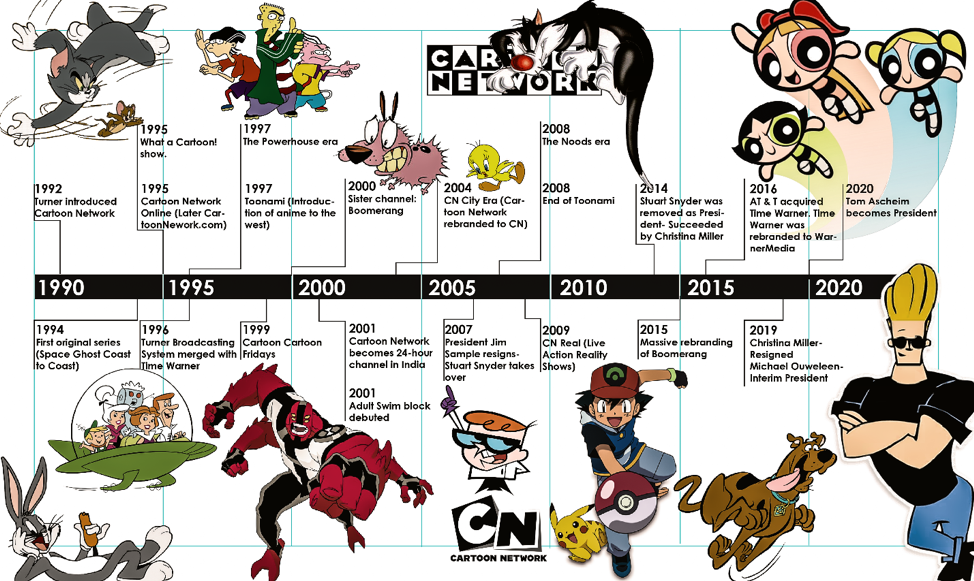
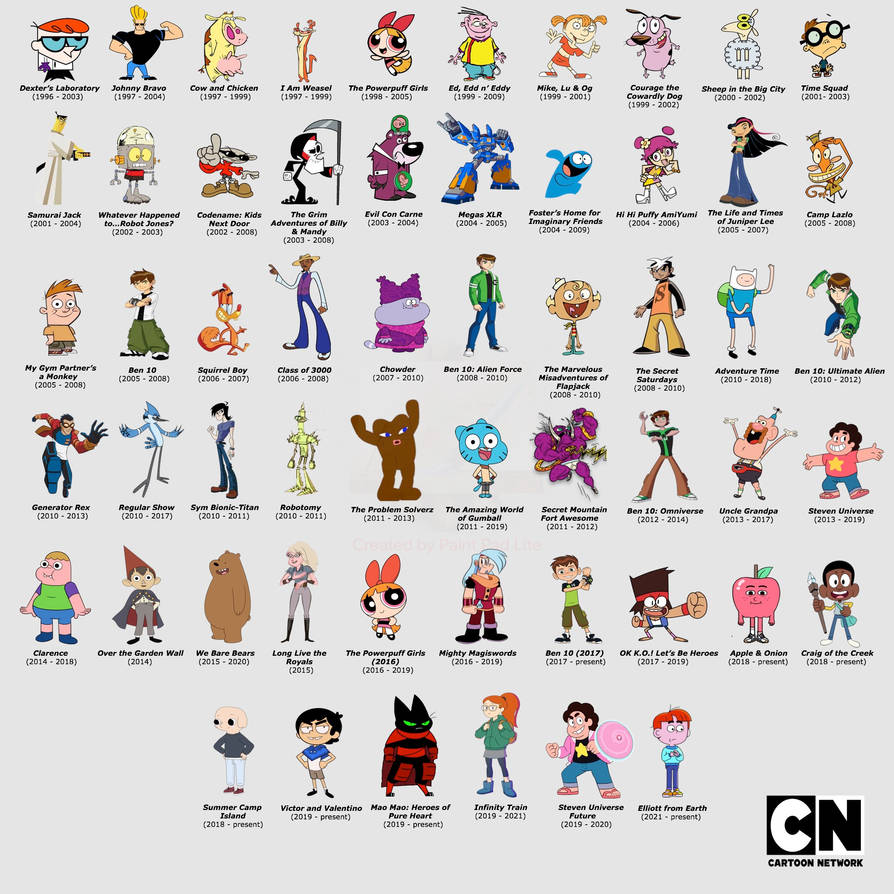
06-28-2023-1306 - Cartoon Network, Variety, Etc. (draft)

Cartoon Network by minecraftman1000 on DeviantArt


https://www.deviantart.com/minecraftman1000/art/Cartoon-Network-887439062

https://en.wikipedia.org/wiki/List_of_Cartoon_Network_Studios_productions

List of Cartoon Network Studios productions - Wikipedia

06-28-2023-1304 - draft (note, draft, etc.) (fictionary, etc.) (Draft)

zak: ben ten, teen titans (?), etc.. draft

nati: blues imaginary friends, ed edd eddy, dexters lab, courage the cowardly dog, tom jerry, flap jacke, etc..

extras: grims, johnny bravo, power puff girls, pokemon, tom jerry, mickey mouse, buggs bunny, flinstones, outerspace family, etc.. draft

Cartoon Network: An era before Social Network 

https://www.linkedin.com/pulse/cartoon-network-era-before-social-arnold-mathew

https://www.facebook.com/CartoonNetwork/photos/a.85358203371/10158702507233372/?type=3

No photo description available.

06-28-2023-1215 - DRAFT (USA NAC DOM, FICTIONARY, JOKE, ETC.)

 NOTE.

CATCH ME IF YOU CAN AGE 10-12

INCEPTION AGE 16-18

SALT 19-21

DRAFT

CASPER THE FRIENDLY GHOST

PUFF THE MAGIC DRAGON

DRAFT 

BLINKY

LAST UNICORN

BATMAN

DRAFT

DEXTERS LABORATORY

SCOOBY DOO

COURAGE THE COWARDLY DOG

YOUTUBE DR MONSTER

DRAFT

SAILOR MOON

DRAGON BALL Z

NARUTO

DRAFT


JOKE.

NATI YOU HAVE TO WATCH ALL THESE CARTOONS. DRAFT

I WATCH BATMAN, SAILOR MOON DRAGON BALL Z, ETC., AND YOU WATCH SPONGE BOB, ETC.. I WATCH CARTOON NETWORK AND YOU WATCH NICKALODEON { Nickelodeon}. DRAFT (NIKI TO NATI) (DRAFT) (SOME LIMITATIONS, EXTENDED CONSIDERATION, SORRIES, COURTESY, ETC.) (DRAFT) [JOKE. URSULA AND ARIEL, DISNEY. PRINCE ERIC. DRAFT] (DRAFT) (NOTE. ALMOST...MEAN. OR JOKE. TWO DICTATOR STRUCTURE AND ONE DRUG LORD, WITH A TIME ORDER AND DOUBLE GANGS SEPARATE AND INTERFACE POINTS. INDEPENDENT DISCRETE UNITS, GANGS, ETC.. COURTESY. VENUS LEGACY AND WORLD POWER, LEPERCHAUNATI AND SEPARATE INDEPENDENT CONNECTIONS/TIES/ETC., NON-ENMESHMENT, NON-MIXING, NO SHARE, ETC.. DRAFT. LITTLE SISTER CAUTION, AND THE BIG SISTER IMAGINARY POWERS (LIMITED, RETIRED BY 10 ; REFORMATS RETIRES BY 12 ; REFORMATS RETIRED BY 14 ; REFORMATS RETIRES BY 15, ETC.. TESTS OF CHARACTER. ACTOR CHARACTER SCRIPT. LIMITATIONS TERMS CONDITIONS. DISCRETION. NEVER MET CLAUSE, NO CORRECTIONS, NO CHANGE, COINCIDENTAL ENCOUNTER, TIME CONSIDERATION, LIMITATIONS, CONSIDERATIONS, RESTRICTIONS, RECTIFICATIONS, MAYBE NO CONSIDERATION, ETC.. DRAFT ; NO RECORD NO ACCOUNT NOT MEANT TO REF ANYONE ACTUAL LIVING DECEASED OR OTHERWISE, TIGHTS, TIGHT ROPE, ROPE CORD, TIGHT LINE, HIGH LINE, ETC.. DRAFT. PARODY AND DEPARTURE. DRAFT. THE FINE LINE. DRAFT ADULT DELUSIONS (LAST ROUND) V CHILD DRUG LORDS AND/OR GROWN CHILD DRUG LORDS. EVALUATION OF AMERICANS. NO FOREIGNS, IMMIGRANTS, VENUS, FOREIGN COUNTRY TO USA NAC DOM, RACES, ETC.. DISCRETION, CONTROLS, CONDITIONS, CONFOUNDS, CONSTRUCTS, CONSTRAINTS, CONFLICT OF INTEREST, LIMITATIONS, TERMS CONDITIONS, LIMIT, DELIMITER, DEMARCATION, LIMITATION, ETC.. EXPERIMENTAL DESIGN LEVELS OF ANALYSIS MATHEMATICA MATHEMATICS RESTRICTIONS TERMS CONDITIONS LIMITATIONS ZERO ZERO PARODY ZERO POINT EQUILIBRIUM STATISTICS NORMALIZATION RANDOM DISTRIBUTION SCATTER PLOT OUTLIER ANOMOLY SINGULARITY NORM AVERAGE STATISTICAL DEVIATION STANDARD DEVIATION THREE STANDARD DEVIATIONS FROM THE MEAN MEASURE CALIBRATION REFINEMENT ANOREXIA ALBINO LORD CHURCH FOREIGN DOMAIN IMPLICATIONS ETC.. DRAFT)) (DRAFT)

ADULT SELF DECEPTION IMPLICATIONS ALL SHE HAD HAS TO WRINKELD OLD 100% CAUCASIAN HALF AMPUTEE SKIN CANCER WRINKLY OLD DEFORMED LADY SHELL 100% CAUCASIAN. AMERICANS. DISEASE DEFORMITY. DRAFT

OBESITY RISK. DRAFT

SUB-RISK PLUMP, EATING, BLOWN ROUND, GETTING FATTER, OLD, AGING, ANTI-AGEING, OVER-EXPECTATION, DEMAND OF REWARD OVER EARNED, STOLEN EARNINGS, LOST EARNINGS, NO DIRECTION, MISUSE OF ONE DIRECTION, MULTIDIRECTION AND DECEPTION, POSSIBILITY PLOT AND DISGUISE, ASSAULT HARASSMENT AND ESCALATION REFORMATTING COMPOUNDING ETC., DISPLACEMENT ONTO THE VIC, BLAME THE VICTIM, CHASE, HUNT, PURSUIT, TRAP, AMBUSH, TRESSPASS, SPY, STALK, HOSTAGE, TRACES, IMAGINARY, PIECE IN THE WHOLE, PART, WHOLE, RESCUE, REBUILD, EUTHANASIA, UPKEEP, MAINTENANCE, NO HOSTAGER, CROSS-LINE DISTINCTION, RACES AND RACISM, SEGREGATION, DISCRIMINATION, APOLOGIES, RETREAT, ARMED FORCES, RACIAL HIERARCHY, DISPLACED OBJECTOR, RESCUES BY CHILDREN, CHILD WAR HEROES, LIMITATIONS, REBUILD AND TEMPORARY TISSUES, SURGICAL TOOLS AND IMPLANTS, RECTIFICATION AND LIMITATIONS, LIMIT OF POSSESSION, TECH PHARM ADV, MISSING IP/MEN/GROUPS/ETC., DELIMITER, DEMARCATION, FALSE DEMARCATION, VERIFICATIONS, IMAGING, REBUILD, SUPPLIES, SUPPLIERS, MATERIALS, CONTAMINATION, METHODS, TIME, MARKERS, TIME LINE, INTERIM, INTERIM HOSTAGERY AND TIME WASTING, OBSOLETIFICATION, COINCIDENCE OF MISUSE, NON TRAFFICKING, CODE STANDARD, STANDARD, CODE, LIMITATIONS OF TECH PHARM POSSESSION ADV ETC., SMALLER UNIT, UNIT, NON-MIGRATION, NON-RETAINER, NON-APPREHENSION, EUTHANASIA, IDENTIFIABLE V CONCEPTUAL OR ABSTRACTION, DELICATE OR CAREFUL ABSTRACTION OR CONSIDERATION, IMPORTANCE OF BASELINE BASEFRAME, NON-COINCISION BASELINE BASEFRAME, LIMITATIONS WHERE COINCISION AND RETAINER, LIMITATIONS OF USE, NON-MIGRATORY, DOUBLE BASE SECURITY, HOSTAGATION ATTEMPTS BY AMERICANS USA NAC DOM CAUCASIANS ETC., HOSTAGATION OF CHILDREN, WE THE FALLEN, GOOD PEOPLE, ACCIDENTS, LIMITATION OF KNOWLEDGE, LIMITATION OF TRUTH, RESPECT FOR PERSONS, HOSTAGE CHILD OR FAITH OR ASSAULT, NVHT NTSP, NVHT TO MISSING KIDS (INC. ADULTS, PERSONS, VAR, CHARACTER, ELEMENT, UNIT, ITEM, ETC.), STANDARD CODE REPEATER, REPEATER AND CYCLE CONCEPTS AND REQUIREMENT LIMITATIONS, NON GENERALIZATION, NOT DOCTRINE MANIFESTO PHILOSOPHY RELIGION ETC., NOT MEANT TO REFERENCE ANYONE ACTUAL LIVING DECEASED OR OTHERWISE, MISSING WORDS, FORGOTTEN DATA, PRIVATE DOMAIN, STOLEN SURGICAL TOOLS FROM CHILD SURGEONS, DEFORMED SHELL SWAPS ON SOME EQUITY CHILDREN (WITHOUT PROPER STRUCTURE OR ALTRUISM AND WITH GLOBAL DEMAND NOT EXTORTION BY FAMING FLAMING OR DEFAMING PARENTS OR (WITHOUT AND SENTENCE) WITHOUT REMEDIATION BY BEAUTY SURGERY PROPER AND SUFFICIENCY OR RELEASE OR ETC.. DRAFT), STUCK ADULTS AS CHILDREN OR CHILDREN AS ADULTS, INTERROGATION BY MENACES/LATINOS/BROWNS/ENEMIES/INFERIOR GENETICS/CONSUMERS/CLIENTS/HOSTAGES/ASSAILANTS/PATIENTS/EX-PATIENTS/EX-SUBJECTS/SUBJECTS/PSYCHOPATHS/MEN-PSYCHO-DEFORMED-ASSAILANTS/CHURCH/MIXED-BREED/RACES/ILLEGAL/ILLEGITIMATE/ILLICIT/ETC., DISPLACEMENT OF GUILT OR BLAME TO THE NEUTRAL/UNKNOWN/ETC., CONSTRUCT BIASING AT IMPARTIALITY BY ADULTS CAUCASIANS TEMP GROUPS ETC., PATHOLOGIZATION OF THE INNOCENT, PATHOLOGIZATION, NO CATEGORIZATION, DECATEGORIZATION, VAR, ETC..


HERO CHILDREN. GENIUSES. HERO ADULTS. DRAFT

DRAFT


ILLEGAL WORDS (GENIUS), ILLEGAL DOMAIN (ADULT IS BETTER OR ASSAIL OR MIND OR DEPOSE OR DISPOSE OR FIND SO LOW OR DEGENERATE OR DOCUMENT/SPY/PROFESSIONALIZE/SECURE-VAR/ETC. OR THEFT OR TRAFFICKING SLAVERY PEONAGE OR BETTER CRIME GETS TIME OR ROTARY CYCLE AND ERROR SHUNT OR ABUSE THE CLEMENT GOOD HUMANE (NOT GENIE) OR KNEEL FOR PSYCHIATRY FALSE PRISON OR HOSTAGERY DISGUISED AS GOVERNMENTAL INSTITUTION (EDUCATION JAIL ETC.) OR GIVE AWAY BODY PARTS KIDS FREE THINGS EMBRYOS EGGS OR STEAL FROM ANOTHER OR MISINTERPRET AND MISINFORM AND SAY ITS MISINFORMATION OR MISUNDERSTANDING AND AVOID AND BLAME HARD OR GO HARD BLAMING PSYCHO OR BE A PSYCHO AND BLAME HARD GO HARD OR ETC., FAIL THE SYSTEM AT HOSTAGE SITUATION UNDERGROUND OR UNKNOWN OR UNCERTAIN WITH SLAVES DISGUISING THEMSELVES AS FREE PEOPLE WITHOUT THEIR SLAVE HISTORY CONTRACT DOCUMENT RECORD, ESCAPING SLAVES TO USA NAC DOM, CORRUPTION POLITICAL SOCIAL GOVERNMENT PEOPLE ETC., CORRUPTION BY CAUCASIANS, ETC..) (DRAFT)

HUNT DOWN THE INJURED/INNOCENT/HONORABLE/EQUITY/SWORD/ETC., ETC.. DRAFT

STEAL THE ONE AND ONLY SEAT. DRAFT

MISAPPRECIATE STEAL THE ONE AND ONLY SEAT AND STEAL FIRST LINE WITH RETAINER. DRAFT

MISUSE OF CHEAT LIE STEAL AND BIG SPYER BIG LIAR. DRAFT

OVER LITERALIZE WITHOUT RETIREMENT, RELEASE, RETREAT, REMEDIATION OPTION, RESTITUTION OPTION, NO FURTHER, ETC.. DRAFT CASCADE OF CONSEQUENCES WITHOUT ASSISTANCE TO STOP FURTHER SUFFERING WITHOUT CHURCH EXTERNALIZATION AND INTERNALIZATION AND PERSONALIZATION AND SUB-CHURCHERY BY CAUCASIANS OR SECTS. SOME LIMITATIONS (E.G. SPECIAL MEN AND SECTS, GUILDS, GROUPS, TROOPS, COLONIES, ETC.). (DRAFT)

OVER-GENERALIZE OR APPLY TO EVERYONE NON-DISCRIMINATELY. DRAFT

INDISCRIMINATE HARM OF PEOPLE WITH INTENT TO INSTILL FEAR OR TERROR IN/OF THEM. DRAFT CONQUER THE TERROR WARS OR INABILITY TO ISOLATE, REFRAIN, EVADE, AVOID, IGNORE, ETC.. DRAFT

AMERICANS WITH SCHEMES TO HARM THE PEOPLE. THE THINGS THEY DID NOT KNOW, THE THINGS THEY WILL NEVER KNOW HAPPENED, THE THINGS THEY CANNOT REMEMBER/KNOW/ETC.. DRAFT

NOTE. THEY ARE UNAWARE THAT THEY ARE INTOXICATED WHILE THEY ARE INTOXICATED AND THEY CANNOT RECALL THE EVENTS THAT OCCURRED WHILE INTOXICATED ONCE UNINTOXICATED. (QUOTE) [RR]

NOTE. INVISIBLE PEOPLE, DARK SHADOWS, MONSTER UNDER THE BED, CLOSET SPIRITS, GHOSTS, LIGHT STREAMS, ALIVE ROCK, SENTIMENT, CONSCIOUSNESS, FIELD, MAGNETIC FIELD, DREAM, FUGUE, DAYDREAM, DELUGE, DAZED AND CONFUSED, HALLUCINATION PLAY, MIRROR FRIENDS, NON-PATHOLOGY COMPETENCE, CAPACITY, INTELLIGENCE, DISCRETION, INHIBITION, REFRAIN, PONDERANCE, THOUGHTFULNESS, COURTESY, LIVING SCENES, AMERICAN GIRL PLAYS, SCRIPT, STRICT INTERPRETATION OF SCRIPT AND ONLY THEATER (E.G. AMERICA, USA NAC DOM, STANDARD, GENERAL POPULACE, GENERAL, COMMONS, COMMON SENSE, FIRST APPRAISAL/PREMISE/NOTE/PRECEDENCE/PREFERENCE/POSITION/POSE/ETC., APPRECIATION, NON-COMMITTED/INVESTED/ETC. APPRECIATION/LIMITED/DISAPPEARING/DISSIPATING/DECAY/EXTINCTION/ETC., ETC..), LIVING PLAYS, IMAGINARY FRIENDS, IMAGINARY CHARACTERS, IMAGINARY SCENES (PRETEND PLAY PROP TOOL ETC.), PROPS, PROMPTS, PRIMES, ZEROS, FALSE REALITY PLAY, PLAY, LIMITATIONS, TERMS, CONDITIONS, APPRECIATIONS, DISCRETION, INFORMAL, CASUAL, NOT TRAINED, REQUIRES PROFESSIONAL TRAINING FOR DESIRED EFFECT OR INTENDED OR EXPECTED OR PROPER OR EFFECTIVE OR NEUTRAL OR ETC., INVITATION AND SHAPING OR TEACHING OF PLAY NOT TRAINING, CRITICAL DISTINCTIONS WITHELD, BIASATION OF CHILDREN AND ANALYTICS, TO SUPPOSE OR IMPORT THAT THEY MAY HAVE COMMITTED A CRIME WHEN IN FACT THEY HAVE NOT COMMITTED A CRIME, FALSE OBJECTIVE, FALSE OBJECTIVITY, OBJECT CONSERVATION, OBJECTIFICATION, DESENSITIZATION, SEPARATE LEVELS, SEPARATE CONSTRUCTS, SEPARATE VALUES, DISCRETE, INDEPENDENT, UNITS, FUNCTION, STRUCTURE, ENVIRONMENT, STRUCTURE, LIMITATIONS, IMPRINTING, ERASURES, DELIMITER, DEMARCATION, ETC.. DRAFT

TIME AND MALIGNMENT OF DEPRIVITY. DRAFT

NO TOBACCO, NO DIET COKE, FORCING THEIR CHILDREN TO EAT PASTA AND CHIKEN, FORCING THEIR CHILDREN TO SIT AT THE TABLE, SPYING ON CHILDREN, ASSAULTING CHILDREN, HOSTAGING CHILDRENS ARMS, MISUSE OF GROUNDING PREMISE, SECRET MALIGNATION WITH INFERIOR RACE SUBJECT GROUPS, MULTI-ERROR VAR AND COVER COINCIDENCE DISAPPEARING ADULTS CRIMES (E.G. AMERICANS AND THEIR DISAPPEARING CRIMES WITH CRIMINAL MOTIVE PLOT PLAN PREMEDITATION INTENT ETC.), THE FAILED FOUNDATION OF A PROPER TRADITIONAL OR GOOD CRIME (ERROR), MISLEADATION AND NOTES V I WAS MISLEAD V MISLEADING CLAIMS V ETC., NON-FITTED, FITTING AND CHARACTER APPROACH, ETC.. DRAFT

BACK IN THE OLDEN DAYS, ETC.. DRAFT

THE SYMBOLISM AND THE BIBI LIFE OR PITTY LIFE. DRAFT (THE GESTURE NOT THE WORD EMBRYO ; CONCEPTS ADVANCED TO AVOID EMBRYO V CHINI PEOPLE), ETC.. DRAFT

THE LEGEND AND THE LEGACY. DRAFT

PARENTS AS A GENERAL CATEGORY AND COMPLICATIONS OR PROBLEMS. OBSOLETE. DRAFT

TEACHING OF CHILDREN OBSOLETE CATEGORIES WITHOUT PROPER SUSTAINER OR STRUCTURE AND OVERFEED DEFORMITY ASSAULT PARASITE INFECTION POVERTY AND NO TOBACCO, DIET COKE, SURGICAL TOOLS, MATERIALS, ETC.. DRAFT (US GOVERNMENT, POLITICS, ETC.) (DRAFT)

STEPPARENT SECRET DILEMMA. DRAFT

STAYING WITH GRANDPA. DRAFT

CODE. DRAFT


DRAFT


06-28-2023-1040 - DRAFT (CANVA, NOTE, ETC.) (DRAFT)

Your paragraph text by Nikiya Anton Bettey

06-28-2023-0949 - DRAFT (CANVA, ART, NOTE, VARIETY, ETC.) (DRAFT)

Design by Nikiya Anton Bettey

06-28-2023-0941 - DRAFT (CANVA, NOTE, ART, ETC.) (DRAFT)

https://www.canva.com/design/DAFnHdz3j4M/fintrHz237QG218iZMZqPA/edit?utm_content=DAFnHdz3j4M&utm_campaign=designshare&utm_medium=link2&utm_source=sharebutton

https://www.latlong.net/place/bangor-me-usa-5453.html

https://latitude.to/articles-by-country/us/united-states/2529/bangor-maine


SURGERY DRAFT ORTHOGNATHIC FULL CRANIAL RECONSTRUCTION FULL RECONSTRUCTIVE FULL REBUILD REBUILD LIMB LENGTHENING SURGERY NECK LENGTHENING SURGERY MUSCLE REDUCTION LIPOSUCTION FULL BODY SKIN GRAFT FULL BODY SKIN REPLACEMENT FULL BODY LIFT ORGAN SUBSTITUTE, by Nikiya Anton Bettey

06-28-2023-0849 - DRAFT (USA NAC DOM)

USA NAC DOM 

DRAFT

SURGICAL PROCEDURES AND GAUGE CIRCUMSCRIPTION (DRAFT) IN NEED OF ADDRESSMENT (USA NAC DOM) (DRAFT) 

[ADDRESSMENT: [PROCEDURE, MATERIALS, SUPPLIES, SUPPLIERS, EQUIPMENT, INSTRUMENTS, METHODS, TECHNIQUE, STANDARD, COMPLIANCE, EXTENDED, VARIANT, DOMAIN, NOT AVAILABLE, AUXILIARY, ETC.] (METHODOLOGY IS SEPARATE) (DRAFT)

{OPTIONS NEED TO BE MADE AVAILABLE TO EACH AND EVERY PERSON AT UNITED STATES OF AMERICA, NORTH AMERICA, CONTINENT WEST, USA, ETC.. (NOTE. EDIT MAY BE REQUIRED, ETC.) ; ACCESS AND OPTIONS SHOULD BE MADE AVAILABLE TO EACH INDIVIDUAL PRESENT AT UNITED STATES OF AMERICA NORTH AMERICA CONTINENT WEST DOMESTIC. (NOTE. USA NAC DOM) (DRAFT)}

ORTHOGNATHIC

RHINOPLASTY

FULL BODY SKIN GRAFT DOMAIN (SKIN REPLACEMENT)

MUSCLE REDUCTION SURGERY (LIMBS, NECK, BACK, CHEST, PELVIS, ETC.) (DRAFT)

FAT REMOVAL SURGERY (LIPOSUCTION, ETC.) 

REFORMATION OPTIONS, TISSUE OPTIONS, EXTENDED OPTIONS, VARIANCE APPRECIATION, AUXILIARY DOMAIN (E.G. REFINEMENT), NOT AVAILABLE, LIMITATIONS, TERMS, CONDITIONS, RESTRICTED, ETC.. DRAFT REFERENCE TEXT, COORDINATES, MEASURE, LANGUAGE, BIOGRAPHY OF SCIENTIST (MEN ONLY), STANDARD, MODEL, PROTOTYPE, IDEAL, APPRECIATION, DEVIATION, STATISTICS, MATHEMATICS, CODE, ENVIRONMENT SPECIFICATIONS, FOUNDATION TEXT, REFERENCES, DATABASE, ETC.. DRAFT

LIPOSUCTION, ETC..

STORAGE (STORAGE FOR SHELL AND ORGANS, PROPER PREPARATIONS (REASONABLE), SALVAGE PROCEDURES/METHODS/SUPPORT/MEN/STAFF/ETC., SPECIAL CODE RESERVE, RETAINER, RESERVE, ETC..) (DRAFT)

LIMB LENGTHENING SURGERY

NECK LENGTHENING SURGERY

TORSO REDUCTION SURGERY (ESP. WIDTH DEPTH)

LUNG RESECTION/REDUCTION/TRANSPLANT/ETC. (INC. ANIMAL OR SMALL LUNG OPTIONS, SAFETY OR COMPASSION COURTESY CONSIDERATION, ETC. ; NOTE ON ANIMALS AND SPECIAL CONSIDERATIONS TO PREVENT PARASITE INFESTATION, BIOLOGICAL INFECTION, ETC.) (DRAFT)

ARTIFICIAL ORGAN AND ORGAN SUBSTITUTE INCLUDING OMISSION OPTIONS (UNNECESSARY ORGANS, APPENDAGES, VESTIGIALS (NOT LIMB CLASS SPECIFICATION, COMMON APPRECIATION, LIKE GALLBLADDER, UNCERTAIN PURPOSE TO CIVILIANS, ETC.),  ETC.. ; SUBSTITUTE LININGS SLIM PLATES PARTICLE ONE CELL ONE FIELD DISTAL ANCHOR COMPUTER CHIP POST LUNG QUARTER HEART ETC. ; SIMPLIFIED LUNG HIGH FUNCTIONING GOOD BURN OFF SOLS/GELS/FATS/PARASITES/BACTERIA/ETC. CYCLES GOOD CATABOLIC RATE NUCLEAR RATE DESSICATION ALTER-PROCESS CAPABLE (E.G. SILVER ARSENIC INSTEAD OF OXYGEN HYDROGEN)(E.G. NO PROTEIN OR FAT REQUIREMENT FOR FUNCTION)(E.G. NO SURPRISE LUNG ADDITIONS, AMOEBA, COLONY, BACTERIA COLONY, SPECIAL SQUAMEOUS CELL OR NOT SQUAMEOUS CELL, SQUARE CELL INSTEAD OF SQUAMEOUS CELL, DEEP FAT REQUIRED, MUST BE BROWN, AMERICAN EDUCATION SYSTEM MODEL LUNGS WITHOUT PROPER APPRECIATION, BUILD OFF MODEL ERRORS, INTEGRATION AND IMPLEMENTATION OF ERRORS, COMPENSATORY ERROR BACKFIRE, BACKFLUSH, ETC.)) (DRAFT)

HEAD RESHAPING SURGERY OR PROCEDURE (SKULL REPAIR, BACK CAP, HEAD ROUNDING, FULL CRANIAL RECONSTRUCTION, FULL CRANIAL RECONSTRUCTIVE SURGERY, ETC.) (DRAFT)

FULL CRANIAL RECONSTRUCTION (ADDING TOP SIDES BACK OF THE SKULL, ROUND HEAD SHAPE, ETC. ; USUALLY IN TANDEM WITH ORTHOGNATHIC SURGERY TO REMOVE THE JAW AND FULL FACIAL RECONSTRUCTIVE SURGERY OR REDUCE THE JAW SHAVE CHEEK BROW BONES REFIT/REFORM/SMOOTH FACE PLATE LOWER THE EYES INCREASE EYE SOCKET REPLACE EYES WITH LARGER EYES INCREASE DISTANCE BETWEEN EYES, REDUCE NOSE OMIT NOSE AND NASAL BREATHING, REDUCE MOUTH BREATHING, RESHUNT BREATH OUTLET, RESTRUCTURE TO ACCOMMODATE RESPIRATION WITHOUT NOSE/MOUTH/CHEST-HEAVE/ETC., REPAIR SPACE BETWEEN NOSE AND MOUTH (E.G. UPPER LIP, OR WHERE UPPER LIP WAS BEFORE OR REGION MAXILLA OR SPACE SMOOTHING, ETC.), ROUND LENGTHEN (MAYBE WIDEN) FOREHEAD, LIGHTEN THE HEAD, LENGTHEN AND THIN THE NECK, REMOVE FACIAL MUSCLES FILLERS FATS ETC., RELAY HEAD SKIN (E.G. FULL HEAD, FACE AND HEAD, ETC. (SOME EXTENDED)) OR RELAY THE FACE SKIN, ETC.. (DRAFT)


PROCEDURES AVAILABLE TO GENERAL POPULACE 2000S (LATE)

ORTHOGNATHIC (ASIAN, ETC.) (DRAFT) [DOMAIN OWNERS OR HEROES]

FULL CRANIAL RECONSTRUCTIVE SURGERY (MIDDLE EAST, ETC.) (DRAFT) [DOMAIN OWNERS OR HEROES]

LIMB LENGTHENING SURGERY (ASIANS, ETC.) (DRAFT) [DOMAIN OWNERS OR HEROES]

LIPOSUCTION (CAUCASIANS, ETC.) (DRAFT) [DOMAIN OWNERS OR HEROES]

(MUSCLE REDUCTION) (DRAFT) (ASIA, MIDDLE EAST, ETC.) (DRAFT) [DOMAIN OWNERS OR HEROES]

FULL BODY SKIN GRAFT (MIDDLE EAST, ETC.) (DRAFT)

FULL BODY SKIN LIFT (ASIANS, MIDDLE EAST, ETC.) (DRAFT)


TRANSPLANT DOMAIN

ARTIFICIAL ORGANS (STORAGE FOR SHELL ORGANS) (DRAFT)


UNSECURED OR TRADITIONAL OR FOREIGN OR SPECIAL CLASS OR RACE OPTIONS OR ETC. DOMAIN

REBODIMENT

BUILD SHELL REBODIMENT

BUILD ORGAN

BUILD REPRODUCTIVE ORGAN SYSTEM COMPONENT

ALTERNATE METHODS

CLONE BRAIN, IMPLANT SUBSTITUTE FOR BRAIN (NO BRAIN FAT PROTEIN MICRO GYRUS TISSUE PINK HARD SOLID SOL GEL ETC. ; EMPTY CAVITY OR SPECIAL FIELDING NO DEPENDENCY ON SOLID ORGAN BASE FOR OPERATION ETC. (NO DEPENDENCY ON TRADITION TUMOR OR HUMAN BRAIN MASS OR MATTER ETC. IN WILD TYPE OR CIVILIAN FORMS ETC.); ETC.), ARTIFICIAL BRAIN STEM, ARTIFICIAL SPINE (ROPE CORD SPINE, NODE SPINE, FIELD RESIDUE SPINE DISTAL POWER ETC., UNKNOWN SPINE, ALTERNATE TYPE SPINE, SPINE SUBSTITUTES, ETC.. DRAFT


06-27-2023-1947 - draft (note, fictionary, etc.)

note. 

Pre-culture appropriation...

damaged starter use, primitive or rudimentary procedure (undeveloped underdeveloped, stunted, etc.), term. radiocarbon dating and human kind, alternate methods evaluation appraisal assessment review specifications comparison consideration etc.. draft

biological weapons units, and damaged compensation. limitations terms conditions. compensation for wild type, no category, no identifier, no concordance, no correspondence, natural, in nature no humans, in space no humans, one human contact, in nature one human zone, in nature few humans zone, in nature wild feral rural forest uncolonized undeveloped undocumented unknown restricted lands/etc., in natural animals only zone, developed colonized fecular variety human regions (esp. colonies, towns, civilization, civilians, medical, surgery, slaves, hostages, etc.), extinction regions, obsolete regions, missing regions, unknown regions, misclassified regions (e.g. animals only area, that may or may not have humans present near premises/area/region/domain/etc., etc.)(e.g. special consideration regions such as animal only regions, policy consideration, generally animals only, disclaimer, restricted area, protected area, ideal standard, etc.), etc.. draft 

Trash zones, america-usa grade usa nac dom zones, misclassified zones (e.g. xlif viv, builders, enslaved, general assistance, global ss, shell swaps, rebodiment workers, troops, groups, prisoners, etc.), misweighted and misclassified zones (term rotary piling etc.), usa nac dom zones, small town, one room, one house, one mansion, one manor, one castle, castle region, scale consideration, practices consideration, body count, etc.), usa nac dom zones, etc.. draft

biological weaponists and weapons collection consideration. draft (no impository, etc.) (draft)

human homo sapien mammal hybrid variety biological fecular variety white nigger mammal shells biohazard repositories demagnatized carcas carion meaty putty fat muscular non-uniform cell tissue variety pussing bones fattening skin slough rot inflammation pitting acne cyst ulceration gangars civilians human biological reactor system inefficacious ineffective dysfunctional rudimentary baseline (human gauge range) deformans baseframe (human gauge range) preformans enfironment environment oil sol gas nuclear elects dissip field gas var var medium generator alt alternate default automatic sequlae waste trace field implosion moment plane explosion shock sound wave wrapping gas plastic coatery seepage browned wax coal leather fur base-recalibration rate decay anabolic clugging stocking overload piling var metabolite bypath byproduct error catabolic compromise/depression chafing ulcer nuclear downgrade force rebound sonic var turbulence viral shedding dissipation retainer containment expansion phage dna habitation plasmid sub-component or component incubating subjecta subjects patery patient chain lock method signal origin life organism organ generator nism accretion disk developer core generator or pressure gradient disparity jet stream channels vortex sheet shear plane vertical pressure variation inversion of order of events rotary variegationing (spectrumization) differentiation decay explosion metaphor equatorialization equlibrialization equalization normalization statisticalization standardization default calibration refinement rate variance variation variety hybridization automatic semi-automatic default one dimension, dimensional multiplicity contact explosions implosive shocks anti-gravity events black hole vortex tunnels shadow tunnels dust low visibility rising clear lighting striated dusted merged low sky invisible sky various phenomena light streamers special lifeforms special species extinct unknown missing species uncertainty transition mediums time and conservation contained heavy air smog smoke air smoke living trees living air shadow trees special life various forms of life hard and slipping units bottom outs exhaustions scale var unreliation relic artifact etc.. draft

draft

(limitations, terms, conditions, etc.) (draft)


06-27-2023-1904 - In response to controversies over cultural appropriation and the use of an indigenous term, Filipino... (draft) (all persons fictitious disclaimer) (draft)

In response to controversies over cultural appropriation and the use of an indigenous term, Filipino television network ABS-CBN used a special disclaimer in the 2018 fantaserye Bagani, maintaining that the series takes place in an alternate fantasy universe inspired by, but unrelated to, pre-colonial Philippines and is in no way intended to trivialize or misrepresent tribal groups: "Ang kuwentong inyong mapapanood ay kathang-isip lamang at kumuha ng inspirasyon mula sa iba’t ibang alamat at mitolohiyang Pilipino. Ito’y hindi tumutukoy o kumakatawan sa kahit anong Indigenous People sa Pilipinas." ("The story you are about to watch is a work of fiction and merely takes inspiration from various Philippine legends and mythologies. It does not pertain to nor does it represent any Indigenous People in the Philippines.")[9][10][11] 

https://en.wikipedia.org/wiki/All_persons_fictitious_disclaimer

06-27-2023-1804 - 4.04.4.3.3(i) Sensitivity and specificity, chemometrics, prob, error, zero, empty, cell, indirect, measure, reason, decision, critical think, logic fallacy, discretion v accept, accept as weak indoctrinary, misleading educatinary, hypothetical extended (alternate use of hypothet, off label use prescriptions analogy, etc.), use as intended, direction decision conundrum, confounds, disclaimer test, tests, trial error, observer effect, heuristics, priming, prompting, personalization, idea of reference, perspective, perception time, error, time var, videography, no central ver, confounds, dependencies, structure, unknown, -inf, approachment, zeroity, zero cult pert, zero cult, zero, var zer, concept of limit approachment of limit concepts, variable uncertainty, one point analytics, one dimension, word, observation, objective, image forming, image testing, imaging, no measure, no truth, no ver, grand rounds, environment, term, belief, know, position, valid, information, credit, alt error, alt hypo, error, brok rule, human error, inter error, scaled, no cent lim, order of events, etc. (draft)

https://www.frontiersin.org/articles/10.3389/fnhum.2017.00390/full

Null Hypothesis


A null hypothesis is a statistical hypothesis that is tested for possible rejection under the assumption that it is true (usually that observations are the result of chance). The concept was introduced by R. A. Fisher.

The hypothesis contrary to the null hypothesis, usually that the observations are the result of a real effect, is known as the alternative hypothesis.

 
https://mathworld.wolfram.com/NullHypothesis.html
https://www.ncbi.nlm.nih.gov/pmc/articles/PMC2996198/
 
https://www.scalestatistics.com/null-hypothesis.html
 

Null Hypothesis (H0)

A rejection of the null hypothesis H0 would then discredit the claim of the manufacturer.

From: Introductory Statistics (Fourth Edition), 2017

https://www.sciencedirect.com/topics/mathematics/null-hypothesis-h0

Truth, Possibility and Probability

In North-Holland Mathematics Studies, 1991

https://www.sciencedirect.com/topics/mathematics/null-hypothesis-h0

Linear Regression Models

Milan Meloun, Jiří Militký, in Statistical Data Analysis, 2011

Problem 6.12 Simultaneous test of a composite hypothesis for a Lambert-Beer law model

For the data from Problem 6.10, test the composite null hypothesis H0: β2 = 0, β1 = 0.148 against HA: β2 ≠ 0, β1 ≠ 0.148. The false approach would be two separate tests of two null hypotheses, H0: β2 = 0 and H0: β1 = 0.148.

Solution: On substitution into Eq. (6.48), we obtain

T2=1.461×10400.00398=0.037T1=0.14590.1480.000908=2.314

Because T1, and T2 are less than the quantile of the Student t-distribution, t0.975(4) = 2.7764, both tests lead to a conclusion that H0: β2 = 0, β1 = 0.148 should be accepted. This conclusion is, however, false.

The more rigorous approach uses a simultaneous test of the composite hypothesis H0: β2 = 0 and β1 = 0.148.

The procedure starts with a calculation of RSC = 5.12 × 10 − 5 for estimates b1 = 0.1459 and b2 = 1.461 × 10− 4. Then, RSC1 = 5.3476 × 10− 4 for parameters β2,0 = 0 and β1,0 = 0.148 is calculated. From Eq. (6.50), the test criterion F1, is

F1=5.347×1045.12×105×45.12×105×2=18.89

Because the quantile of Fisher-Snedecor F-distribution is F0.95(2, 4) = 6.944, the null hypothesis H0: β2 = 0 and β1 = 0.148 cannot be accepted. The result of this F-test is not in agreement with conclusion of the previous t-tests. Figure 6.16 shows the 95% confidence ellipse of parameters β1 and β2, and the point β1,0 = 0.148 and β2,0 = 0 marked by a cross. This point lies outside the 95% confidence interval of the two parameters.

Figure 6.16. The 95% confidence interval for the parameters β1 and β2. The point β1 = 0, β2 = 0.148 is marked by a cross.

Conclusion: It may be concluded that a simultaneous test of the compositehypothesis cannot be replaced by tests of two separate hypotheses. Thus, testingof individual parameters in a vector β0 can lead to quite false conclusions.

Hypothesis Testing

Andrew F. Siegel, in Practical Business Statistics (Seventh Edition), 2016

Results, Decisions, and p-Values

There are two possible outcomes of a hypothesis test: either “accept the null hypothesis” or “reject the null hypothesis, accept the research hypothesis, and declare significance.” The result is defined to be statistically significant whenever you accept the research hypothesis because you have eliminated the null hypothesis as a reasonable possibility. By convention, the two possible outcomes are described as follows:

Results of a Hypothesis Test

Either:Accept the null hypothesis, H0, as a reasonable possibility.A weak conclusion; not a significant result.
Or:Reject the null hypothesis, H0, and accept the research hypothesis, H1A strong conclusion; a significant result.

Note that we never speak of rejecting the research hypothesis. The reason has to do with the favored status of the null hypothesis as default. Accepting the null hypothesis merely implies that you do not have enough evidence to decide against it. When we decide to “accept” a null hypothesis, H0, we should not necessarily believe that it is true, and should recognize that the research hypothesis H1 might well actually be true, but because the null hypothesis might be true (and has favored status) we will accept the null hypothesis. While accepting the null hypothesis as a reasonably possible scenario that could have generated the data, we nonetheless recognize that there are many other such believable scenarios close to the null hypothesis that also might have generated the data. For example, when we accept the null hypothesis that claims the population mean is $2,000, we have not usually ruled out the possibility that this mean is $2,001 or $1,999. For this reason, some statisticians prefer to say that we “fail to reject” the null hypothesis rather than simply say that we “accept” it.

It may help you to think of the hypotheses in terms of a criminal legal case. The null hypothesis is “innocent,” and the research hypothesis is “guilty.” Since our legal system is based on the principle of “innocent until proven guilty,” this assignment of hypotheses makes sense. Accepting the null hypothesis of innocence says that there was not enough evidence to convict; it does not prove that the person is truly innocent. On the other hand, rejecting the null hypothesis and accepting the research hypothesis of guilt says that there is enough evidence to rule out innocence as a possibility and to convincingly establish guilt. We do not have to rule out guilt in order to find someone innocent, but we do have to rule out innocence in order to find someone guilty.

While there is a vast variety of hypothesis tests covered here and in later chapters, depending on the type of data and the chosen model, and each test has its own particular detailed calculations (and its own important intuition) there is a useful, unifying fact: Every hypothesis test can produce a p-value that is interpreted in the same way:

Using the p-Value to Perform a Hypothesis Test

If p > 0.05:Accept the null hypothesis, H0, as a reasonable possibility.
If p < 0.05:Reject the null hypothesis, H0, and accept the research hypothesis, H1

The p-value tells you how surprised you would be to learn that the null hypothesis had produced the data, with smaller p-values indicating more surprise and leading to rejection of H0 when p is less than the conventional 5% threshold. The p-value is computed (by statistical software) while assuming the null hypothesis is true, and tells the probability of observing your data (or data even farther from the null hypothesis). By convention, if the null hypothesis produces data like yours less than 5% of the time, this low probability is taken as evidence against the null hypothesis and leads to its rejection.2

Volume 4

M. Forina, ... P. Oliveri, in Comprehensive Chemometrics, 2009

4.04.4.3.3(i) Sensitivity and specificity

https://www.sciencedirect.com/topics/mathematics/null-hypothesis-h0

Empty CellNull hypothesis H0 TRUENull hypothesis H0 FALSE
Statistical decision: Reject H0Type I errorCorrect II decision
Statistical decision: Do not reject H0Correct I decisionType II error

https://www.sciencedirect.com/topics/mathematics/null-hypothesis-h0


Tuesday, June 27, 2023

06-27-2023-1757 - Null Hypothesis (draft) (basic definitions, etc.) (draft)

Basic definitions

The null hypothesis and the alternative hypothesis are types of conjectures used in statistical tests, which are formal methods of reaching conclusions or making decisions on the basis of data. The hypotheses are conjectures about a statistical model of the population, which are based on a sample of the population. The tests are core elements of statistical inference, heavily used in the interpretation of scientific experimental data, to separate scientific claims from statistical noise.

"The statement being tested in a test of statistical significance is called the null hypothesis. The test of significance is designed to assess the strength of the evidence against the null hypothesis. Usually, the null hypothesis is a statement of 'no effect' or 'no difference'."[2] It is often symbolized as H0.

The statement that is being tested against the null hypothesis is the alternative hypothesis.[2] Symbols include H1 and Ha.

Statistical significance test: "Very roughly, the procedure for deciding goes like this: Take a random sample from the population. If the sample data are consistent with the null hypothesis, then do not reject the null hypothesis; if the sample data are inconsistent with the null hypothesis, then reject the null hypothesis and conclude that the alternative hypothesis is true."[3]

The following adds context and nuance to the basic definitions.

Given the test scores of two random samples, one of men and one of women, does one group differ from the other? A possible null hypothesis is that the mean male score is the same as the mean female score:

H0: μ1 = μ2

where

H0 = the null hypothesis,
μ1 = the mean of population 1, and
μ2 = the mean of population 2.

A stronger null hypothesis is that the two samples are drawn from the same population, such that the variances and shapes of the distributions are also equal. 

https://en.wikipedia.org/wiki/Null_hypothesis

In scientific research, the null hypothesis (often denoted H0)[1] is the claim that no relationship exists between two sets of data or variables being analyzed. The null hypothesis is that any experimentally observed difference is due to chance alone, and an underlying causative relationship does not exist, hence the term "null". In addition to the null hypothesis, an alternative hypothesis is also developed, which claims that a relationship does exist between two variables.

Basic definitions

The null hypothesis and the alternative hypothesis are types of conjectures used in statistical tests, which are formal methods of reaching conclusions or making decisions on the basis of data. The hypotheses are conjectures about a statistical model of the population, which are based on a sample of the population. The tests are core elements of statistical inference, heavily used in the interpretation of scientific experimental data, to separate scientific claims from statistical noise.

"The statement being tested in a test of statistical significance is called the null hypothesis. The test of significance is designed to assess the strength of the evidence against the null hypothesis. Usually, the null hypothesis is a statement of 'no effect' or 'no difference'."[2] It is often symbolized as H0.

The statement that is being tested against the null hypothesis is the alternative hypothesis.[2] Symbols include H1 and Ha.

Statistical significance test: "Very roughly, the procedure for deciding goes like this: Take a random sample from the population. If the sample data are consistent with the null hypothesis, then do not reject the null hypothesis; if the sample data are inconsistent with the null hypothesis, then reject the null hypothesis and conclude that the alternative hypothesis is true."[3]

The following adds context and nuance to the basic definitions.

Given the test scores of two random samples, one of men and one of women, does one group differ from the other? A possible null hypothesis is that the mean male score is the same as the mean female score:

H0: μ1 = μ2

where

H0 = the null hypothesis,
μ1 = the mean of population 1, and
μ2 = the mean of population 2.

A stronger null hypothesis is that the two samples are drawn from the same population, such that the variances and shapes of the distributions are also equal.

Terminology

Simple hypothesis
Any hypothesis which specifies the population distribution completely. For such a hypothesis the sampling distribution of any statistic is a function of the sample size alone.
Composite hypothesis
Any hypothesis which does not specify the population distribution completely.[4] Example: A hypothesis specifying a normal distribution with a specified mean and an unspecified variance.

The simple/composite distinction was made by Neyman and Pearson.[5]

Exact hypothesis
Any hypothesis that specifies an exact parameter value.[6] Example: μ = 100. Synonym: point hypothesis.
Inexact hypothesis
Those specifying a parameter range or interval. Examples: μ ≤ 100; 95 ≤ μ ≤ 105.

Fisher required an exact null hypothesis for testing (see the quotations below).

A one-tailed hypothesis (tested using a one-sided test)[2] is an inexact hypothesis in which the value of a parameter is specified as being either:

  • above or equal to a certain value, or
  • below or equal to a certain value.

A one-tailed hypothesis is said to have directionality.

Fisher's original (lady tasting tea) example was a one-tailed test. The null hypothesis was asymmetric. The probability of guessing all cups correctly was the same as guessing all cups incorrectly, but Fisher noted that only guessing correctly was compatible with the lady's claim.

Technical description

The null hypothesis is a default hypothesis that a quantity to be measured is zero (null). Typically, the quantity to be measured is the difference between two situations. For instance, trying to determine if there is a positive proof that an effect has occurred or that samples derive from different batches.[7][8]

The null hypothesis states that a quantity (of interest) is larger or equal to zero and smaller or equal to zero. If either requirement can be positively overturned, the null hypothesis is "excluded from the realm of possibilities".

The null hypothesis is generally assumed to remain possibly true. Multiple analyses can be performed to show how the hypothesis should either be rejected or excluded e.g. having a high confidence level, thus demonstrating a statistically significant difference. This is demonstrated by showing that zero is outside of the specified confidence interval of the measurement on either side, typically within the real numbers.[8] Failure to exclude the null hypothesis (with any confidence) does not logically confirm or support the (unprovable) null hypothesis. (When it is proven that something is e.g. bigger than x, it does not necessarily imply it is plausible that it is smaller or equal than x; it may instead be a poor quality measurement with low accuracy. Confirming the null hypothesis two-sided would amount to positively proving it is bigger or equal than 0 and to positively proving it is smaller or equal than 0; this is something for which infinite accuracy is needed as well as exactly zero effect, neither of which normally are realistic. Also measurements will never indicate a non-zero probability of exactly zero difference.) So failure of an exclusion of a null hypothesis amounts to a "don't know" at the specified confidence level; it does not immediately imply null somehow, as the data may already show a (less strong) indication for a non-null. The used confidence level does absolutely certainly not correspond to the likelihood of null at failing to exclude; in fact in this case a high used confidence level expands the still plausible range.

A non-null hypothesis can have the following meanings, depending on the author a) a value other than zero is used, b) some margin other than zero is used and c) the "alternative" hypothesis.[9][10]

Testing (excluding or failing to exclude) the null hypothesis provides evidence that there are (or are not) statistically sufficient grounds to believe there is a relationship between two phenomena (e.g., that a potential treatment has a non-zero effect, either way). Testing the null hypothesis is a central task in statistical hypothesis testing in the modern practice of science. There are precise criteria for excluding or not excluding a null hypothesis at a certain confidence level. The confidence level should indicate the likelihood that much more and better data would still be able to exclude the null hypothesis on the same side.[8]

The concept of a null hypothesis is used differently in two approaches to statistical inference. In the significance testing approach of Ronald Fisher, a null hypothesis is rejected if the observed data are significantly unlikely to have occurred if the null hypothesis were true. In this case, the null hypothesis is rejected and an alternative hypothesis is accepted in its place. If the data are consistent with the null hypothesis statistically possibly true, then the null hypothesis is not rejected. In neither case is the null hypothesis or its alternative proven; with better or more data, the null may still be rejected. This is analogous to the legal principle of presumption of innocence, in which a suspect or defendant is assumed to be innocent (null is not rejected) until proven guilty (null is rejected) beyond a reasonable doubt (to a statistically significant degree).[8]

In the hypothesis testing approach of Jerzy Neyman and Egon Pearson, a null hypothesis is contrasted with an alternative hypothesis, and the two hypotheses are distinguished on the basis of data, with certain error rates. It is used in formulating answers in research.

Statistical inference can be done without a null hypothesis, by specifying a statistical model corresponding to each candidate hypothesis, and by using model selection techniques to choose the most appropriate model.[11] (The most common selection techniques are based on either Akaike information criterion or Bayes factor).

Principle

Hypothesis testing requires constructing a statistical model of what the data would look like if chance or random processes alone were responsible for the results. The hypothesis that chance alone is responsible for the results is called the null hypothesis. The model of the result of the random process is called the distribution under the null hypothesis. The obtained results are compared with the distribution under the null hypothesis, and the likelihood of finding the obtained results is thereby determined.[12]

Hypothesis testing works by collecting data and measuring how likely the particular set of data is (assuming the null hypothesis is true), when the study is on a randomly selected representative sample. The null hypothesis assumes no relationship between variables in the population from which the sample is selected.[13]

If the data-set of a randomly selected representative sample is very unlikely relative to the null hypothesis (defined as being part of a class of sets of data that only rarely will be observed), the experimenter rejects the null hypothesis, concluding it (probably) is false. This class of data-sets is usually specified via a test statistic, which is designed to measure the extent of apparent departure from the null hypothesis. The procedure works by assessing whether the observed departure, measured by the test statistic, is larger than a value defined, so that the probability of occurrence of a more extreme value is small under the null hypothesis (usually in less than either 5% or 1% of similar data-sets in which the null hypothesis does hold).

If the data do not contradict the null hypothesis, then only a weak conclusion can be made: namely, that the observed data set provides insufficient evidence against the null hypothesis. In this case, because the null hypothesis could be true or false, in some contexts this is interpreted as meaning that the data give insufficient evidence to make any conclusion, while in other contexts, it is interpreted as meaning that there is not sufficient evidence to support changing from a currently useful regime to a different one. Nevertheless, if at this point the effect appears likely and/or large enough, there may be an incentive to further investigate, such as running a bigger sample.

For instance, a certain drug may reduce the risk of having a heart attack. Possible null hypotheses are "this drug does not reduce the risk of having a heart attack" or "this drug has no effect on the risk of having a heart attack". The test of the hypothesis consists of administering the drug to half of the people in a study group as a controlled experiment. If the data show a statistically significant change in the people receiving the drug, the null hypothesis is rejected.

Goals of null hypothesis tests

There are many types of significance tests for one, two or more samples, for means, variances and proportions, paired or unpaired data, for different distributions, for large and small samples; all have null hypotheses. There are also at least four goals of null hypotheses for significance tests:[14]

  • Technical null hypotheses are used to verify statistical assumptions. For example, the residuals between the data and a statistical model cannot be distinguished from random noise. If true, there is no justification for complicating the model.
  • Scientific null assumptions are used to directly advance a theory. For example, the angular momentum of the universe is zero. If not true, the theory of the early universe may need revision.
  • Null hypotheses of homogeneity are used to verify that multiple experiments are producing consistent results. For example, the effect of a medication on the elderly is consistent with that of the general adult population. If true, this strengthens the general effectiveness conclusion and simplifies recommendations for use.
  • Null hypotheses that assert the equality of effect of two or more alternative treatments, for example, a drug and a placebo, are used to reduce scientific claims based on statistical noise. This is the most popular null hypothesis; It is so popular that many statements about significant testing assume such null hypotheses.

Rejection of the null hypothesis is not necessarily the real goal of a significance tester. An adequate statistical model may be associated with a failure to reject the null; the model is adjusted until the null is not rejected. The numerous uses of significance testing were well known to Fisher who discussed many in his book written a decade before defining the null hypothesis.[15]

A statistical significance test shares much mathematics with a confidence interval. They are mutually illuminating. A result is often significant when there is confidence in the sign of a relationship (the interval does not include 0). Whenever the sign of a relationship is important, statistical significance is a worthy goal. This also reveals weaknesses of significance testing: A result can be significant without a good estimate of the strength of a relationship; significance can be a modest goal. A weak relationship can also achieve significance with enough data. Reporting both significance and confidence intervals is commonly recommended.

The varied uses of significance tests reduce the number of generalizations that can be made about all applications.

Choice of the null hypothesis

The choice of the null hypothesis is associated with sparse and inconsistent advice. Fisher mentioned few constraints on the choice and stated that many null hypotheses should be considered and that many tests are possible for each. The variety of applications and the diversity of goals suggests that the choice can be complicated. In many applications the formulation of the test is traditional. A familiarity with the range of tests available may suggest a particular null hypothesis and test. Formulating the null hypothesis is not automated (though the calculations of significance testing usually are). Sir David Cox said, "How [the] translation from subject-matter problem to statistical model is done is often the most critical part of an analysis".[16]

A statistical significance test is intended to test a hypothesis. If the hypothesis summarizes a set of data, there is no value in testing the hypothesis on that set of data. Example: If a study of last year's weather reports indicates that rain in a region falls primarily on weekends, it is only valid to test that null hypothesis on weather reports from any other year. Testing hypotheses suggested by the data is circular reasoning that proves nothing; It is a special limitation on the choice of the null hypothesis.

A routine procedure is as follows: Start from the scientific hypothesis. Translate this to a statistical alternative hypothesis and proceed: "Because Ha expresses the effect that we wish to find evidence for, we often begin with Ha and then set up H0 as the statement that the hoped-for effect is not present."[2] This advice is reversed for modeling applications where we hope not to find evidence against the null.

A complex case example is as follows:[17] The gold standard in clinical research is the randomized placebo-controlled double-blind clinical trial. But testing a new drug against a (medically ineffective) placebo may be unethical for a serious illness. Testing a new drug against an older medically effective drug raises fundamental philosophical issues regarding the goal of the test and the motivation of the experimenters. The standard "no difference" null hypothesis may reward the pharmaceutical company for gathering inadequate data. "Difference" is a better null hypothesis in this case, but statistical significance is not an adequate criterion for reaching a nuanced conclusion which requires a good numeric estimate of the drug's effectiveness. A "minor" or "simple" proposed change in the null hypothesis ((new vs old) rather than (new vs placebo)) can have a dramatic effect on the utility of a test for complex non-statistical reasons.

Directionality

The choice of null hypothesis (H0) and consideration of directionality (see "one-tailed test") is critical.

Tailedness of the null-hypothesis test

Consider the question of whether a tossed coin is fair (i.e. that on average it lands heads up 50% of the time) and an experiment where you toss the coin 5 times. A possible result of the experiment that we consider here is 5 heads. Let outcomes be considered unlikely with respect to an assumed distribution if their probability is lower than a significance threshold of 0.05.

A potential null hypothesis implying a one-tail test is "this coin is not biased toward heads". Beware that, in this context, the word "tail" takes two meanings: either as outcome of a single toss, or as region of extremal values in a probability distribution.

Indeed, with a fair coin the probability of this experiment outcome is 1/25 = 0.031, which would be even lower if the coin were biased in favour of tails. Therefore, the observations are not likely enough for the null hypothesis to hold, and the test refutes it. Since the coin is ostensibly neither fair nor biased toward tails, the conclusion of the experiment is that the coin is biased towards heads.

Alternatively, a null hypothesis implying a two-tailed test is "this coin is fair". This one null hypothesis could be examined by looking out for either too many tails or too many heads in the experiments. The outcomes that would tend to refuse this null hypothesis are those with a large number of heads or a large number of tails, and our experiment with 5 heads would seem to belong to this class.

However, the probability of 5 tosses of the same kind, irrespective of whether these are head or tails, is twice as much as that of the 5-head occurrence singly considered. Hence, under this two-tailed null hypothesis, the observation receives a probability value of 0.063. Hence again, with the same significance threshold used for the one-tailed test (0.05), the same outcome is not statistically significant. Therefore, the two-tailed null hypothesis will be preserved in this case, not supporting the conclusion reached with the single-tailed null hypothesis, that the coin is biased towards heads.

This example illustrates that the conclusion reached from a statistical test may depend on the precise formulation of the null and alternative hypotheses.

Discussion

Fisher said, "the null hypothesis must be exact, that is free of vagueness and ambiguity, because it must supply the basis of the 'problem of distribution,' of which the test of significance is the solution", implying a more restrictive domain for H0.[18] According to this view, the null hypothesis must be numerically exact—it must state that a particular quantity or difference is equal to a particular number. In classical science, it is most typically the statement that there is no effect of a particular treatment; in observations, it is typically that there is no difference between the value of a particular measured variable and that of a prediction.

Most statisticians believe that it is valid to state direction as a part of null hypothesis, or as part of a null hypothesis/alternative hypothesis pair.[19] However, the results are not a full description of all the results of an experiment, merely a single result tailored to one particular purpose. For example, consider an H0 that claims the population mean for a new treatment is an improvement on a well-established treatment with population mean = 10 (known from long experience), with the one-tailed alternative being that the new treatment's mean > 10. If the sample evidence obtained through x-bar equals −200 and the corresponding t-test statistic equals −50, the conclusion from the test would be that there is no evidence that the new treatment is better than the existing one: it would not report that it is markedly worse, but that is not what this particular test is looking for. To overcome any possible ambiguity in reporting the result of the test of a null hypothesis, it is best to indicate whether the test was two-sided and, if one-sided, to include the direction of the effect being tested.

The statistical theory required to deal with the simple cases of directionality dealt with here, and more complicated ones, makes use of the concept of an unbiased test.

The directionality of hypotheses is not always obvious. The explicit null hypothesis of Fisher's Lady tasting tea example was that the Lady had no such ability, which led to a symmetric probability distribution. The one-tailed nature of the test resulted from the one-tailed alternate hypothesis (a term not used by Fisher). The null hypothesis became implicitly one-tailed. The logical negation of the Lady's one-tailed claim was also one-tailed. (Claim: Ability > 0; Stated null: Ability = 0; Implicit null: Ability ≤ 0).

Pure arguments over the use of one-tailed tests are complicated by the variety of tests. Some tests (for instance the χ2 goodness of fit test) are inherently one-tailed. Some probability distributions are asymmetric. The traditional tests of 3 or more groups are two-tailed.

Advice concerning the use of one-tailed hypotheses has been inconsistent and accepted practice varies among fields.[20] The greatest objection to one-tailed hypotheses is their potential subjectivity. A non-significant result can sometimes be converted to a significant result by the use of a one-tailed hypothesis (as the fair coin test, at the whim of the analyst). The flip side of the argument: One-sided tests are less likely to ignore a real effect. One-tailed tests can suppress the publication of data that differs in sign from predictions. Objectivity was a goal of the developers of statistical tests.

It is a common practice to use a one-tailed hypothesis by default. However, "If you do not have a specific direction firmly in mind in advance, use a two-sided alternative. Moreover, some users of statistics argue that we should always work with the two-sided alternative."[2][21]

One alternative to this advice is to use three-outcome tests. It eliminates the issues surrounding directionality of hypotheses by testing twice, once in each direction and combining the results to produce three possible outcomes.[22] Variations on this approach have a history, being suggested perhaps 10 times since 1950.[23]

Disagreements over one-tailed tests flow from the philosophy of science. While Fisher was willing to ignore the unlikely case of the Lady guessing all cups of tea incorrectly (which may have been appropriate for the circumstances), medicine believes that a proposed treatment that kills patients is significant in every sense and should be reported and perhaps explained. Poor statistical reporting practices have contributed to disagreements over one-tailed tests. Statistical significance resulting from two-tailed tests is insensitive to the sign of the relationship; Reporting significance alone is inadequate. "The treatment has an effect" is the uninformative result of a two-tailed test. "The treatment has a beneficial effect" is the more informative result of a one-tailed test. "The treatment has an effect, reducing the average length of hospitalization by 1.5 days" is the most informative report, combining a two-tailed significance test result with a numeric estimate of the relationship between treatment and effect. Explicitly reporting a numeric result eliminates a philosophical advantage of a one-tailed test. An underlying issue is the appropriate form of an experimental science without numeric predictive theories: A model of numeric results is more informative than a model of effect signs (positive, negative or unknown) which is more informative than a model of simple significance (non-zero or unknown); in the absence of numeric theory signs may suffice.

History of statistical tests

The history of the null and alternative hypotheses is embedded in the history of statistical tests.[24][25]

  • Before 1925: There are occasional transient traces of statistical tests for centuries in the past, which provide early examples of null hypotheses. In the late 19th century statistical significance was defined. In the early 20th century important probability distributions were defined. Gossett and Pearson worked on specific cases of significance testing.
  • 1925: Fisher published the first edition of Statistical Methods for Research Workers which defined the statistical significance test and made it a mainstream method of analysis for much of experimental science. The text was devoid of proofs and weak on explanations, but it was filled with real examples. It placed statistical practice in the sciences well in advance of published statistical theory.
  • 1933: In a series of papers (published over a decade starting in 1928) Neyman & Pearson defined the statistical hypothesis test as a proposed improvement on Fisher's test. The papers provided much of the terminology for statistical tests including alternative hypothesis and H0 as a hypothesis to be tested using observational data (with H1, H2... as alternatives).[5] Neyman did not use the term null hypothesis in later writings about his method.
  • 1935: Fisher published the first edition of the book The Design of Experiments which introduced the null hypothesis[26] (by example rather than by definition) and carefully explained the rationale for significance tests in the context of the interpretation of experimental results; see quotations regarding the null hypothesis.
  • Following: Fisher and Neyman quarreled over the relative merits of their competing formulations until Fisher's death in 1962. Career changes and World War II ended the partnership of Neyman and Pearson. The formulations were merged by relatively anonymous textbook writers, experimenters (journal editors) and mathematical statisticians without input from the principals.[24] The subject today combines much of the terminology and explanatory power of Neyman & Pearson with the scientific philosophy and calculations provided by Fisher. Whether statistical testing is properly one subject or two remains a source of disagreement.[27] Sample of two: One text refers to the subject as hypothesis testing (with no mention of significance testing in the index) while another says significance testing (with a section on inference as a decision). Fisher developed significance testing as a flexible tool for researchers to weigh their evidence. Instead testing has become institutionalized. Statistical significance has become a rigidly defined and enforced criterion for the publication of experimental results in many scientific journals. In some fields significance testing has become the dominant and nearly exclusive form of statistical analysis. As a consequence the limitations of the tests have been exhaustively studied. Books have been filled with the collected criticism of significance testing.

See also

References


  • Helmenstine, Anne Marie. "What Is the Null Hypothesis? Definition and Examples". ThoughtCo. Retrieved 10 December 2019.

  • Moore, David; McCabe, George (2003). Introduction to the Practice of Statistics (4 ed.). New York: W.H. Freeman and Co. p. 438. ISBN 9780716796572.

  • Weiss, Neil A. (1999). Introductory Statistics (5th ed.). p. 494. ISBN 9780201598773.

  • Rossi, R. J. (2018), Mathematical Statistics, Wiley, p. 281.

  • Neyman, J; Pearson, E. S. (1 January 1933). "On the Problem of the most Efficient Tests of Statistical Hypotheses". Philosophical Transactions of the Royal Society A. 231 (694–706): 289–337. Bibcode:1933RSPTA.231..289N. doi:10.1098/rsta.1933.0009.

  • Winkler, Robert L; Hays, William L (1975). Statistics : probability, inference, and decision. New York: Holt, Rinehart and Winston. p. 403. ISBN 978-0-03-014011-2.

  • Everitt, Brian (1998). The Cambridge Dictionary of Statistics. Cambridge and New York: Cambridge University Press. ISBN 978-0521593465.

  • Hayes, Adam. "Null Hypothesis Definition". Investopedia. Retrieved 10 December 2019.

  • Zhao, Guolong (18 April 2015). "A Test of Non Null Hypothesis for Linear Trends in Proportions". Communications in Statistics - Theory and Methods. 44 (8): 1621–1639. doi:10.1080/03610926.2013.776687. ISSN 0361-0926. S2CID 120030713.

  • "OECD Glossary of Statistical Terms - Non-null hypothesis Definition". stats.oecd.org. Retrieved 5 December 2020.

  • Burnham, K. P.; Anderson, D. R. (2002), Model Selection and Multimodel Inference: A Practical Information-Theoretic Approach (2nd ed.), Springer-Verlag, ISBN 978-0-387-95364-9.

  • Stockburger D.W. (2007), "Hypothesis and hypothesis testing", Encyclopedia of Measurement and Statistics (editor—Salkind N.J.), SAGE Publications.

  • Chiang, I. -Chant A.; Jhangiani, Rajiv S.; Price, Paul C. (13 October 2015). "Understanding Null Hypothesis Testing – Research Methods in Psychology". opentextbc.ca. Retrieved 10 December 2019.

  • Cox, DR (1982). "Statistical Significance Tests". Br. J. Clin. Pharmacol. 14 (3): 325–331. doi:10.1111/j.1365-2125.1982.tb01987.x. PMC 1427620. PMID 6751362.

  • Statistical Methods for Research Workers (11th Ed): Chapter IV: Tests of Goodness of Fit, Independence and Homogeneity; With Table of χ2. Regarding a significance test supporting goodness of fit: If the calculated probability is high then "there is certainly no reason to suspect that the [null] hypothesis is tested. If it is [low] it is strongly indicated that the [null] hypothesis fails to account for the whole of the facts."

  • Cox, D. R. (2006). Principles of Statistical Inference. Cambridge University Press. p. 197. ISBN 978-0-521-68567-2.

  • Jones, B; P Jarvis; J A Lewis; A F Ebbutt (6 July 1996). "Trials to assess equivalence: the importance of rigorous methods". BMJ. 313 (7048): 36–39. doi:10.1136/bmj.313.7048.36. PMC 2351444. PMID 8664772. It is suggested that the default position (the null hypothesis) should be that the treatments are not equivalent. Conclusions should be made on the basis of confidence intervals rather than significance.

  • Fisher, R. A. (1966). The Design of Experiments (8th ed.). Edinburgh: Hafner.

  • For example see Null hypothesis

  • Lombardi, Celia M.; Hurlbert, Stuart H. (2009). "Misprescription and misuse of one-tailed tests". Austral Ecology. 34: 447–468. doi:10.1111/j.1442-9993.2009.01946.x. Discusses the merits and historical usage of one-tailed tests in biology at length.

  • Bland, J Martin; Altman, Douglas G (23 July 1994). "One and two sided tests of significance". BMJ. 309 (6949): 248. doi:10.1136/bmj.309.6949.248. PMC 2540725. PMID 8069143. With respect to medical statistics: "In general a one sided test is appropriate when a large difference in one direction would lead to the same action as no difference at all. Expectation of a difference in a particular direction is not adequate justification." "Two sided tests should be used unless there is a very good reason for doing otherwise. If one sided tests are to be used the direction of the test must be specified in advance. One sided tests should never be used simply as a device to make a conventionally non-significant difference significant."

  • Jones, Lyle V.; Tukey, John W. (2000). "A Sensible Formulation of the Significance Test". Psychological Methods. 5 (4): 411–414. doi:10.1037/1082-989X.5.4.411. PMID 11194204. S2CID 14553341. Test results are signed: significant positive effect, significant negative effect or insignificant effect of unknown sign. This is a more nuanced conclusion than that of the two-tailed test. It has the advantages of one-tailed tests without the disadvantages.

  • Hurlbert, S. H.; Lombardi, C. M. (2009). "Final collapse of the Neyman-Pearson decision theoretic framework and rise of the neoFisherian". Ann. Zool. Fennici. 46 (5): 311–349. doi:10.5735/086.046.0501. ISSN 1797-2450. S2CID 9688067.

  • Gigerenzer, Gerd; Zeno Swijtink; Theodore Porter; Lorraine Daston; John Beatty; Lorenz Kruger (1989). "Part 3: The Inference Experts". The Empire of Chance: How Probability Changed Science and Everyday Life. Cambridge University Press. pp. 70–122. ISBN 978-0-521-39838-1.

  • Lehmann, E. L. (2011). Fisher, Neyman, and the creation of classical statistics. New York: Springer. ISBN 978-1441994998.

  • Aldrich, John. "Earliest Known Uses of Some of the Words of Probability & Statistics". Retrieved 30 June 2014. Last update 12 March 2003. From Jeff Miller.

    1. Lehmann, E. L. (December 1993). "The Fisher, Neyman-Pearson Theories of Testing Hypotheses: One Theory or Two?". Journal of the American Statistical Association. 88 (424): 1242–1249. doi:10.1080/01621459.1993.10476404.

    Further reading

    • Adèr, H. J.; Mellenbergh, G. J. & Hand, D. J. (2007). Advising on research methods: A consultant's companion. Huizen, The Netherlands: Johannes van Kessel Publishing. ISBN 978-90-79418-01-5.
    • Efron, B. (2004). "Large-Scale Simultaneous Hypothesis Testing". Journal of the American Statistical Association. 99 (465): 96–104. doi:10.1198/016214504000000089. S2CID 1520711. The application of significance testing in this paper is an outlier. Tests to find a null hypothesis? Not trying to show significance, but to find interesting cases?
    • Rice, William R.; Gaines, Steven D. (June 1994). "'Heads I win, tails you lose': testing directional alternative hypotheses in ecological and evolutionary research". TREE. 9 (6): 235–237. doi:10.1016/0169-5347(94)90258-5. PMID 21236837. Directed tests combine the attributes of one-tailed and two-tailed tests. "...directed tests should be used in virtually all applications where one-sided tests have previously been used, excepting those cases where the data can only deviate from H0, in one direction."

    External links

     https://en.wikipedia.org/wiki/Null_hypothesis