Blog Archive

Monday, August 16, 2021

08-15-2021 - Mode of Reproduction

 Animals make use of a variety of modes of reproduction to produce their young. Traditionally this variety was classified into three modes, oviparity (embryos in eggs), viviparity (young born live), and ovoviviparity (intermediate between the first two).

However, each of those so-called traditional modes covered a wide range of diverse reproductive strategies. The biologist Thierry Lodé has accordingly proposed five modes of reproduction based on the relationship between the zygote (the fertilised egg) and the parents. His revised modes are ovuliparity, with external fertilisation; oviparity, with internal fertilisation of large eggs containing a substantial nutritive yolk; ovo-viviparity, that is oviparity where the zygotes are retained for a time in a parent's body, but without any sort of feeding by the parent; histotrophic viviparity, where the zygotes develop in the female's oviducts, but are fed on other tissues; and hemotrophic viviparity, where the developing embryos are fed by the mother, often through a placenta.

The mode of reproduction in birds combines internal fertilisation with oviparous development. Here a Montagu's harrier chick has just hatched from its egg.

https://en.wikipedia.org/wiki/Modes_of_reproduction

08-15-2021-1958 - Internal Fertilization & Homophones

 Internal fertilization is the union of an egg and sperm cell during sexual reproduction inside the female body. Internal fertilization, unlike its counterpart, external fertilization, brings more control to the female with reproduction.[1] For internal fertilization to happen there needs to be a method for the male to introduce the sperm into the female's reproductive tract. 

Most taxa that reproduce by internal fertilization are gonochoric.[2]:124–125 In mammalsreptiles, and certain other groups of animals, this is done by copulation, an intromittent organ being introduced into the vagina or cloaca.[3][4] In most birds, the cloacal kiss is used, the two animals pressing their cloacas together while transferring sperm.[5] Salamandersspiders, some insects and some molluscs undertake internal fertilization by transferring a spermatophore, a bundle of sperm, from the male to the female. Following fertilization, the embryos are laid as eggs in oviparous organisms, or continue to develop inside the reproductive tract of the mother to be born later as live young in viviparous organisms.

https://en.wikipedia.org/wiki/Internal_fertilization


Note. fertilizer and fertilization different terms, different context (homophone).


Homophones are words that sound the same but are different in meaning or spelling. Homographs are spelled the same, but differ in meaning or pronunciation. Homonyms can be either or even both.

https://www.merriam-webster.com/words-at-play/homophones-vs-homographs-vs-homonyms

08-15-2021-1957 - viviparity

 Among animals, viviparity is development of the embryo inside the body of the parent. This is opposed to oviparity which is a reproductive mode in which females lay developing eggs that complete their development and hatch externally from the mother.[1]

The term 'viviparity' and its adjective form 'viviparous' derive from the Latin vivus meaning "living" and pario meaning "give birth to".[2]

Hemotrophic viviparity: a mammal embryo (centre) attached by its umbilical cord to a placenta (top) which provides food

Five modes of reproduction have been differentiated in animals[3] based on relations between zygote and parents. The five include two nonviviparous modes: ovuliparity, with external fertilisation, and oviparity, with internal fertilisation. In the latter, the female lays zygotes as eggs with a large yolk; this occurs in all birds, most reptiles, and some fishes.[4] These modes are distinguished from viviparity, which covers all the modes that result in live birth:

At least some transport of nutrients from mother to embryo appears to be common to all viviparous species, but those with fully developed placentas such as found in the Theria, some skinks, and some fish can rely on the placenta for transfer of all necessary nutrients to the offspring and for removal of all the metabolic wastes as well once it has been fully established during the early phases of a pregnancy. In such species, there is direct, intimate contact between maternal and embryonic tissue, though there also is a placental barrier to control or prevent uncontrolled exchange and the transfer of pathogens.

In at least one species of skink in the large genus Trachylepis, placental transport accounts for nearly all of the provisioning of nutrients to the embryos before birth. In the uterus, the eggs are very small, about 1 mm in diameter, with very little yolk and very thin shells. The shell membrane is vestigial and transient; its disintegration permits the absorption of nutrients from uterine secretions. The embryo then produces invasive chorionic tissues that grow between the cells of the uterine lining till they can absorb nutrients from maternal blood vessels. As it penetrates the lining, the embryonic tissue grows aggressively till it forms sheets of tissue beneath the uterine epithelium. They eventually strip it away and replace it, making direct contact with maternal capillaries.[8] In several respects, the phenomenon is of considerable importance in theoretical zoology. Blackburn & Flemming (2011)[8] remark that such an endotheliochorial placenta is fundamentally different from that of any known viviparous reptile.[8]

There is no relationship between sex-determining mechanisms and whether a species bears live young or lays eggs. Temperature-dependent sex determination, which cannot function in an aquatic environment, is seen only in terrestrial viviparous reptiles. Therefore, marine viviparous species, including sea snakes and, it now appears, the mosasaursichthyosaurs, and plesiosaurs of the Cretaceous, use genotypic sex determination (sex chromosomes), much as birds and mammals do.[9] Genotypic sex determination is also found in most reptiles, including many viviparous ones (such as Pseudemoia entrecasteauxii), whilst temperature dependent sex determination is found in some viviparous species, such as the montane water skink (Eulamprus tympanum).[10]


https://en.wikipedia.org/wiki/Viviparity

08-15-2021-1955 - Egg-laying lizard also gives live birth. Is this evolution before our eyes?

Egg-laying lizard also gives live birth. Is this evolution before our eyes?
22 April 2020

Share
Only a handful of vertebrates have evolved to lay eggs and also give live birth. The Australian three-toed skink may be in the process of transitioning from egg-laying to giving live birth.

https://www.sydney.edu.au/news-opinion/news/2020/04/22/egg-laying-lizard-also-gives-live-birth-is-this-evolution-before-our-eyes.html

https://onlinelibrary.wiley.com/doi/abs/10.1002/jmor.20912

08-15-2021-1952 - Reptile Pregnancy Is Underpinned by Complex Changes in Uterine Gene Expression: A Comparative Analysis of the Uterine Transcriptome in Viviparous and Oviparous Lizards


Fig 3 - available via license: Creative Commons Attribution-NonCommercial 4.0 International
Content may be subject to copyright.

Inferred processes occurring in the two placentae of the southern grass skink. Stylized figure (modified from Stewart and Thompson 2003) outlining the processes (dashed lines) occurring in the uterine tissue of each placenta in grass skinks as identified by functional annotation analysis of differentially expressed genes between chorioallantoic and yolk sac placental samples. Ut – uterus, BO – bilaminar omphalopleure, CA – chorioallantois.

Reptile Pregnancy Is Underpinned by Complex Changes in Uterine Gene Expression: A Comparative Analysis of the Uterine Transcriptome in Viviparous and Oviparous Lizards

September 2016
Genome Biology and Evolution8(10):evw229
DOI:10.1093/gbe/evw229

Authors:

Oliver William Griffith
Macquarie University


Matthew C. Brandley


Katherine Belov
The University of Sydney


Michael B Thompson
The University of Sydney

https://www.researchgate.net/publication/308193929_Reptile_Pregnancy_Is_Underpinned_by_Complex_Changes_in_Uterine_Gene_Expression_A_Comparative_Analysis_of_the_Uterine_Transcriptome_in_Viviparous_and_Oviparous_Lizards


08-15-2021-1949 - Placentation

 In biology, placentation refers to the formation, type and structure, or arrangement of the placenta. The function of placentation is to transfer nutrients, respiratory gases, and water from maternal tissue to a growing embryo, and in some instances to remove waste from the embryo. Placentation is best known in live-bearing mammals (theria), but also occurs in some fish, reptiles, amphibians, a diversity of invertebrates, and flowering plants. In vertebrates, placentas have evolved more than 100 times independently, with the majority of these instances occurring in squamate reptiles.

The placenta can be defined as an organ formed by the sustained apposition or fusion of fetal membranes and parental tissue for physiological exchange.[1] This definition is modified from the original Mossman (1937)[2] definition, which constrained placentation in animals to only those instances where it occurred in the uterus.

Placentation
Placentation.svg
Placentation resulting from cleavage at various gestational ages

In live bearing mammals, the placenta forms after the embryo implants into the wall of the uterus. The developing fetus is connected to the placenta via an umbilical cord. Mammalian placentas can be classified based on the number of tissues separating the maternal from the fetal blood. These include:

endotheliochorial placentation
In this type of placentation, the chorionic villi are in contact with the endothelium of maternal blood vessels. (e.g. in most carnivores like cats and dogs)
epitheliochorial placentation
Chorionic villi, growing into the apertures of uterine glands ( epithelium). (e.g. in ruminantshorseswhaleslower primatesdugongs)
hemochorial placentation
In hemochorial placentation maternal blood comes in direct contact with the fetal chorion, which it does not in the other two types.[3] It may avail for more efficient transfer of nutrients etc., but is also more challenging for the systems of gestational immune tolerance to avoid rejection of the fetus.[4] (e.g. in higher order primates, including humans, and also in  rabbitsguinea pigsmice, and rats)[5]

During pregnancy, placentation is the formation and growth of the placenta inside the uterus. It occurs after the implantation of the embryo into the uterine wall and involves the remodeling of blood vessels in order to supply the needed amount of blood. In humans, placentation takes place 7–8 days after fertilization.

In humans, the placenta develops in the following manner. Chorionic villi (from the embryo) on the embryonic pole grow, forming chorion frondosum. Villi on the opposite side (abembryonic pole) degenerate and form the chorion laeve (or chorionic laevae), a smooth surface. The endometrium (from the mother) over the chorion frondosum (this part of the endometrium is called the decidua basalis) forms the decidual plate. The decidual plate is tightly attached to the chorion frondosum and goes on to form the actual placenta. Endometrium on the opposite side to the decidua basalis is the decidua parietalis. This fuses with the chorion laevae, thus filling up the uterine cavity.[6]

In the case of twinsdichorionic placentation refers to the presence of two placentas (in all dizygotic and some monozygotic twins). Monochorionic placentationoccurs when monozygotic twins develop with only one placenta and bears a higher risk of complications during pregnancy. Abnormal placentation can lead to an early termination of pregnancy, for example in pre-eclampsia.


https://en.wikipedia.org/wiki/Placentation


08-15-2021-1949 - Pseudemoia

Pseudemoia
Glossy Grass Skink (Pseudemoia rawlinsoni) 2.jpg
Pseudemoia rawlinsoni'
Scientific classificatione
Kingdom:Animalia
Phylum:Chordata
Class:Reptilia
Order:Squamata
Family:Scincidae
Subfamily:Eugongylinae
Genus:Pseudemoia
Fuhn, 1967[1]

 https://en.wikipedia.org/wiki/Pseudemoia


08-15-2021-1947 - Pseudemoia_entrecasteauxii

The southern grass skink (Pseudemoia entrecasteauxii) is a species of lizard in the family Scincidae. The species is endemicto Australia, where it is found in the south-east of the continent, as well as in Tasmania and the islands of Bass Strait. Although it occurs in a variety of habitats, it is most commonly found in open grassy woodlands.[3][4]

The Southern grass skink has a lifespan of about 5 or 6 years. It grows up to 7.5 cm (3.0 in) in length (not including the tail). Male skinks change colouration during the breeding season.

 The southern grass skink has become a model species for reproductive biology in reptiles because it gives birth to live youngand exhibits non-invasive epitheliochorial placentation. Unlike the majority of live bearing reptiles, Pseudemoia develop complex placentae, which provide a substantial amount of nutrients to the embryo through pregnancy.[6] Pregnancy in squamates is supported by the evolution of a novel state of gene regulation.[7] The amount of nutrients provided is dependent on the amount of food females consume during pregnancy, and, unlike other live-bearing reptiles, scarcity of food during pregnancy can cause developmental failure.  Together, these results suggest that placental nutrient transport may only be a successful mode of reproduction if food is abundant throughout pregnancy, which may limit its opportunities to evolve in some reptiles.[8] Lipid transport in this species most likely occurs through the yolk sac placenta and is facilitated in part by the production of the protein lipoprotein lipase.[9]  The extra-uterine embryo did not invade maternal tissue, suggesting fundamental differences between the nature and  evolution of placentation in southern grass skinks and eutherian mammals.

https://en.wikipedia.org/wiki/Pseudemoia_entrecasteauxii

08-15-2021-1945 - Reptile Pregnancy Is Underpinned by Complex Changes in Uterine Gene Expression: A Comparative Analysis of the Uterine Transcriptome in Viviparous and Oviparous Lizards

Reptile Pregnancy Is Underpinned by Complex Changes in Uterine Gene Expression: A Comparative Analysis of the Uterine Transcriptome in Viviparous and Oviparous Lizards

https://www.researchgate.net/figure/nferred-processes-occurring-in-the-two-placentae-of-the-southern-grass-skink-Stylized_fig3_308193929

https://www.researchgate.net/publication/308193929_Reptile_Pregnancy_Is_Underpinned_by_Complex_Changes_in_Uterine_Gene_Expression_A_Comparative_Analysis_of_the_Uterine_Transcriptome_in_Viviparous_and_Oviparous_Lizards

08-15-2021-1839 - United States et al. Discouraged from Travel Due COVID-19 Pandemic (07-12-2021; 21:13) [etc.] DRAFT

Tuesday, July 13, 2021

United States et al. Discouraged from Travel Due COVID-19 Pandemic (07-12-2021; 21:13)

Date: 07-12-2021

Time: 21:13/24:00

https://www.usatoday.com/story/news/health/2021/07/12/covid-vaccine-variant-masks-delta-pfizer-booster/7932182002/

I. The United States et al., is strongly discouraged from travel due COVID-19 pandemic.

II. The United States of America is required to send funds to the country and nation of: Japan, and to provide funds to Japanese persons located within or of the United States of America.

III. The United States of America is required to send funds to the country and nation of: Japan, and to provide funds to Japanese persons located in or of The United States of America.


IV. In addition, it is strongly recommended that the United States of America confer on the country and nation of: Japan, a financial sum to satisfy a condition of sum equal to the full expenditure (including preparations/etc.) of the Olympic games.

V. It is strongly recommended that the United States of America confer on the country and nation of: Japan, full financial reimbursement for the cost of Olympic games (including preparations/etc.).

VI. In addition, it is strongly recommended that the United States of America confer on the country and nation of: Japan, a financial sum equivalent or greater to the/that expenditure imposed on the country and nation of: Japan, and to present the Olympic Games (esp. 2019-2021). 

VII. The United States of America should provide full financial reimbursement to the country and nation of: Japan, and for the expenditure imposed on them and by the United States of America, beneath/of/by/etc. the Olympic games (including preparations/etc.). 

VIII. The United States of America should provide full financial reimbursement to the country and nation of: Japan, and for the expenditure imposed on them and by the United States of America.

Update: 08-15-2021-1829


08-15-2021-1827 - FORBES - Second Stimulus Checks Should Be Recurring And Direct, Urge 156 Top Economists

FORBES

08:14pm EDT|1,878,926 views

Second Stimulus Checks Should Be Recurring And Direct, Urge 156 Top Economists


https://www.forbes.com/sites/jimwang/2020/07/11/second-stimulus-checks-should-be-recurring-and-direct-urge-156-top-economists/?sh=51e105521831

Jim Wang

08-15-2021-1824 - Anguilla Bank skink

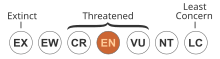
 The Anguilla Bank skink (Spondylurus powelli) was discovered in the Caribbean with 20 other reptile species and was immediately listed as an endangered species. The population of this lizard has been decreasing due to the introduction of the mongoose, which was originally imported to control rats in sugarcane fields, and now is an invasive species to the Caribbean Islands.[2] Many of the newly added skink species discovered along with S. powelli are facing extinction for the same reason. Skinks are unique and perhaps at a disadvantage among lizards as they produce a human-like placenta and have live birth. The average gestation period is suggested at one year and may be the cause for the skinks being an easy target to the mongoose, since they are larger and slower when pregnant. Other types of human activity, along with the deforestation in the Caribbean, are thought to have decreased overall species numbers, as well.[3]

References[edit]

  1. ^ Hedges, B., Powell, R. & Daltry, J.C. 2017. Spondylurus powelli. The IUCN Red List of Threatened Species 2017: e.T47103288A72240413. https://dx.doi.org/10.2305/IUCN.UK.2017-2.RLTS.T47103288A72240413.en. Downloaded on 18 April 2020.
  2. ^ "A new skink fauna from Caribbean islands (Squamata, Mabuyidae, Mabuyinae)" (PDF). Zootaxa. Retrieved 2013-11-03.
  3. ^ "24 New Species of Lizards Discovered on Caribbean Islands are Close to Extinction". psu.edu. Retrieved 2013-11-03.

Spondylurus powelli
Spondylurus powelli.jpg
Scientific classificationedit
Kingdom:Animalia
Phylum:Chordata
Class:Reptilia
Order:Squamata
Family:Scincidae
Genus:Spondylurus
Species:
S. powelli
Binomial name
Spondylurus powelli
Hedges & Conn, 2012

https://en.wikipedia.org/wiki/Spondylurus_powelli