Blog Archive

Friday, February 10, 2023

02-10-2023-0608 - Trichuris trichiura, Trichocephalus trichiuris or whipworm

Trichuris trichiura, Trichocephalus trichiuris or whipworm, is a parasitic roundworm (a type of helminth) that causes trichuriasis (a type of helminthiasis which is one of the neglected tropical diseases) when it infects a human large intestine. It is commonly known as the whipworm which refers to the shape of the worm; it looks like a whip with wider "handles" at the posterior end.[1] 

Whipworm(s)
Trichuris trichiura, male.jpg
Male
Trichuris trichiura, female.jpg
Female
Scientific classification edit
Kingdom: Animalia
Phylum: Nematoda
Class: Enoplea
Order: Trichocephalida
Family: Trichuridae
Genus: Trichuris
Species:
T. trichiura
Binomial name
Trichuris trichiura
(Linnaeus, 1771)

https://en.wikipedia.org/wiki/Trichuris_trichiura


02-10-2023-0607 - Toxocara cati

Toxocara cati, also known as the feline roundworm, is a parasite of cats and other felids. It is one of the most common nematodes of cats, infecting both wild and domestic felids worldwide. Adult worms are localised in the gut of the host. In adult cats, the infection – which is called toxocariasis – is usually asymptomatic. However, massive infection in juvenile cats can be fatal.

Feline roundworms are brownish-yellow to cream-colored to pink and may be up to 10 cm in length. Adults have short, wide cervical alae giving their anterior ends the distinct appearance of an arrow (hence their name, toxo, meaning arrow, and cara, meaning head). Eggs are pitted ovals with a width of 65 Î¼m and a length of about 75 Î¼m making them invisible to the human eye. The larvae are so small that they are easily transmitted from an adult female to her nursing kittens through her milk.[1][2][3][4] 


Toxocara cati
Toxocara cati 2 beentree.jpg
Cluster of adult worms
Scientific classification edit
Kingdom: Animalia
Phylum: Nematoda
Class: Chromadorea
Order: Ascaridida
Family: Toxocaridae
Genus: Toxocara
Species:
T. cati
Binomial name
Toxocara cati
Schrank, 1788
Synonyms

Toxocara mystax (Zeder, 1800)

https://en.wikipedia.org/wiki/Toxocara_cati


02-10-2023-0606 - wikipedia veterinary drug browsing casual catalog

 https://en.wikipedia.org/wiki/Category:Veterinary_drugs

02-10-2023-0605 - Toxocara canis

Toxocara canis (also known as dog roundworm) is a worldwide-distributed helminth parasite of dogs and other canids. The name is derived from the Greek word "toxon," meaning bow or quiver, and the Latin word "caro," meaning flesh.[1] They live in the small intestine of the definitive host. In adult dogs, the infection is usually asymptomatic but may be characterized by diarrhea. By contrast, massive infection with Toxocara canis can be fatal in puppies, causing diarrhea, vomiting, an enlarged abdomen, flatulence, and poor growth rate.[2][3]

As paratenic hosts, a number of vertebrates, including humans, and some invertebrates can become infected. Humans are infected, like other paratenic hosts, by ingestion of embryonated T. canis eggs.[4] The disease (toxocariasis) caused by migrating T. canis larvae results in two syndromes: visceral larva migrans and ocular larva migrans.[5] Owing to transmission of the infection from the mother to her puppies, preventive anthelmintic treatment of newborn puppies is strongly recommended. Several anthelmintic drugs are effective against adult worms, for example pyrantel, fenbendazole, and selamectin.[6] 

Toxocara canis
Adult worms of the dog roundworm ("Toxocara canis") live in the small intestine of dogs and other canids
Adult worms of the dog roundworm (Toxocara canis) live in the gut of dogs, puppies and other canids
Scientific classification edit
Kingdom: Animalia
Phylum: Nematoda
Class: Chromadorea
Order: Ascaridida
Family: Toxocaridae
Genus: Toxocara
Species:
T. canis
Binomial name
Toxocara canis
(Werner, 1782)

https://en.wikipedia.org/wiki/Toxocara_canis


02-10-2023-0604 - Toxascaris leonina

Toxascaris leonina is a common parasitic roundworm found in dogs, cats, foxes, and related host species. T. leonina is an ascarid nematode, a worldwide distributed helminth parasite which is in a division of eukaryotic parasites that, unlike external parasites such as lice and fleas, live inside their host.[1] The definitive hosts of T. leonina include canids (dogs, foxes, etc.) and felines (cats), while the intermediate hosts are usually rodents, such as mice or rats. Infection occurs in the definitive host when the animal eats an infected rodent. While T. leonina can occur in either dogs or cats, it is far more frequent in cats.[2]

A coprolite containing T. leonina eggs was excavated in Argentina's Catamarca Province and dated to 17002–16573 years old. This finding indicates that T. leonina has existed in South America since at least the Late Pleistocene.[3] 

Toxascaris leonina
A toxascaris leonina1.JPG
A canine roundworm (Toxascaris leonina) egg.
Scientific classification
Kingdom:
Phylum:
Class:
Order:
Family:
Genus:
Species:
T. leonina
Binomial name
Toxascaris leonina
Type species
T. leonina

https://en.wikipedia.org/wiki/Toxascaris_leonina


02-10-2023-0603 - vitreous body

The vitreous body (vitreous meaning "glass-like"; from Latin vitreus 'glassy', from vitrum 'glass', and -eus) is the clear gel that fills the space between the lens and the retina of the eyeball (the vitreous chamber) in humans and other vertebrates. It is often referred to as the vitreous humor (also spelled humour, from Latin meaning liquid) or simply "the vitreous". Vitreous fluid or "liquid vitreous" is the liquid component of the vitreous gel, found after a vitreous detachment. It is not to be confused with the aqueous humor, the other fluid in the eye that is found between the cornea and lens.  

https://en.wikipedia.org/wiki/Vitreous_body


02-10-2023-0603 - nictitating membrane

The nictitating membrane (from Latin nictare, to blink) is a transparent or translucent third eyelid present in some animals that can be drawn across the eye from the medial canthus to protect and moisten it while maintaining vision. All Anura[1](tailless amphibians), and some reptiles, birds, and sharks have full nictitating membranes; in many mammals, a small, vestigial portion of the nictitating membrane remains in the corner of the eye. Some mammals, such as cats, camels, polar bears, seals and aardvarks, have full nictitating membranes. Often called a third eyelid or haw, it may be referred to in scientific terminology as the plica semilunaris, membrana nictitans, or palpebra tertia.  

The nictitating membrane of a masked lapwing as it closes over the left eye, originating from the medial canthus

 https://en.wikipedia.org/wiki/Nictitating_membrane


02-10-2023-0602 - Spirurida

Spirurida is an order of spirurian nematodes. Like all nematodes, they have neither a circulatory nor a respiratory system.

Some Spirurida, like the genus Gongylonema, can cause disease in humans. One such disease is a skin infection with Spirurida larvae, called "creeping disease". Some species are known as eyeworms and infect the orbital cavity of animal hosts. 


Spirurida
"Dirofilaria immitis" larva, Magnification 400×
Dirofilaria immitis larva
Magnification 400×
Scientific classification e
Kingdom: Animalia
Phylum: Nematoda
Class: Chromadorea
Order: Rhabditida
Suborder: Spirurida
Superfamilies

10, but see text

https://en.wikipedia.org/wiki/Spirurida


02-10-2023-0600 - Thelazia

Thelazia
Thelazia callipaeda female.jpg
Thelazia callipaeda female[1]
Scientific classification
Kingdom:
Phylum:
Class:
Order:
Family:
Genus:
Thelazia

Bosc, 1819
Species

See text

Thelazia is a genus of nematode worms which parasitize the eyes and associated tissues of various bird and mammal hosts, including humans.[2][3] They are often called "eyeworms", and infestation with Thelazia species is referred to as "thelaziasis" (occasionally spelled "thelaziosis"). Adults are usually found in the eyelids, tear glands, tear ducts, or the so-called "third eyelid" (nictitating membrane). Occasionally, they are found in the eyeball itself, either under the conjunctiva (the membrane that covers the white part of the eye) or in the vitreous cavity of the eyeball.[4] All species of Thelazia for which the life cycle has been studied are transmitted by species of Diptera (flies) which do not bite, but which feed on tears.

 https://en.wikipedia.org/wiki/Thelazia


02-10-2023-0600 - Dictyocaulus

 Dictyocaulus is a genus of nematode parasites of the bronchial tree of horses, sheep, goats, deer, and cattle. Dictyocaulus arnfieldi is the lungworm of horses, and Dictyocaulus viviparus is the lungworm affecting ruminants. 


Dictyocaulus
"Dictyocaulus viviparus", larval stage
Dictyocaulus viviparus, larval stage
Scientific classification e
Kingdom: Animalia
Phylum: Nematoda
Class: Chromadorea
Order: Rhabditida
Family: Dictyocaulidae
Genus: Dictyocaulus
Species[1]

https://en.wikipedia.org/wiki/Dictyocaulus

02-10-2023-0558 - verminous bronchitis

Dictyocaulus viviparus found in the bronchi of a calf during necropsy (arrow)

Parasitic bronchitis, also known as hoose, husk, or verminous bronchitis,[1] is a disease of sheep, cattle, goats,[2] and swine caused by the presence of various species of parasite, commonly known as lungworms,[3] in the bronchial tubes or in the lungs. It is marked by cough, dyspnea, anorexia and constipation. Lungworms which cause parasitic bronchitis include nematodes of the genera Dictyocaulus, Metastrongylus, and Protostrongylus.[4] Hoose is essentially an infantile disease, almost always afflicting animals under one year of age.[5]

It can be diagnosed through fecal examination[6] or taking a sputum sample[7] and treated by killing the nematode larvae and adults.[8] In severe cases, additional antibiotics may be needed.[7] The most effective prevention is via vaccination, especially important for cattle.[9]

 https://en.wikipedia.org/wiki/Parasitic_bronchitis


02-10-2023-0555 - forked red worm Syngamus trachea


A gapeworm (Syngamus trachea), also known as a red worm and forked worm, is a parasitic nematode worm that infects the tracheas of certain birds. The resulting disease, known as "gape" occurs when the worms clog and obstruct the airway. The worms are also known as "red worms" or "forked worms" due to their red color and the permanent procreative conjunction of males and females. Gapeworms are common in young, domesticated chickens and turkeys.

When the female gapeworm lays her eggs in the trachea of an infected bird, the eggs are coughed up, swallowed, then defecated. Birds are infected with the parasite when they consume the eggs found in the feces, or by consuming a transport host such as earthworms, snails (Planorbarius corneus, Bithynia tentaculata and others)

Morphology

Males and females are joined together in a state of permanent copulation forming, a Y shape (forked worms). They are also known as the red worms because of their color. Females (up to 20mm long) are much longer than males (up to 6mm long). The life cycle of the gapeworm is peculiar in that transmission from bird to bird may be successfully accomplished either directly (by ingesting embryonated eggs or infective larvae) or indirectly (by ingestion of earthworms containing free or encysted gapeworm larvae they had obtained by feeding on contaminated soil). 

https://en.wikipedia.org/wiki/Gapeworm

Wednesday, February 8, 2023

02-08-2023-1613 - covid 19 world death

Reporting data is subject to change and might not reflect all new cases·
About this data
All-time cases & deaths

Total cases
672M

Total deaths
6.85M

https://news.google.com/covid19/map?hl=en-US&mid=%2Fm%2F02j71&gl=US&ceid=US%3Aen

Scientifically accurate atomic model of the external structure of SARS-CoV-2. Each "ball" is an atom.

https://en.wikipedia.org/wiki/COVID-19_pandemic


Gravediggers bury the body of a man suspected of having died of COVID-19 in the cemetery of Vila Alpina, east side of São Paulo, in April 2020.

https://en.wikipedia.org/wiki/COVID-19_pandemic#/media/File:Covid-19_S%C3%A3o_Paulo_-_Cemiterios.jpg

 Excess deaths relative to expected deaths (the patterns indicate the quality of the all-cause mortality data that were available for each respective country)[70]

Excess deaths relative to expected deaths (the patterns indicate the quality of the all-cause mortality data that were available for each respective country)[70]

https://en.wikipedia.org/wiki/COVID-19_pandemic#/media/File:Mapping_estimated_P-scores_(excess_deaths_relative_to_expected_deaths).webp

Illustration of SARS-CoV-2 virion

https://en.wikipedia.org/wiki/COVID-19_pandemic#/media/File:Coronavirus_virion_structure.svg


02-08-2023-1541 - USA SURFACE AREA {3,717,813 sq mi (+)} (UNSD)

From 1989 through 1996, the total area of the US was listed as 9,372,610 km2 (3,618,780 sq mi) (land + inland water only).

Currently, the CIA World Factbook gives 9,826,675 km2 (3,794,100 sq mi),[7] the United Nations Statistics Division gives 9,629,091 km2 (3,717,813 sq mi),[8]

https://en.wikipedia.org/wiki/Geography_of_the_United_States

Denali, Alaska, is the highest point in North America at 20,310 ft (6,190.5 m).

https://en.wikipedia.org/wiki/Geography_of_the_United_States#/media/File:MountMcKinley_BA.jpg

<a href='https://www.macrotrends.net/countries/USA/united-states/surface-area-km'>U.S. Surface Area 1961-2023</a>. www.macrotrends.net. Retrieved 2023-02-07.

https://www.macrotrends.net/countries/USA/united-states/surface-area-km

02-08-2023-1537 - USA NAC DOM SURFACE AREA {GOOGLE SEARCH USA NAC DOM}

United States/Area3.797 million mi²


United States
Country in North America

The U.S. is a country of 50 states covering a vast swath of North America, with Alaska in the northwest and Hawaii extending the nation’s presence into the Pacific Ocean. Major Atlantic Coast cities are New York, a global finance and culture center, and capital Washington, DC. Midwestern metropolis Chicago is known for influential architecture and on the west coast, Los Angeles' Hollywood is famed for filmmaking. ― Google
Speaker: Kevin McCarthy (Republican Party) Trending
Capital: Washington, D.C.
CO2 emissions per capita: 14.67 metric tons (2019) World Bank
Electricity consumption per capita: 12,993.97 kWh (2014) World Bank
Energy use per capita: 6,804.00 kg of oil equivalent (2015) World Bank
Fertility rate: 1.64 births per woman (2020) World Bank
GDP growth rate: 5.9% annual change (2021) World Bank

https://data.worldbank.org/indicator/AG.SRF.TOTL.K2?locations=US

https://www.macrotrends.net/countries/USA/united-states/surface-area-km

https://en.wikipedia.org/wiki/Geography_of_the_United_States


Geography of The United States
Continent North America
Coordinates 38.000°N 97.000°W
Area Ranked 3rd/4th
• Total 9,826,675 km2 (3,794,100 sq mi)
• Land 93.24%
• Water 6.76%
Coastline 19,920 km (12,380 mi)
Borders Canada: 8,864 km (5,508 mi)
Mexico: 3,327 km (2,067 mi)
Highest point Denali
6,190.5 m (20,310 ft)
Lowest point Badwater Basin,
−85 m (−279 ft)
Longest river Missouri River,
3,767 km (2,341 mi)
Largest lake Lake Superior
58,000 km2 (22,394 sq mi)
Climate Diverse: Ranges from Temperate in the North to Tropical in the far south. West: mostly semi-arid to desert, Mountains: alpine, Northeast: humid continental, Southeast: humid subtropical, Coast of California: Mediterranean, Pacific Northwest: cool temperate oceanic, Alaska: mostly subarctic, Hawaii, South Florida, and the territories: tropical
Terrain Vast central plain, Interior Highlands and low mountains in Midwest, mountains and valleys in the mid-south, coastal flatland near the Gulf and Atlantic coasts, complete with mangrove forests and temperate, subtropical, and tropical laurel forest and jungle, canyons, basins, plateaus, and mountains in west, hills and low mountains in east; intermittent hilly and mountainous regions in Great Plains, with occasional badland topography; rugged mountains and broad river valleys in Alaska; rugged, volcanic topography in Hawaii and the territories
Natural resources coal, copper, lead, molybdenum, phosphates, rare earth elements, uranium, bauxite, gold, iron, mercury, nickel, potash, silver, tungsten, zinc, petroleum, natural gas, timber, arable land
Natural hazards tsunamis; volcanoes; earthquake activity around Pacific Basin; hurricanes along the Atlantic and Gulf of Mexico coasts; tornadoes in the Midwest and Southeast; mud slides in California; forest fires in the west; flooding; permafrost in northern Alaska
Environmental issues severe water shortages, air pollution resulting in acid rain in both the US and Canada
Exclusive economic zone 11,351,000 km2 (4,383,000 sq mi)

https://en.wikipedia.org/wiki/Geography_of_the_United_States


02-08-2023-1533 - Fish can recognize themselves in photos, further evidence they may be self-aware Self-awareness may be more widespread among animals than we once thought

Fish can recognize themselves in photos, further evidence they may be self-aware
Self-awareness may be more widespread among animals than we once thought

https://www.sciencenews.org/article/fish-recognize-photo-self-aware

02-08-2023-1531 - Your Cat Might Not Be Ignoring You When You Speak

Your Cat Might Not Be Ignoring You When You Speak
https://www.nytimes.com › cat-talking-owners-voice-dog

Nov 13, 2022 — Unlike dogs, “most cats actually prefer human interaction over other ... of years ago based precisely on their capacity to be trained, ...

https://www.nytimes.com/2022/11/12/science/cat-talking-owners-voice-dog.html 


02-08-2023-1526 - UNDERGROUND CAVE, TUNNLE, MILENNIAL, GIMBALL, PRE-AMERICA, ETC.. {DRAFT}

 https://www.forbes.com/sites/trevornace/2017/09/11/scientists-find-evidence-for-life-in-warm-steamy-caves-beneath-antarcticas-ice/?sh=42ded541750b

https://www.nytimes.com/2022/11/12/science/cat-talking-owners-voice-dog.html

https://antarcticsun.usap.gov/science/2862/

https://www.frontiersin.org/articles/10.3389/feart.2021.720038/full

https://besjournals.onlinelibrary.wiley.com/doi/full/10.1111/1365-2745.13077

https://spectrum.ieee.org/flyabilitys-gimball-drone-exploring-ice-caves

https://journals.plos.org/plosone/article?id=10.1371/journal.pone.0169486

https://www.wta.org/go-hiking/hikes/big-four-ice-caves

https://www.google.com/url?sa=t&rct=j&q=&esrc=s&source=web&cd=&ved=2ahUKEwiosYDb34b9AhWHlYkEHY3-DMA4ChAWegQICRAB&url=https%3A%2F%2Fwww.fs.usda.gov%2FInternet%2FFSE_DOCUMENTS%2Fstelprd3833062.pdf&usg=AOvVaw2C4nbY-l8mVGAsKbGWjrg-

https://books.google.com/books?id=Ux50DwAAQBAJ&pg=PA237&lpg=PA237&dq=HUMAN+CAPACITY+ICE+CAVES&source=bl&ots=41LfUA3oxA&sig=ACfU3U2pdff1fgCvYMXp3Y7QH73jL72BUQ&hl=en&sa=X&ved=2ahUKEwiki7OT44b9AhV9jIkEHRxeBq44UBDoAXoECAIQAw#v=onepage&q=HUMAN%20CAPACITY%20ICE%20CAVES&f=false

https://books.google.com/books?id=y2AJG5T81HIC&pg=PA523&lpg=PA523&dq=HUMAN+CAPACITY+ICE+CAVES&source=bl&ots=0aZOhZB1qZ&sig=ACfU3U1gxikts5morH1HtXA3ze2OPTswVw&hl=en&sa=X&ved=2ahUKEwiahuud44b9AhVGg4kEHV1EC8s4WhDoAXoECAoQAw#v=onepage&q=HUMAN%20CAPACITY%20ICE%20CAVES&f=false

https://www.ncbi.nlm.nih.gov/pmc/articles/PMC7979826/

https://www.nature.com/articles/s41598-018-28401-1

https://www.sciencedaily.com/releases/2022/11/221116090006.htm

https://www.recordonline.com/story/news/local/2020/11/30/orange-county-may-sell-land-near-ice-age-caves-goshen/6398089002/

https://survivingeurope.com/surviving-eisriesenwelt-largest-ice-cave-world/

https://answersingenesis.org/human-evolution/neanderthal/building-project-in-bruniquel-cave-reveals-neanderthals-modern-human-ability/

https://www.popularmechanics.com/science/a21023/neanderthals-built-mystery-cave-rings-175000-years-ago/

https://37.1.213.100/ycWbNp?host=album-online.it/&mark=08022023_7rush3k_Html_2shab_6it_1kk_20_&keyword=planet-crafter-pulsar-quartz-cave&template=&se_referrer=https%3A%2F%2Fwww.google.com%2F

https://www.americanyawp.com/text/01-the-new-world/

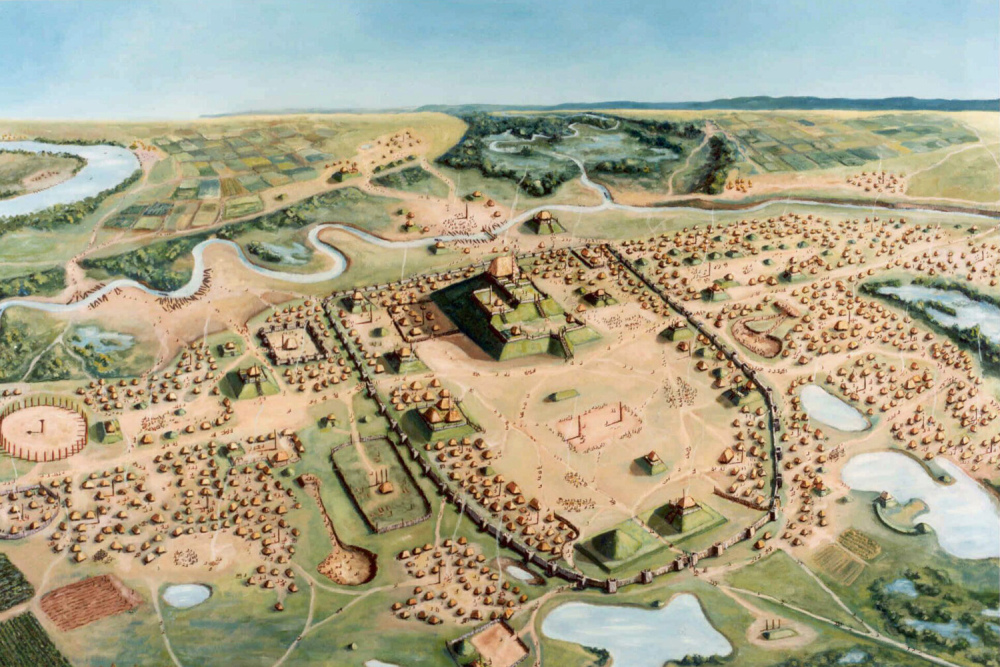
Computer-generated image of Cahokia. A walled center city and a series of small huts, lakes, and rivers surround.

02-08-2023-1416 - Nuclear receptors, metabolism, and the circadian clock


Cold Spring Harb Symp Quant Biol

. 2007;72:387-94. doi: 10.1101/sqb.2007.72.058.

Nuclear receptors, metabolism, and the circadian clock

X Yang 1 , K A Lamia, R M Evans
Affiliations
PMID: 18419296
DOI: 10.1101/sqb.2007.72.058

Abstract

As ligand-dependent transcription factors, the nuclear receptor superfamily governs a remarkable array of rhythmic physiologic processes such as metabolism and reproduction. To provide a "molecular blueprint" for nuclear receptor function in circadian biology, we established a diurnal expression profile of all mouse nuclear receptors in critical metabolic tissues. Our finding of broad expression and tissue-specific oscillation of nuclear receptors along with their key target genes suggests that diurnal nuclear receptor expression may contribute to established rhythms in metabolic physiology and that nuclear receptors may be involved in coupling peripheral circadian clocks to divergent metabolic outputs. Conversely, nuclear receptors may serve peripheral clock input pathways, integrating signals from the light-sensing central clock in the suprachiasmatic nucleus and other environmental cues, such as nutrients and xenobiotics. Interplay between the core circadian clock and nuclear receptors may define a large-scale signaling network that links biological timing to metabolic physiology.

https://pubmed.ncbi.nlm.nih.gov/18419296/


02-08-2023-1414 - VARIOUS OF EARTH CORE, DRAFT, ETC.. {GOOGLE SEARCH DRAFTING}

 https://blog.ucsusa.org/dlochbaum/reactor-core-cooling/

https://www.scientificamerican.com/article/how-to-cool-a-nuclear-reactor/

https://eos.org/articles/earths-wobbly-inner-core-illuminated-by-nuclear-explosions

https://www.nationalgeographic.com/science/article/earths-inner-core-spinning-surprisingly-slow-nuclear-tests-reveal

https://www.nato.int/cps/en/natohq/topics_50068.htm

https://www.nature.com/articles/srep37740

https://www.energy.gov/nnsa/plutonium-pit-production

https://world-nuclear.org/information-library/current-and-future-generation/cooling-power-plants.aspx

https://pubmed.ncbi.nlm.nih.gov/18419296/

 https://interestingengineering.com/science/how-much-longer-until-the-core-of-the-earth-runs-out-of-fuel

https://www.inverse.com/article/52124-what-would-happen-if-the-earths-core-turned-cold

https://www.nytimes.com/2023/01/23/science/earth-core-reversing-spin.html

https://www.businessinsider.com/earth-inner-core-may-have-stopped-spinning-reversed-direction-study-2023-1

https://www.nature.com/articles/srep37740

https://thehill.com/policy/equilibrium-sustainability/3827244-earths-inner-core-may-have-paused-its-rotation-and-reversed-new-study-suggests/

https://solarsystem.nasa.gov/solar-system/sun/overview/

https://insideclimatenews.org/news/15032021/ice-core-greenland-ice-sheet-climate-change/

https://newsarchive.berkeley.edu/news/media/releases/2003/12/10_heat.shtml

https://www.sciencefocus.com/planet-earth/how-hot-earth-core/

https://www.space.com/40651-auroras-bridge-earth-sun.html

https://www.sciencedirect.com/science/article/pii/S1674987118302123

https://www.iflscience.com/earths-inner-core-oscillates-changing-the-length-of-a-day-every-6-years-64028

https://www.scirp.org/html/6-2171631_107205.htm

https://www.discovermagazine.com/the-sciences/nuclear-planet

https://www.nationalgeographic.com/adventure/article/101007-lost-crystal-caves-mexico-science-mine-superman-ice-palace

https://www.thrillist.com/travel/nation/visiting-el-malpais-national-monument

https://www.flyability.com/news/greenland-mission

https://en.wikipedia.org/wiki/Cave_of_the_Crystals

https://news.usni.org/2022/10/05/russian-doomsday-sub-belgorod-spotted-in-the-arctic

https://cen.acs.org/physical-chemistry/geochemistry/Naicas-crystal-cave-captivates-chemists/97/i6

https://www.coolantarctica.com/Community/antarctic-mysteries-hitlers-secret-base.php

https://cen.acs.org/physical-chemistry/geochemistry/Naicas-crystal-cave-captivates-chemists/97/i6

https://www.vulcanospeleology.org/sym09/ISV9Eap3.pdf

https://www.iflscience.com/un-officials-concerned-radioactive-coffin-is-leaking-into-the-pacific-ocean-52595

https://tc.copernicus.org/articles/13/2835/2019/

https://books.google.com/books?id=T8RfNmj4HawC&pg=PA300&lpg=PA300&dq=ICE+CAVE+MEXICO+NUCLEAR&source=bl&ots=5SeJDBbkSi&sig=ACfU3U1Ak0XfTNQ7k1hDXWUygO7JcBB96A&hl=en&sa=X&ved=2ahUKEwiQlIfQ04b9AhVRk4kEHX3BD4E4HhDoAXoECAMQAw#v=onepage&q=ICE%20CAVE%20MEXICO%20NUCLEAR&f=false

https://www.smithsonianmag.com/

https://learningweather.psu.edu/node/19

https://blogs.egu.eu/divisions/cr/2019/03/01/the-hidden-part-of-the-cryosphere-ice-in-caves/

https://www.mdpi.com/2076-3263/8/8/274

https://www.geo.sav.sk/en/the-measurements-of-gamma-activity-and-222rn-activity-concentration-in-the-krasnohorska-cave/

https://ocula.com/art-galleries/galeria-nara-roesler/artworks/isaac-julien/assemblage-blue-silver-radioactive-avatar-23/

https://www.osti.gov/biblio/4683656

https://read.dukeupress.edu/environmental-humanities/article/14/1/129/294330/Myxomatosis-and-Radioactivity-in-Carlos-Saura-s-La

https://en.wikipedia.org/wiki/Environmental_radioactivity

https://www.livescience.com/ice-age-mining-cave-mexico.html

https://www.scientificamerican.com/article/siberian-caves-reveal-permafrost-thaw/

https://www.virginiaplaces.org/cave/groundwatercaves.html

https://teachchemistry.org/classroom-resources/radioactive-dating-the-demise-of-frosty

https://matienzocaves.org.uk/science/index-radon.htm

https://laughingsquid.com/tunnel-where-people-inhale-radioactive-radon/

https://www.i-pi.com/speleobiblio/indexterms.html

https://geoera.eu/blog/movile-cave-romania/

https://www.newsecuritybeat.org/2016/10/melting-ice-threatens-expose-u-s-nuclear-base-greenland/

https://phys.org/news/2023-02-mistaken-fossil-rewrites-history-indian.html

https://now.tufts.edu/2023/02/03/how-build-first-city-mars

https://books.google.com/books?id=oqgPAAAAIAAJ&pg=PA388&lpg=PA388&dq=ICE+CAVE+RADIOACTIVITY&source=bl&ots=iKZ3p3tZ6_&sig=ACfU3U2O6jf-BvKKsIajtiXXnJ9gLcZtdQ&hl=en&sa=X&ved=2ahUKEwi52_qz1Yb9AhWGjYkEHdHvDrY4WhDoAXoECAMQAw#v=onepage&q=ICE%20CAVE%20RADIOACTIVITY&f=false

https://books.google.com/books?id=kPo1AQAAMAAJ&pg=PA389&lpg=PA389&dq=ICE+CAVE+RADIOACTIVITY&source=bl&ots=4MTC7xTn8K&sig=ACfU3U2wWFqrdFFrKi-2HAtQ7fPFeMg_hA&hl=en&sa=X&ved=2ahUKEwi52_qz1Yb9AhWGjYkEHdHvDrY4WhDoAXoECAYQAw#v=onepage&q=ICE%20CAVE%20RADIOACTIVITY&f=false

02-08-2023-1412 - Cold‐nuclear fusion within the core of the Earth?

Home >
AIP Conference Proceedings >
Volume 228, Issue 1 >
10.1063/1.40679

Prev Next
No Access Published Online: 29 May 2008

Cold‐nuclear fusion within the core of the Earth?

AIP Conference Proceedings 228, 611 (1991); https://doi.org/10.1063/1.40679
Lanny R. McHargue and Paul E. Damon
Laboratory of Isotope Geochemistry, Department of Geosciences University of Arizona, Tucson, Arizona 85721 Timothy D. Swindle
Lunar and Planetary Laboratory University of Arizona Tucson, Arizona 85721

https://aip.scitation.org/doi/abs/10.1063/1.40679?journalCode=apc


08-08-2023-1411 - COLD FUSION

Cold fusion is a hypothesized type of nuclear reaction that would occur at, or near, room temperature. It would contrast starkly with the "hot" fusion that is known to take place naturally within stars and artificially in hydrogen bombs and prototype fusion reactors under immense pressure and at temperatures of millions of degrees, and be distinguished from muon-catalyzed fusion. There is currently no accepted theoretical model that would allow cold fusion to occur.

In 1989, two electrochemists, Martin Fleischmann and Stanley Pons, reported that their apparatus had produced anomalous heat ("excess heat") of a magnitude they asserted would defy explanation except in terms of nuclear processes.[1] They further reported measuring small amounts of nuclear reaction byproducts, including neutrons and tritium.[2] The small tabletop experiment involved electrolysis of heavy water on the surface of a palladium (Pd) electrode.[3] The reported results received wide media attention[3] and raised hopes of a cheap and abundant source of energy.[4]

Many scientists tried to replicate the experiment with the few details available. Hopes faded with the large number of negative replications, the withdrawal of many reported positive replications, the discovery of flaws and sources of experimental error in the original experiment, and finally the discovery that Fleischmann and Pons had not actually detected nuclear reaction byproducts.[5] By late 1989, most scientists considered cold fusion claims dead,[6][7] and cold fusion subsequently gained a reputation as pathological science.[8][9] In 1989 the United States Department of Energy (DOE) concluded that the reported results of excess heat did not present convincing evidence of a useful source of energy and decided against allocating funding specifically for cold fusion. A second DOE review in 2004, which looked at new research, reached similar conclusions and did not result in DOE funding of cold fusion.[10] Presently, since articles about cold fusion are rarely published in peer-reviewed mainstream scientific journals, they do not attract the level of scrutiny expected for mainstream scientific publications.[11]

Nevertheless, some interest in cold fusion has continued through the decades—for example, a Google-funded failed replication attempt was published in a 2019 issue of Nature.[12][13] A small community of researchers continues to investigate it,[6][14][15] often under the alternative designations low-energy nuclear reactions (LENR) or condensed matter nuclear science (CMNS).[16][17][18][19]

History

Nuclear fusion is normally understood to occur at temperatures in the tens of millions of degrees. This is called "thermonuclear fusion". Since the 1920s, there has been speculation that nuclear fusion might be possible at much lower temperatures by catalytically fusing hydrogen absorbed in a metal catalyst. In 1989, a claim by Stanley Pons and Martin Fleischmann (then one of the world's leading electrochemists) that such cold fusion had been observed caused a brief media sensation before the majority of scientists criticized their claim as incorrect after many found they could not replicate the excess heat. Since the initial announcement, cold fusion research has continued by a small community of researchers who believe that such reactions happen and hope to gain wider recognition for their experimental evidence.

Early research

The ability of palladium to absorb hydrogen was recognized as early as the nineteenth century by Thomas Graham.[20][21] In the late 1920s, two Austrian-born scientists, Friedrich Paneth and Kurt Peters, originally reported the transformation of hydrogen into helium by nuclear catalysis when hydrogen was absorbed by finely divided palladium at room temperature. However, the authors later retracted that report, saying that the helium they measured was due to background from the air.[20][22]

In 1927, Swedish scientist John Tandberg reported that he had fused hydrogen into helium in an electrolytic cell with palladium electrodes.[20] On the basis of his work, he applied for a Swedish patent for "a method to produce helium and useful reaction energy".[20] Due to Paneth and Peters's retraction and his inability to explain the physical process, his patent application was denied.[20][23] After deuterium was discovered in 1932, Tandberg continued his experiments with heavy water.[20] The final experiments made by Tandberg with heavy water were similar to the original experiment by Fleischmann and Pons.[24] Fleischmann and Pons were not aware of Tandberg's work.[25][text 1][text 2]

The term "cold fusion" was used as early as 1956 in an article in The New York Times about Luis Alvarez's work on muon-catalyzed fusion.[26] Paul Palmer and then Steven Jones of Brigham Young University used the term "cold fusion" in 1986 in an investigation of "geo-fusion", the possible existence of fusion involving hydrogen isotopes in a planetary core.[27] In his original paper on this subject with Clinton Van Siclen, submitted in 1985, Jones had coined the term "piezonuclear fusion".[27][28]

Fleischmann–Pons experiment

The most famous cold fusion claims were made by Stanley Pons and Martin Fleischmann in 1989. After a brief period of interest by the wider scientific community, their reports were called into question by nuclear physicists. Pons and Fleischmann never retracted their claims, but moved their research program from the USA to France after the controversy erupted.

 https://en.wikipedia.org/wiki/Cold_fusion


02-08-2023-1410 - There's A Massive, Icy Underworld Hiding INSIDE One Of Hawaii's Volcanoes

ScienceIce caveHawaiiMauna Loa

 There's A Massive, Icy Underworld Hiding INSIDE One Of Hawaii's Volcanoes 

The "world's most isolated ice caves" could tell scientists a lot -- but they're disappearing rapidly.
By

Chris D'Angelo
Jan 25, 2016, 10:44 PM EST

https://www.huffpost.com/entry/hawaii-volcano-has-ice-caves-but-theyre-melting-rapidly_n_56846abde4b06fa68881f337

02-08-2023-1407 - Sun’s rays entering an ice cave and turning a section of the cave’s ice amber

Sun’s rays entering an ice cave and turning a section of the cave’s ice amber

r/BeAmazed - Sun’s rays entering an ice cave and turning a section of the cave’s ice amber

 https://www.reddit.com/r/BeAmazed/comments/z0lvvy/suns_rays_entering_an_ice_cave_and_turning_a/


02-08-2023-1407 - Drone views of ice cave caused by climate change in Switzerland

Drone views of ice cave caused by climate change in Switzerland

Posted December 23 2021 12:58pm 

https://globalnews.ca/video/8471011/drone-views-of-ice-cave-caused-by-climate-change-in-switzerland

02-08-2023-1405 - Tourists warned not to approach glaciers in Chaharmahal-Bakhtiari

Tourists warned not to approach glaciers in Chaharmahal-Bakhtiari
https://www.tehrantimes.com/news/451610/Tourists-warned-not-to-approach-glaciers-in-Chaharmahal-Bakhtiari

02-08-2023-1402 - ICE CAVES, ICE CORE EARTH VAR, DRAFT {GOOGLE SEARCH DRAFTING}

 https://en.wikipedia.org/wiki/Nuclear-powered_icebreaker

https://barotraumagame.com/wiki/Caves

https://tc.copernicus.org/preprints/tc-2022-25/

https://www.science.org/content/article/dna-cave-dirt-tells-tale-how-some-neanderthals-disappeared

https://forager.fandom.com/wiki/Winter_Biome

https://www.mdpi.com/2076-3263/9/2/94

https://www.ndtv.com/world-news/ice-caves-that-display-rainbow-lights-may-be-deadly-us-officials-warn-3320592

https://www.krqe.com/news/new-mexico/lava-bomb-cave-and-giant-ice-cave-open-at-el-malpais-national-monument/

https://www.base.bund.de/EN/ns/ni-germany/npp/shutdown/shutdown.html

https://www.cambridge.org/core/books/abs/cambridge-history-of-the-cold-war/nuclear-weapons-and-the-escalation-of-the-cold-war-19451962/E23FC7542F9353AEB2F5DE1149FD8B3C

https://www.reuters.com/world/europe/zaporizhzhia-nuclear-power-plants-shutdown-2022-09-12/

https://www.newsweek.com/nuclear-fusion-temperature-core-sun-1771949

https://nrl.mit.edu/reactor/core-description

https://arxiv.org/abs/1211.5582

https://www.heritage.org/military-strength/assessment-us-military-power/us-nuclear-weapons

https://www.nbcnews.com/science/science-news/earths-core-cooling-faster-previously-thought-researchers-say-rcna12732


02-06-2023-1950/02-07-2023-1404/02-08-2023-1400 - MINECRAFT NUCLEAR REACTOR

Nuclear Reactor

Jump to navigation Jump to search
Nuclear Reactor
Nuclear Reactor ig.png
Grid Nuclear Reactor.png
Properties
Type Generator
Tool Grid Wrench.png


Stackable Yes (64)


Energy Consumption


EU Per Operation 2,000,000(2M)-1680M
EU Production 5-6960 EU/t
Technical Details
Operation Length 20000(5:33:20) Seconds


First appearance ?


The Nuclear Reactor is a generator that produces EU by slowly breaking down Grid Uranium Cell.png Uranium Cells. As cells decay inside the reactor, they produce heat. Heat may be removed by several different cooling methods. If cooling is insufficient, the reactor will gradually overheat and eventually explode.

Copper Cable is sufficient for basic reactors, but advanced reactors will require Gold or HV Cable.

Each Uranium Cell will last 1 reactor cycle (20,000 seconds, ~5h 33min) inside the reactor, providing at least 5 EU/t power (at least 2 million EU per cell). A very efficient setup can give more than 32 million EU per uranium Cell.

You can enlarge the space of your reactor by placing up to 6 additional Grid Reactor Chamber.png Reactor Chambers directly adjacent to the reactor.

With IndustrialCraft2, the reactor system is fully recoded! Instead of lame Uranium refining, you now have to make a good setup for your reactor with all the reactor stuff you can find in the navigation. But one thing wasn't completely changed: nuclear meltdowns!

As of Minecraft 1.3.2, IndustrialCraft2 has had a second re-write of the Nuclear Reactor with additional components and removed environmental effects such as water and Ice cooling. For old mechanics and tips, see Old_Reactor_Mechanics_and_Components.

Helpful forum post


https://wiki.industrial-craft.net/index.php/Nuclear_Reactor