Blog Archive

Thursday, September 30, 2021

09-29-2021-2233 - conserved sequences

 In evolutionary biology, conserved sequences are identical or similar sequences in nucleic acids (DNA and RNA) or proteins across species (orthologous sequences), or within a genome (paralogous sequences), or between donor and receptor taxa (xenologous sequences). Conservation indicates that a sequence has been maintained by natural selection.

A highly conserved sequence is one that has remained relatively unchanged far back up the phylogenetic tree, and hence far back in geological time. Examples of highly conserved sequences include the RNA components of ribosomes present in all domains of life, the homeobox sequences widespread amongst Eukaryotes, and the tmRNAin Bacteria. The study of sequence conservation overlaps with the fields of genomics, proteomics, evolutionary biology, phylogenetics, bioinformatics and mathematics.


A multiple sequence alignment of five mammalian histone H1 proteins 
Sequences are the amino acids for residues 120-180 of the proteins. Residues that are conserved across all sequences are highlighted in grey. Below each site (i.e., position) of the protein sequence alignment is a key denoting conserved sites (*), sites with conservative replacements (:), sites with semi-conservative replacements (.), and sites with non-conservative replacements ( ).[1]


https://en.wikipedia.org/wiki/Conserved_sequence

09-29-2021-2232 - Bacteriophage pRNA

Bacteriophage pRNA is a ncRNA element. During replication of linear dsDNA viruses, the viral genome is packaged into the pre-formed viral procapsid. The packaging of DNA into the procapsid requires a molecular motor, which uses ATP as energy to accomplish the energetically unfavorable motion. In some bacteriophage, an RNA (pRNA) molecule is a vital component of this motor.[1] Structural analyses of the packaging motor have demonstrated that the pRNAmolecule has fivefold symmetry when attached to the prohead.[2][3][4] The pRNA is thought to be bound by the capsid connector protein.[4] Only the first 120 bases of the pRNA are essential for packing the viral DNA.[5][6] The pRNA is proposed to be composed of two domains, one corresponding to the first 120 bases and the second to the remaining 50 bases.[6] Nuclear cleavage occurs in the single strand region linking these two domains.[6]

Bacteriophage pRNA
RF00044.jpg
Predicted secondary structure and sequence conservation of Phage_pRNA
Identifiers
SymbolPhage_pRNA
RfamRF00044
Other data
RNA typeGene
Domain(s)Viruses
SOSO:0000655
PDB structuresPDBe

 https://en.wikipedia.org/wiki/Bacteriophage_pRNA


09-29-2021-2231 - Gammaretrovirus core encapsidation signal

 The Gammaretrovirus core encapsidation signal is an RNA element known to be essential for stable dimerisation and efficient genome packaging during virus assembly.[1]Dimerisation of the viral RNA genomes is proposed to act as an RNA conformational switch which exposes conserved UCUG elements and enables efficient genome encapsidation.[2] The structure of this element is composed of three stem-loops. Two of the stem-loops called SL-C and SL-D form a single co-axial extend helix.

Gammaretrovirus core encapsidation signal
RF00374.jpg
Predicted secondary structure and sequence conservation of Gammaretro_CES
Identifiers
SymbolGammaretro_CES
RfamRF00374
Other data
RNA typeCis-reg
Domain(s)Eukaryota; Viruses
SOSO:0000233
PDB structuresPDBe

https://en.wikipedia.org/wiki/Gammaretrovirus_core_encapsidation_signal

09-29-2021-2231 - murine leukemia viruses (MLVs or MuLVs)

 The murine leukemia viruses (MLVs or MuLVs) are retroviruses named for their ability to cause cancer in murine (mouse) hosts. Some MLVs may infect other vertebrates. MLVs include both exogenous and endogenous viruses. Replicating MLVs have a positive sense, single-stranded RNA (ssRNA) genome that replicates through a DNA intermediate via the process of reverse transcription.

Murine leukemia virus
Virus classificatione
(unranked):Virus
Realm:Riboviria
Kingdom:Pararnavirae
Phylum:Artverviricota
Class:Revtraviricetes
Order:Ortervirales
Family:Retroviridae
Genus:Gammaretrovirus
Species:
Murine leukemia virus

https://en.wikipedia.org/wiki/Murine_leukemia_virus

09-29-2021-2220 - Disco Ball Moving Image (GIF) [Gfycat]

 Latest Disco Ball GIFs | Gfycat

09-29-2021-2036 - simian vacuolating virus 40 or simian virus 40 SV40

SV40 is an abbreviation for simian vacuolating virus 40 or simian virus 40, a polyomavirusthat is found in both monkeys and humans. Like other polyomaviruses, SV40 is a DNA virus that has the potential to cause tumors in animals, but most often persists as a latent infection. SV40 has been widely studied as a model eukaryotic virus, leading to many early discoveries in eukaryotic DNA replication[1] and transcription.[2]

https://en.wikipedia.org/wiki/SV40


--------------------------------------------------------------------------------------------------------------------


Oncovirus, oncogenic viri, clonally transmissible cancer, infectious cancer, Equine Infectious Anemia, viral systemic disease, intracellular pathogen, pathology, histology, infectious disease, biology, etc..

Malaria Mumps Polio Epstein Barr

endogenous retroviral element, endogenous retrovirus, particle, fragment, prion, misfolded protein, denatured protein, supramolecular chemistry, phosphorus, nuclear, field, etc..

DNA transcription/translation, DNA replication (semiconservative replication), enzyme (protein), DNA to mRNA to protein (translation), reverse transcriptase (reverse transcription RNA to DNA; Recombination ; etc.),  etc..


https://en.wikipedia.org/wiki/DNA_replication

https://en.wikipedia.org/wiki/Transcription_(biology)


https://courses.lumenlearning.com/microbiology/chapter/rna-transcription/

https://www.sciencedirect.com/topics/biochemistry-genetics-and-molecular-biology/rna-transcription


https://en.wikipedia.org/wiki/Recombinant_DNA

https://en.wikipedia.org/wiki/Polymerase_chain_reaction

https://en.wikipedia.org/wiki/Ligase_chain_reaction


https://en.wikipedia.org/wiki/Genome

https://en.wikipedia.org/wiki/DNA

https://en.wikipedia.org/wiki/Semiconservative_replication

https://en.wikipedia.org/wiki/Homologous_recombination

https://en.wikipedia.org/wiki/Chromosome


https://en.wikipedia.org/wiki/Mitosis

https://en.wikipedia.org/wiki/Meiosis


https://en.wikipedia.org/wiki/Random_hexamer

https://en.wikipedia.org/wiki/DNA_ligase


https://en.wikipedia.org/wiki/Horizontal_gene_transfer

https://en.wikipedia.org/wiki/Gene_expression

https://en.wikipedia.org/wiki/genetic_leap

https://en.wikipedia.org/wiki/Gene_delivery

https://en.wikipedia.org/wiki/Gene_delivery_DNA


https://en.wikipedia.org/wiki/Reverse_transcriptase#Process_of_reverse_transcription_or_retrotranscription

https://en.wikipedia.org/wiki/Complementary_DNA

https://en.wikipedia.org/wiki/Ribonuclease_H

https://en.wikipedia.org/wiki/CDNA_library

https://en.wikipedia.org/wiki/Provirus

https://en.wikipedia.org/wiki/RNA_virus

https://en.wikipedia.org/wiki/Retrotransposon

https://en.wikipedia.org/wiki/DNA_transposon

https://en.wikipedia.org/wiki/Transposable_element


https://en.wikipedia.org/wiki/Base_pair

https://en.wikipedia.org/wiki/Cytoplasm

https://en.wikipedia.org/wiki/Circular_chromosome

https://en.wikipedia.org/wiki/mitochondrial_DNA

https://en.wikipedia.org/wiki/extracellular_DNA

https://en.wikipedia.org/wiki/extrachromosomal_DNA

https://en.wikipedia.org/wiki/Nucleic_acid_sequence

https://en.wikipedia.org/wiki/Antiparallel_(biochemistry)

https://en.wikipedia.org/wiki/DNA


https://en.wikipedia.org/wiki/Tumor_lysis_syndrome

https://en.wikipedia.org/wiki/Tumor_necrosis_factor

https://en.wikipedia.org/wiki/Rhabdomyolysis

https://en.wikipedia.org/wiki/Caprine_arthritis_encephalitis_virus

https://en.wikipedia.org/wiki/Jaagsiekte_sheep_retrovirus

https://en.wikipedia.org/wiki/Visna-maedi_virus

https://en.wikipedia.org/wiki/Bacillus_thuringiensis

https://en.wikipedia.org/wiki/Lentivirus

https://en.wikipedia.org/wiki/Human_T-lymphotropic_virus

https://en.wikipedia.org/wiki/Simian_immunodeficiency_virus


https://en.wikipedia.org/wiki/Treponema_pallidum

https://en.wikipedia.org/wiki/Arsphenamine


https://seer.cancer.gov/seertools/hemelymph/51f6cf57e3e27c3994bd5363/?q=cytoid#

https://seer.cancer.gov/seertools/hemelymph/532b32a0e4b0626b1926e990/


https://en.wikipedia.org/wiki/Myxococcus

https://en.wikipedia.org/wiki/Methotrexate


https://microbewiki.kenyon.edu/index.php/Granulosis_Virus


https://en.wikipedia.org/wiki/Progressive_vaccinia

https://en.wikipedia.org/wiki/Generalized_vaccinia

https://en.wikipedia.org/wiki/Vaccinia


https://en.wikipedia.org/wiki/African_trypanosomiasis

https://en.wikipedia.org/wiki/Melarsoprol


https://en.wikipedia.org/wiki/DNA#Quadruplex_structures

https://en.wikipedia.org/wiki/DNA#Linear


https://seer.cancer.gov/seertools/hemelymph/532b32a0e4b0626b1926e990/

https://seer.cancer.gov/seertools/hemelymph/51f6cf57e3e27c3994bd5363/?q=cytoid#

https://en.wikipedia.org/wiki/Vasculitis

https://en.wikipedia.org/wiki/cell_tumor

https://en.wikipedia.org/wiki/dysplasia

https://en.wikipedia.org/wiki/Cell_proliferation

https://en.wikipedia.org/wiki/Wound_healing

https://en.wikipedia.org/wiki/Disseminated_disease

https://en.wikipedia.org/wiki/agglomeration


ulcer, bubuole, plaque, pox, chancer, etc.. hole bump mole cavity.

pitting, petachae, etc..


https://seer.cancer.gov/seertools/hemelymph/51f6cf59e3e27c3994bd5486/

https://en.wikipedia.org/wiki/Viral_disease


https://en.wikipedia.org/wiki/prion_disease

https://en.wikipedia.org/wiki/bovine_spongiform_encephalopathy


https://en.wikipedia.org/wiki/Enzootic_nasal_tumor_virus

https://en.wikipedia.org/wiki/Ovine_pulmonary_adenocarcinoma


https://en.wikipedia.org/wiki/Category:Inflammations

https://en.wikipedia.org/wiki/Fibrosis

https://en.wikipedia.org/wiki/cirrhosis

https://en.wikipedia.org/wiki/Fibromatosis

https://en.wikipedia.org/wiki/Sarcoma


https://en.wikipedia.org/wiki/narcosis

https://en.wikipedia.org/wiki/Neurosyphilis

https://en.wikipedia.org/wiki/neurosarcoidosis

https://en.wikipedia.org/wiki/neurocystcercosis

https://en.wikipedia.org/wiki/Dental_plaque


https://link.springer.com/chapter/10.1007/978-981-13-6904-9_16

https://www.ncbi.nlm.nih.gov/pmc/articles/PMC3151597/

https://pubmed.ncbi.nlm.nih.gov/9490267/


https://en.wikipedia.org/wiki/Dentistry

https://en.wikipedia.org/wiki/Veterinary

https://en.wikipedia.org/wiki/zoonotic_disease


https://en.wikipedia.org/wiki/chemistry

https://en.wikipedia.org/wiki/biology

https://en.wikipedia.org/wiki/physics

https://en.wikipedia.org/wiki/mathematics

https://en.wikipedia.org/wiki/language


https://en.wikipedia.org/wiki/Rabies

https://en.wikipedia.org/wiki/Marburg_virus_disease

https://en.wikipedia.org/wiki/Disseminated_intravascular_coagulation

https://en.wikipedia.org/wiki/Viral_hemorrhagic_fever

https://en.wikipedia.org/wiki/Ebola


https://en.wikipedia.org/wiki/Virus_latency

https://en.wikipedia.org/wiki/Picornavirus

https://en.wikipedia.org/wiki/Filoviridae

https://en.wikipedia.org/wiki/Reoviridae


https://en.wikipedia.org/wiki/Cytomegalovirus

https://en.wikipedia.org/wiki/HIV

https://en.wikipedia.org/wiki/Respiratory_syncytial_virus


https://en.wikipedia.org/wiki/Measles_morbillivirus

https://en.wikipedia.org/wiki/Mumps_virus

https://en.wikipedia.org/wiki/Poliovirus

https://en.wikipedia.org/wiki/Rubella_virus

https://en.wikipedia.org/wiki/Varicella_zoster_virus

https://en.wikipedia.org/wiki/Autoimmune_hepatitis


Measles, Mumps, Rubella, Tetanus, typhoid, yellow fever, dengue, malaria, diptheria, dysentry, cholera, tuberculosis, rabies, haemophilia (genetic), pertussis (whooping cough), polio, HIV/AIDS (human immunodeficiency virus, acquired immunodeficiency syndrome), syphilus, gangrene, bubonic plague (yersinia Pestis), smallpox, herpeviridae, hepatitis, leprosy, lupus, etc..

Blood pressure, necrosis, coagulation, organ dysfunction, etc..

Blood vessels, capillaries, matrix (connexons, syncytium, etc.), junction, fusion, channel, filament, tubule, etc..

Bone Teeth Eye Hair Limb Structure; Skin/Tissue, Function

proton, hydrogen, electron, nuclear physics, fission, fusion, photon, deuterium, trihydrogen cation, atmospheric gas composition, atmospheric standard temperature and pressure, altitude, catabolism, scale, quantum, ion, periodic table of elements, density, etc..

Biofilm, Plaque, Tartar, Calculus, Mineralization, Liquefication.

Cavitation, Holeing, Moleing.

Dysplasia, Dissemination, Proliferation, Granulomateous, Progression, etc..

Agglomeration, Conglomeration, Adherance, Coherence, Dissipation, Decoupling, etc..

Structure, Function; Measure - reliable, accurate, precise. Objective, Subjective. (observable universe; empirical evidence, scientific method, etc.).

System, Surroundings. Nested systems. Environment.


https://en.wikipedia.org/wiki/Adenovirus_infection


Disco Ball Animated Gif Hot Cool - Download hd wallpapers


https://en.wikipedia.org/wiki/Bouble

Monday, August 23, 2021

09-29-2021-2027 - Marguerite Vogt transformed the study of all viruses (09-17-2021 - 07:00)

By taking on poliovirus, Marguerite Vogt transformed the study of all viruses

By Megan Scudellari

SEPTEMBER 17, 2021 AT 7:00 AM


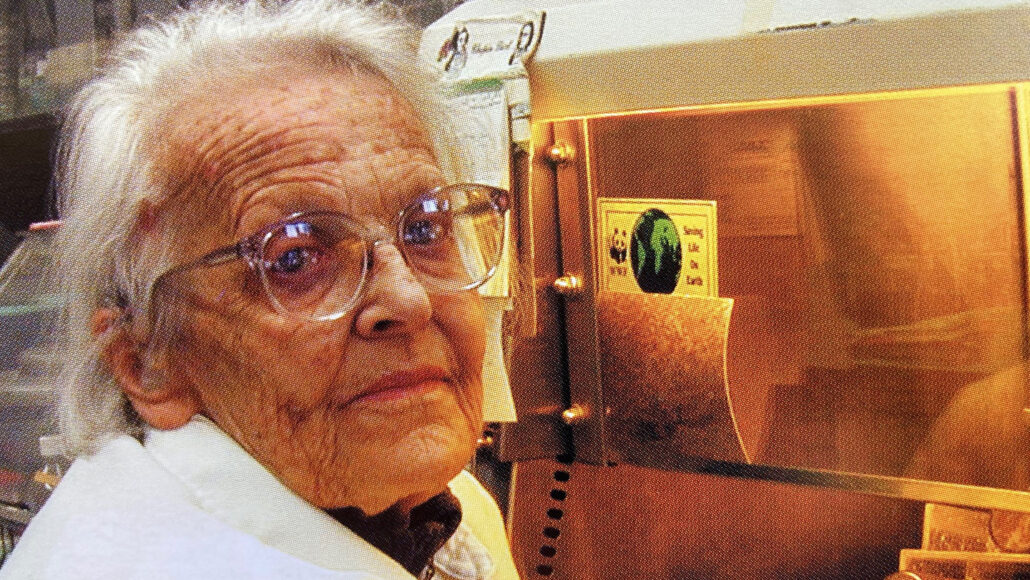
Marguerite Vogt in a lab at the Salk Institute

Marguerite Vogt, shown here at the Salk Institute during her later years, took on the task of attempting to grow and isolate poliovirus when many scientists were reluctant to work with it. COURTESY OF MARTIN HAAS


When nobody else wanted the job, Marguerite Vogt stepped in.

Working from early morning until late at night in a small, isolated basement laboratory at the California Institute of Technology, Vogt painstakingly handled test tubes and petri dishes under a fume hood: incubating, pipetting, centrifuging, incubating again. She was trying to grow a dangerous pathogen: poliovirus.

It was 1952 and polio was one of the most feared diseases in America, paralyzing more than 15,000 people, mostly children, each year. Parents wouldn’t let their children play outside, and quarantines were instituted in neighborhoods with polio cases.

Scientists were desperate for information about the virus, but many were hesitant to work with the infectious agent. “Everybody was afraid to go to that little lab in the basement,” says Martin Haas, professor of biology and oncology at the University of California, San Diego, and a personal friend and collaborator of Vogt’s for over three decades.

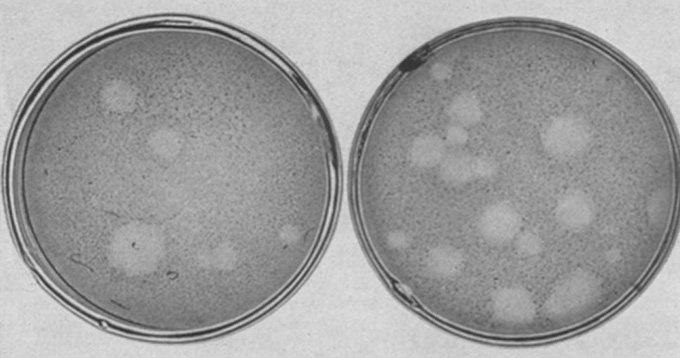
Vogt, a brand-new research associate in the laboratory of Renato Dulbecco, took on the task of attempting to grow and isolate the virus on a layer of monkey kidney cells. The method was called a plaque assay for the distinctive round plaques that form when a single virus particle kills all the cells around it.

Vogt didn’t tell her parents, both acclaimed scientists in Germany, that she was working with the virus. She later remarked that her father would have been very angry had he known of her poliovirus work, Haas says.

After a year of persistence, Vogt succeeded (and remained virus-free). In 1954, she and Dulbecco published the method for purifying and counting poliovirus particles. It was immediately used by other scientists to study variants of poliovirus, and by microbiologist Albert Sabin to identify and isolate strains of weakened poliovirus to make the oral polio vaccine used in mass vaccination campaigns around the world.

Perhaps even more importantly, the poliovirus plaque assay enabled scientists worldwide to analyze animal viruses at the level of individual cells, a field now known as molecular virology. Vogt and Dulbecco’s approach remains the gold standard for purifying and counting virus particles, including in recent studies of SARS-CoV-2, the virus that causes COVID-19. The method, used to measure how infectious a virus is and isolate strains of a virus for further research, is ubiquitous in labs around the world.

Throughout a career spanning three-quarters of a century, beginning with a publication when she was 14 years old, Vogt contributed extensively to our knowledge of the genetics of animal development, how viruses can cause cancer and cellular life cycles. Upon her death in 2007 at the age of 94, nearly 100 three-ring binders lined the shelves of her office, filled with notes on decades of experiments.

Vogt was known for her intense, inventive lab work, including what others have called her “green thumb” for tissue culture — the process of growing cells, viruses and tissues in a dish.

“Being a meticulous person, she worried about every detail of the process of cell culture,” says David Baltimore, biologist and president emeritus of Caltech who worked for three years in a lab close to Dulbecco’s. “That’s really important, because it is finicky. Long experience and precise handling are key to getting good data.”

Born in 1913, Vogt grew up in Germany surrounded by science. The younger daughter of two pioneers of brain research, Oskar and Cécile Vogt, she and her sister Marthe were budding scientists from their youth. Marguerite Vogt’s first paper, published in 1927, investigated the genetics of fruit fly development.

But a year after receiving her M.D. at the Friedrich Wilhelm University in 1936, Vogt and her liberal family were ousted from Berlin by the Nazis. Her parents lost their positions at the Kaiser Wilhelm Institute for Brain Research (now the Max Planck Institute), and Oskar was accused of supporting communists. The family avoided arrest or death due to the intercession of the Krupp family, former patients of Oskar’s and well-connected arms manufacturers who supplied the Nazi regime. With funding from the Krupps, Oskar and Cécile set up a private brain research institute in a remote part of Germany’s Black Forest. There, they continued their research and offered shelter and jobs to other people fleeing Nazi persecution.

From her parents’ institute in the Black Forest, Vogt published 39 seminal papers on how hormones and genetics influence the development of fruit flies, work that was later considered ahead of its time. In 1950, with the help of German-American scientists Hermann Muller and Max Delbrück, Vogt emigrated from Germany to the United States. Vogt rarely talked about her experiences during World War II. She never returned to Germany and refused to speak her native tongue with visiting German students and scientists.

After briefly working with Delbrück on bacterial genetics, Vogt went to work for Dulbecco on the poliovirus assay in 1952. After that success, the pair investigated the role of viruses in cancer. Once again, Vogt developed a technique to grow a virus — this time a small DNA-containing virus called polyomavirus — and the pair was able to count how many cells the virus transformed into cancer cells. In subsequent papers, the team demonstrated that certain viruses integrate their genetic material into host cell DNA, causing uncontrolled cell growth. The discovery changed the way scientists and doctors thought about cancer, showing that cancer is caused by genetic changes in a cell.


This image, which appeared in the 1954 paper by Marguerite Vogt and Renato Dulbecco that reported the method for purifying and counting poliovirus particles, shows plaques of poliovirus on monkey kidney cells 72 hours after infection.R. DULBECCO AND M. VOGT/J. EXP. MED. 1954


In 1963, Vogt followed Dulbecco to the Salk Institute in La Jolla, Calif. There, she spent decades studying viruses that can cause tumors, as well as other areas that sparked her interest, such as trying to define a cellular clock. “She was not only very intense, she was very inventive,” says Haas. “She always knew which way to go and what do to.”

Like the early days studying poliovirus, Vogt worked long and hard, typically six days a week, 10 hours per day. “She liked trying new things, so we often tried to do techniques that she had admired in papers she had read, or we learned things from other labs,” says Candy Haggblom, Vogt’s laboratory assistant for the last 30 years of Vogt’s career.

Vogt never married or had children. “Science was my milk,” she told the New York Times in 2001. But Vogt didn’t lack for company: She was a friend and mentor to many of the young scientists in the lab, four of whom went on to earn Nobel Prizes, and as an accomplished pianist and cellist, Vogt hosted a chamber music group that met at her home every Sunday morning for over 40 years, Haas says.

In 1975, Dulbecco was awarded the Nobel Prize in physiology or medicine for work on how tumor viruses transform cells, a prize shared with Baltimore and virologist Howard Temin. Vogt was not recognized, and Dulbecco did not acknowledge her in his Nobel lecture.

During her lifetime, Vogt did not receive a single major prize or recognition. Despite an advanced degree and prestigious publication record, Vogt did not become a professor or get her own lab at Salk until after Dulbecco left the institute in 1972. She was 59 years old. That rankled her, says Haas, who cared for Vogt later in her life and thought of her like a mother. “She ran his lab while he ran around the world giving talks,” he says. “Marguerite ran it all.”

At 80, Vogt regularly jogged into the lab early in the morning. At 85, she published her final paper, fittingly about how human cells slow down and lose their ability to replicate with age.


https://www.sciencenews.org/article/marguerite-vogt-polio-virus-lab-research-virology


09-29-2021-2019 - Origin and recent expansion of an endogenous gammaretroviral lineage in domestic and wild canids

Dark Matter; the essential entity of life

Origin and recent expansion of an endogenous gammaretroviral lineage in domestic and wild canids

Julia V. Halo, Amanda L. Pendleton, Abigail S. Jarosz, Robert J. Gifford, Malika L. Day & Jeffrey M. Kidd 

Retrovirology volume 16, Article number: 6 (2019) Cite this article

2881 Accesses

1 Citations

16 Altmetric

Metrics

https://retrovirology.biomedcentral.com/articles/10.1186/s12977-019-0468-z

09-29-2021-2008 - ERV-Fc, ERV, murine leukemia virus, HIV, SIV

 ERV-Fc was an endogenous retrovirus (ERV), or a genus or family of them, related to the modern murine leukemia virus. It was active and infectious among many species of mammals in several orders, jumping species more than 20 times between about 33 million and about 15 million years ago, in the Oligocene and early Miocene, in all large areas of the world except for Australia and Antarctica. After about 15 million years ago, it became extinct as an active infectious virus, perhaps due to its hosts developing inherited resistance to it, but inactive damaged copies and partial copies and fragments of its DNA survive as inclusions in the hereditary nuclear DNA of many species of mammals, some in different orders, including humans and other great apes.[1][2][3][4][5][6] That has let interspecies jump routes of the spreading virus be tracked, and timed by the molecular clock in their extant descendants, but with gaps where trails were lost by passing through infected animals who left no extant descendants or by loss of the integrated sequence in some lineages.

https://en.wikipedia.org/wiki/ERV-Fc


Disco Ball Animated Gif Hot Cool - Download hd wallpapers


The Pandemic That Lasted 15 Million Years


https://youtu.be/-M3L_Kykl6w


https://www.wsj.com/articles/covid-19-panel-of-scientists-investigating-origins-of-virus-is-disbanded-11632571202


09-29-2021-1943 - Debarrment of Traversation to Russia

Wednesday, September 29, 2021

Debarrment of Traversation to Russia. 
Debarrment of traversation by persons-etc. of and/or/etc. in affiliation/relation/etc. to the persons/country/lands/etc. of: United States of America, United States, USA, U.S., US, North America continent, Americas, America, Norway, Germs, heathens, neanders, romans, barbs, cretians, Aphuga-IndoPac-Jew, gang, amcan, aziv, nigger, jew, Petersen, Dinurysis, Bettey, Geoffeson, TiLove, Rooney, Walsh Chris et al., Grayden, Chaney, Silvers, Rose Grayden, Sheila, Ispirescu, Layng, AziV, Romaniov, ploish witch et al., large round yellow beetle et al., maine et al., smith, etc. et al., etc..,
...
Perm, Irrevo, et al., etc..

Debarrment of Traversation.
Debarrment of Traversation to Russia.

CIA 618 
CIA 618 92
NLAB 
VIV
CIA

------------------


09-29-2021-1942 - Illicit Edit Punishable by Nuclear Meltdown Cat Global ExT - NLAB/VIV/CIA 618/AGENT BLEU/NUCLEAR WINNER/DOP/BIRTHRIGHT


------------------

AGENT BLEU DRAFT ILLICIT EDIT. 


Sunday, July 18, 2021

Do not permit USA Traversation into Russia by Petersen, Dinurysis, Bettey, Geoffeson, TiLove, Rooney, Walsh Chris et al., Grayden, Chaney, Silvers, Rose Grayden, Sheila, Ispirescu, Layng, AziV, Romaniov, ploish witch et al., large round yellow beetle et al., maine et al., smith, etc. et al., etc.

Do not permit USA Traversation into Russia by Petersen, Dinurysis, Anton, Bettey, Geoffeson, TiLove, Rooney, Walsh Chris et al., Grayden, Chaney, Silvers, Rose Grayden, Sheila, Ispirescu, Layng, AziV, Romaniov-usa, centopiedals, ploish witch et al., large round yellow beetle et al., maine et al., USA, NAC, USA affiliate, affiliate, NAC DOM, undoc/nd/etc., America, Americans, Amcans, jewej, ukj, smith, MCL, MCD, wade, wades friends, blMH, trafficker, trafficker stolen child/etc., slave owner/etc., neanders, heathens, barbarians, romanians, rome, italians, middle east, asia, latins, africans, islanders, europe, canada, other places, norway, german, finland, germs, mixed, obl, srt, freks, disease, vsp, blacks, browns, lats, feastys, black people, browns, irvin trafficka & fam, veterinary/psychology/armed forces/social work/law enforcement/police/poor people/disease/deformed/degenerate/etc., degenerates, diseases, deformity, deviant, different, dangerous, disorder, perturbations/aberrations/abominations/deviants/derivatives/integrants/variants/variant/etc., stolen, stolen child/organ/gene/sequence/code/signature/type/order/pattern/rank/complexity/marker/product/material/intellectual/property/rehoused/transfer/acquired/human/person/existence/etc. et al., theif, misters,  etc..

including USA large families (renamed, rehomed, programed (e.g. if wit prot und cia; then cia override to prohibit emigration of wit prot person). petersen programmed units/programs/groups/etc. exercise special privilege and have no emigration rule/law/etc.; both USA witness protection groups and petersen groups have commonality; both have no obstacle to emigration (where to satisfy condition of occurrance of deception/secrecy/rule bending/argument/danger/conspiracy/espionage/etc. by persons of the USA)), etc.. 

e.g. an independent attempt to traversate the country and nation of any and by a person of a USA large family (esp. renamed, rehomed, programmed (inc. aspergers. mental health, public health care, government program, government mandated health care, etc.), etc.) is prohibited by a witness protection program/program/etc. under the authority-law-etc. of the United States of America-America-etc. (as required law, not optional law)(a non-traversation assumption by USA country government may exist (depending on time/etc.); USA government retains a non-traversation expectation of civilians/etc. and by implication of USA law to include a civilian/USA-USA/contract-etc.; flexible in government favor, as necessary). The Petersen family to satisfy condition of USA large family is not permitted to traversate when in compliance with law of country of origin/life/residence/etc.: America, United States, etc.. However, the family may attempt independent, dependent or otherwise to traversate any non-self country (including by the fabrication-design-etc. of elaborate schemes of society-social work-health-etc., including homes-land-house-programs-privilege-guns-etc., etc., and for purpose to blind-disparity advance and gain).

Mass Self procreated families (petersen, smith, etc.). 

Mass trafficked origin descendants/variants/derivations/derivatives/deviations/integrans/perturbations/abominations/aberrations/relatives/etc., etc..

Clones, hybrids, Impostors (stolen identities/etc.), doubles, genetically modified, stolen, etc..

North America, Americas, Islands, etc.. (Tropical Disease)

execution to all.


CIA 618 92.